

Key Takeaways
Why These Myths Persist — and Why They Matter
Misconceptions about accessible bathrooms are surprisingly common, and they tend to cluster around two fears: cost and appearance. Homeowners who have internalized these myths often delay renovations that could meaningfully improve their safety and independence at home. The good news is that the facts consistently paint a more encouraging picture than the myths suggest.
What follows are the most widespread misconceptions we hear from homeowners planning a bathroom upgrade — along with accurate, practical corrections to each one.
Myth
Accessible bathrooms look sterile and institutional, like a hospital room.
Fact
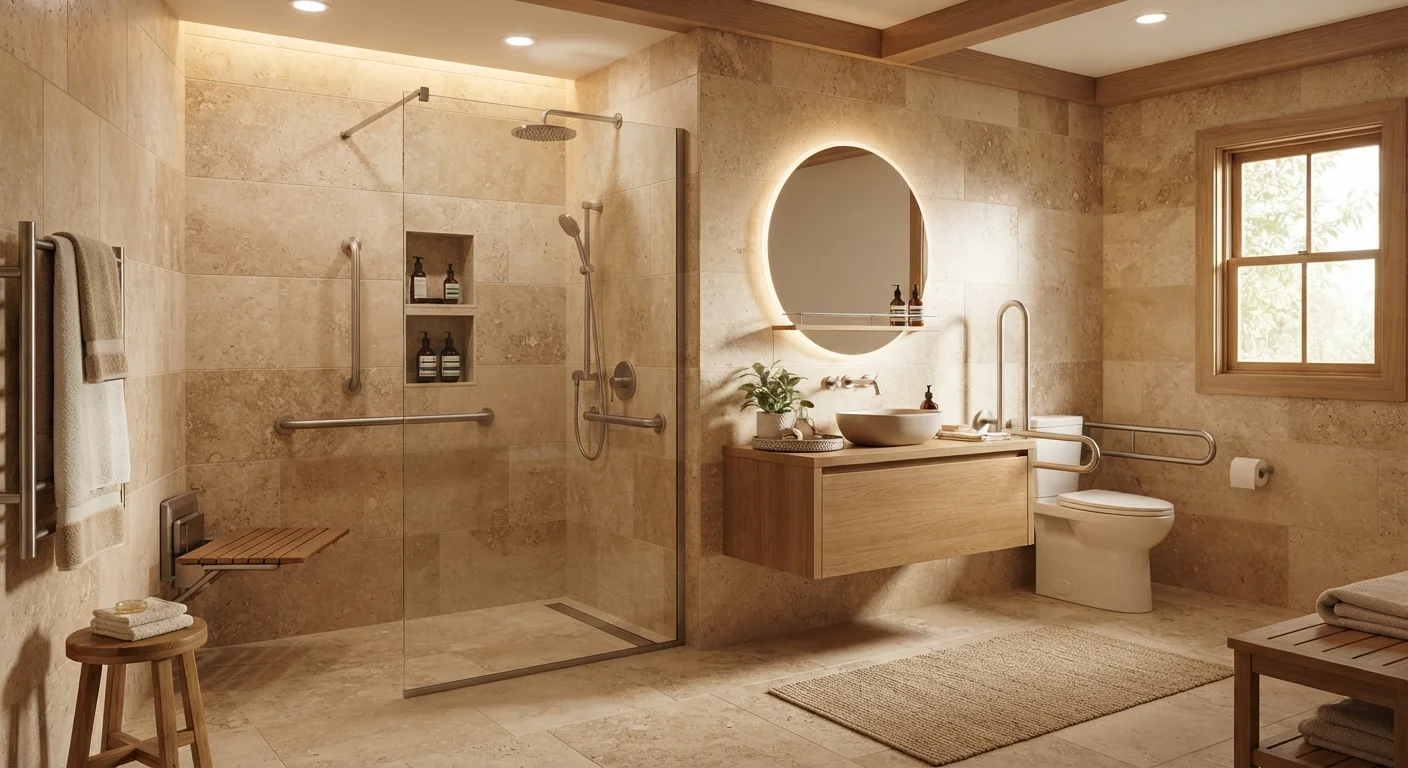
Modern accessible design blends safety features seamlessly into stylish, comfortable spaces.
This is one of the most persistent misconceptions — and it keeps many homeowners from exploring upgrades that could genuinely improve their daily life. The reality is that grab bars now come in brushed nickel, matte black, and bronze finishes. Walk-in showers can feature frameless glass, large-format tile, and rainfall showerheads. Designers and contractors who specialize in accessibility routinely create bathrooms that are warm, contemporary, and completely indistinguishable from a standard renovation. For a deeper look at what these spaces actually include, see what an accessible bathroom actually means.
Myth
Accessible bathroom renovations always cost a fortune.
Fact
Many meaningful accessibility upgrades are modest in cost, and full renovations vary widely depending on scope.
Grab bar installation, comfort-height toilets, and handheld showerheads are among the least expensive upgrades a homeowner can make — often costing a few hundred dollars installed. More extensive changes, such as a curbless (threshold-free) walk-in shower or widened doorways, do involve higher costs, but the range depends heavily on your existing layout, materials chosen, and local labor rates. Assuming the worst-case figure before getting even one contractor quote can lead to unnecessarily delayed decisions. Getting multiple estimates and asking contractors to explain what drives the price helps you plan realistically.
Myth
Accessible features are only necessary if you already have a mobility problem.
Fact
Accessibility features reduce fall risk and improve usability for people at any stage of life.
Bathrooms are among the most common sites for household injuries, and that risk applies across all ages. Grab bars, slip-resistant flooring, and curbless showers make a bathroom easier and safer to use every day — regardless of whether a resident currently has a diagnosed mobility limitation. Planning these features before a health event occurs typically results in less disruptive installation and lower costs than emergency retrofitting. Households with guests of varying ages or abilities also benefit from universally accessible layouts.
Myth
Your existing bathroom is too small to accommodate accessibility modifications.
Fact
Experienced contractors can implement meaningful upgrades within most standard bathroom footprints.
While a full roll-in shower or wheelchair turning radius does require adequate square footage, many of the most impactful modifications — grab bars, comfort-height fixtures, lever-style faucet handles, and non-slip surfaces — require no additional space at all. Even in smaller bathrooms, a skilled contractor can often reconfigure the layout to create a more functional, safer space. The key is working with a professional who has specific experience in accessibility renovations and can assess your bathroom's actual dimensions rather than making assumptions. You can also explore options through the walk-in showers resource hub.
Myth
Any general contractor can handle an accessible bathroom renovation.
Fact
Accessibility renovations benefit from contractors who understand relevant design standards and aging-in-place principles.
Not all renovation contractors have equal familiarity with accessibility standards such as those outlined by the Americans with Disabilities Act (ADA) or universal design guidelines. Contractors who regularly work on accessible bathrooms understand things like optimal grab bar placement heights, slip-resistance ratings for flooring materials, and how to create a safe, low-threshold shower entry. When interviewing contractors, ask specifically about their experience with accessible or aging-in-place projects and request references from previous clients. The same principle applies in other renovation categories — assumptions about contractor interchangeability can lead to poor outcomes, as explored in common beliefs about roofing contractors that simply aren't true.
Myth
Walk-in tubs and walk-in showers are essentially the same thing.
Fact
Walk-in tubs and walk-in showers are distinct products with different features, entry mechanisms, and use cases.
A walk-in tub features a door built into the tub wall that allows entry without stepping over a high threshold, and typically includes a seat and jets. A walk-in shower has no tub basin — it's a dedicated shower space, often with a curbless entry. Each suits different needs, preferences, and bathroom configurations. Confusing the two can lead to selecting the wrong product for your situation. Both are worth understanding in detail: see the walk-in tubs hub and the walk-in showers hub for clear explanations. For more on walk-in tub misconceptions specifically, walk-in tub myths that cost homeowners time and money is worth reading.
How to Move Forward With Confidence
Separating myth from fact is the first step, but knowing how to act on that clarity is what actually improves your home. Here are a few concrete steps to take:
- Request an in-home assessment. Ask contractors to evaluate your existing bathroom before quoting. A physical walk-through reveals possibilities and constraints that a phone estimate cannot.
- Prioritize by impact. If budget is a concern, start with high-impact, lower-cost changes — grab bars, a handheld showerhead, non-slip flooring — and plan larger modifications for a subsequent phase.
- Ask the right questions. When speaking with contractors, ask how many accessibility-focused renovations they've completed, what design standards they follow, and whether they can provide photos of comparable past projects.
- Verify permit requirements. Some accessibility modifications, particularly those involving structural changes or plumbing rerouting, may require permits. Ask your contractor to clarify which local requirements apply — and be cautious of any professional who dismisses permit considerations entirely.
Don't Delay Until After a Fall or Injury
Many homeowners wait until a mobility event — a fall, surgery, or new diagnosis — before exploring bathroom accessibility. At that point, timelines become compressed, decision-making is more stressful, and costs can be higher due to urgency. Planning ahead, even by a few years, gives you more choices, more time to budget, and a less disruptive installation experience.
This article is for informational purposes only. Costs, timelines, and applicable building codes vary by location. Always consult a licensed contractor and verify local permit requirements before beginning any renovation work.