

Key Takeaways
Option A
Per-Linear-Foot Pricing
The itemized, measurement-driven approach.
Best for: Homeowners who want transparent, scalable pricing tied directly to the length of gutter being covered.
Option B
Whole-Home Flat-Rate Pricing
The all-in, single-number quote.
Best for: Homeowners who prefer one predictable total with no need to track individual measurements or line items.
If you want to compare multiple contractor bids easily
Per-Linear-Foot Pricing
A per-foot rate makes it straightforward to check whether two bids are using the same scope of work and materials, since you can multiply the rate by your gutter length and spot discrepancies quickly.
If you have an irregularly shaped roofline or complex gutter layout
Whole-Home Flat-Rate Pricing
A flat rate already accounts for awkward angles, multiple stories, and tricky access points, so you are less likely to receive add-on charges mid-project.
If you are working with a tight, fixed budget
Whole-Home Flat-Rate Pricing
Knowing the total upfront helps you plan your spending without worrying that additional footage measurements will push the bill higher.
If your home has a simple, single-story gutter run
Per-Linear-Foot Pricing
Simple layouts rarely carry surcharges, so per-foot pricing tends to be clean, predictable, and easy to verify against your own measurements.
How These Two Pricing Models Work
When you ask a contractor to quote gutter guard installation, you will generally receive one of two types of estimates: a per-linear-foot price or a whole-home flat rate. Understanding how each is constructed makes it much easier to compare bids fairly and avoid surprises on the final invoice.
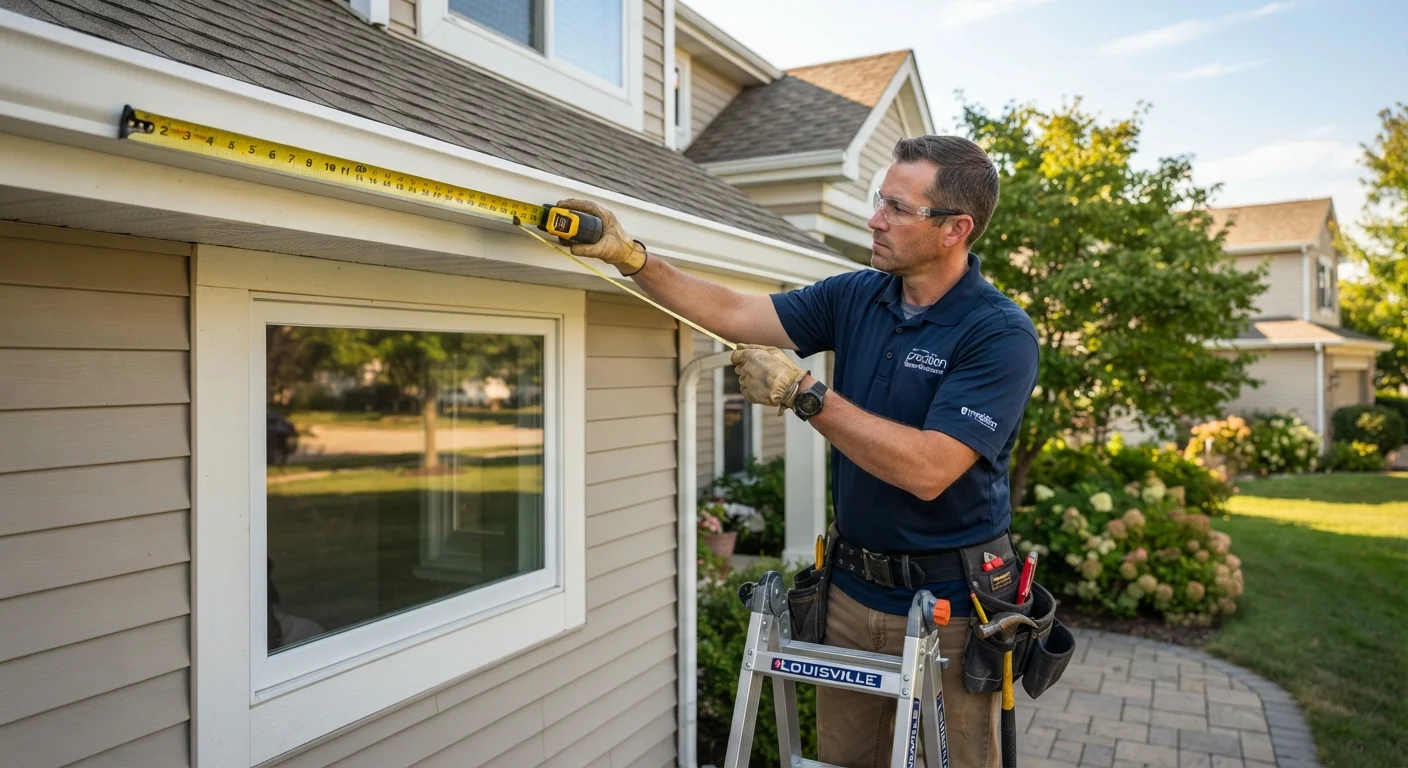
Per-linear-foot pricing works exactly as it sounds. The contractor measures the total length of your gutters — typically in feet — and charges a set dollar amount for each foot of guard installed. That rate usually bundles materials and basic labor together, though some contractors list them separately. Because the quote scales with your home's actual measurements, it can feel more transparent and easier to audit.
Whole-home flat-rate pricing packages everything — materials, labor, access equipment, and sometimes a warranty — into one lump sum. The contractor assesses your property in full, then delivers a single number. This approach can simplify budgeting because you know the ceiling cost upfront, but it requires you to ask more questions to understand what is actually included. For a deeper look at what drives these numbers, see our plain-language breakdown of gutter guard installation costs.
| Criterion | Per-Linear-Foot Pricing | Whole-Home Flat-Rate Pricing |
|---|---|---|
| How cost is calculated | Dollar amount × total feet of gutter | Single price for the entire property |
| Transparency | Easy to audit with your own tape measure | Requires more questions to unpack inclusions |
| Predictability | Can rise if measurements differ from estimate | Fixed total; fewer mid-project surprises |
| Ease of comparing bids | Simple to compare rates across contractors | Harder to compare without matching scope |
| Best suited for | Simple, easy-to-measure layouts | Complex or multi-story rooflines |
| Add-on risk | Common for access, pitch, or extras | Less common if contract is truly all-in |
What Each Approach Tends to Include — and Leave Out
A per-foot quote often covers the guard material and standard installation labor for a straightforward single-story home. What it may not include are charges for second-story access, roof pitch surcharges, end caps, corner pieces, or gutter cleaning before installation. Always ask the contractor for a complete list of exclusions before accepting a per-foot bid.
Flat-rate quotes are more likely to absorb those extras into the single price — but not always. Some contractors use a flat-rate format while still appending line-item add-ons for complexity factors. A quote described as a «whole-home price» is only truly all-in if the contract language confirms it.
Before signing anything, ask these two questions regardless of pricing format:
- What is explicitly included in this price? (materials, labor, cleanup, end caps, gutter cleaning)
- What could cause this number to increase? (access difficulty, additional footage, permit fees)
Our guide on reading a gutter guard installation quote walks through each common line item in detail.
Which Model Tends to Cost More — and Why That Question Misses the Point
Homeowners often ask which pricing model is cheaper. In practice, neither format is inherently less expensive. A per-foot rate multiplied across a large home with a complex roofline can easily exceed a flat-rate quote for the same job — and vice versa for a smaller, simpler property.
The more useful question is: Are these two quotes covering the same scope of work? A lower per-foot rate that excludes gutter cleaning and second-story labor may end up costing more than a higher flat rate that bundles those services in.
100–200 ft
Typical linear gutter run for a mid-sized home
Most single-family homes in the U.S. have between 100 and 200 linear feet of gutters, meaning small differences in per-foot rates can translate to hundreds of dollars.
3+
Quotes recommended before committing
Consumer guidance from home improvement organizations consistently recommends collecting at least three written estimates to establish a reliable local price range.
Guard material type also plays a significant role in pricing under both models. Micro-mesh guards, for example, typically sit at a higher price point than foam or brush-style inserts — so the same pricing format can produce very different totals depending on what is being installed. Learn more about how guard type affects cost in our article on factors that affect your final gutter guard bill.
To avoid being caught off guard by unexpected costs, review common gutter guard cost myths before you start collecting estimates.
This article is for informational and educational purposes only. Costs and contractor practices vary by region. Always obtain multiple written quotes and verify that any contractor you hire carries appropriate licensing and insurance for your area.