

Key Takeaways
Gutter Guard Installation Quote
A gutter guard installation quote is a written cost estimate from a contractor detailing what it will cost to supply and install gutter protection on a specific home. Quotes vary widely because they reflect each home's unique combination of size, gutter condition, roof type, chosen guard material, and local labor rates. No two homes are identical, so no two quotes should be expected to match.
Contractors typically price gutter guard jobs per linear foot of gutter, so total cost scales directly with the total run of guttering on a home — a key reason square footage alone doesn't fully explain price differences.
The Factors That Drive Quote Differences
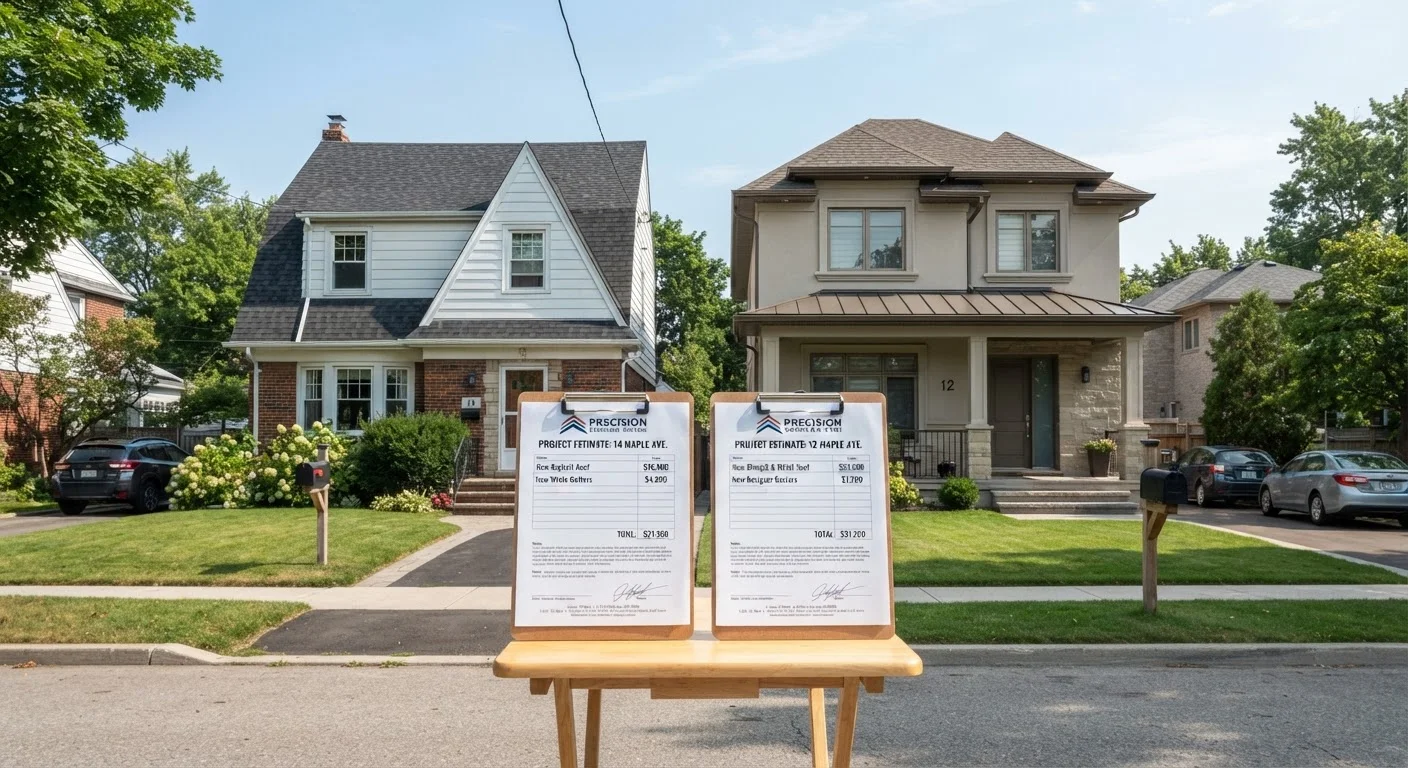
When a neighbor mentions their gutter guard installation came in well under — or well over — what your contractor quoted, it can feel disorienting. But the gap almost always traces back to measurable, explainable differences between the two properties. Understanding those factors helps you evaluate your own quote with confidence rather than frustration.
The four biggest variables contractors assess are: total linear footage of gutter, roof complexity, the condition of existing gutters, and the type of guard being installed. Each one feeds directly into both material and labor costs — and they compound. A home with a steep roof, aging gutters, and a premium mesh guard will receive a much higher quote than a single-story home with sound gutters and a basic screen system, even if the two houses sit side by side.
125–200 ft
Typical linear gutter footage on a mid-sized US home
Industry estimates suggest most single-family homes fall within this range, though actual footage varies with footprint shape and roofline complexity.
6:12
Roof pitch threshold for common labor surcharges
Many roofing and gutter contractors apply additional labor charges for pitches exceeding 6:12 due to increased safety requirements and slower working pace.
3–5x
Cost range between basic and premium guard materials
Per linear foot, premium micro-mesh stainless systems can cost three to five times more than basic foam or screen alternatives, according to contractor pricing data.
For a broader breakdown of what shapes installation pricing across different home types, see our plain-language cost breakdown.
Linear Footage, Roof Height, and Complexity
Contractors price gutter guard jobs per linear foot of gutter — not by square footage of living space. A sprawling single-story ranch may carry far more gutter run than a compact two-story colonial. So the neighbor with the smaller house might actually have more footage to cover, flipping your price expectations upside down.
Roof pitch and height are equally important. Installation on a steep or high roofline requires additional safety equipment, slower pacing, and sometimes a larger crew. Many contractors apply a labor surcharge for roofs above a certain pitch — typically anything beyond a 6:12 slope (meaning six inches of rise for every twelve inches of run). Multi-story homes add further complexity because working at greater heights increases both the time and risk involved.
Dormers, valleys, corners, and curved gutters also increase installation time. Each additional angle requires careful cutting and fitting that adds to the overall labor charge. Your neighbor's simple, straight roofline may simply take half the time yours does.
Gutter Condition and Preparatory Work
Contractors cannot install guards over gutters that are sagging, leaking, or heavily clogged. If your gutters need cleaning, re-pitching, re-sealing, or section replacement before guards go on, those tasks appear as line items on your quote — and they can add meaningfully to the total.
A neighbor whose gutters were recently replaced or cleaned may receive a quote that skips all preparatory charges entirely. Yours may include anywhere from a basic flush-out to partial gutter replacement, depending on what the contractor finds during their site assessment.
This is one reason quotes can look so different even between nearly identical homes: the condition of the existing gutters is invisible from the street but very visible to the contractor standing on a ladder examining them. To understand what each preparatory charge covers, our guide to reading a gutter guard installation quote explains the common line items in plain terms.
Material Choice and Local Labor Rates
The type of gutter guard selected is one of the clearest price differentiators. Foam inserts and basic aluminum screens sit at the lower end of the material cost spectrum. Micro-mesh stainless steel systems — which filter out smaller debris more effectively — carry significantly higher material costs. Since material cost is usually passed through directly to the homeowner, the guard type alone can shift a quote by hundreds of dollars on a mid-sized home.
Your neighbor may have chosen a different guard type entirely, making a direct comparison misleading. Our hub on types of gutter guards outlines how each style is constructed and what installation typically involves, which helps explain why contractors price them so differently.
Labor rates also vary by geography. A contractor operating in a high cost-of-living metro area will carry different overhead — insurance, fuel, licensing fees, wages — than one working in a lower-cost rural market. This means two homeowners in different parts of the country, with otherwise identical homes and identical guard types, may still receive quotes that differ by a noticeable margin.
Get At Least Three Quotes for Your Specific Home
Because so many variables shape a gutter guard quote, the most reliable way to understand fair pricing is to collect multiple estimates for your exact home — not to rely on what neighbors or online averages suggest. Our guide on getting a fair gutter guard quote explains what to ask each contractor and how to compare estimates meaningfully.
If you're concerned that pricing common beliefs are distorting your expectations, our article on gutter guard cost myths addresses the most common misconceptions that leave homeowners underprepared.