

Key Takeaways
How to Know When Your AC Is Telling You Something Important
Air conditioners rarely fail all at once. More often, they send subtle signals over months or even years — signals that are easy to dismiss as minor quirks. For homeowners who've lived with the same system for a decade or more, recognizing those signals early can mean the difference between a planned, budgeted replacement and an emergency breakdown in the middle of a summer heat wave.
The six warning signs below don't always mean immediate replacement is necessary. Some point to repairable issues; others suggest a system is reaching the end of its practical life. Either way, each one is worth a professional evaluation rather than a wait-and-see approach. Staying ahead of cooling problems can also help you manage energy costs — a topic covered in depth in Keeping Your Cooling Costs Down Without Sacrificing Comfort.
The System Is More Than 15 Years Old
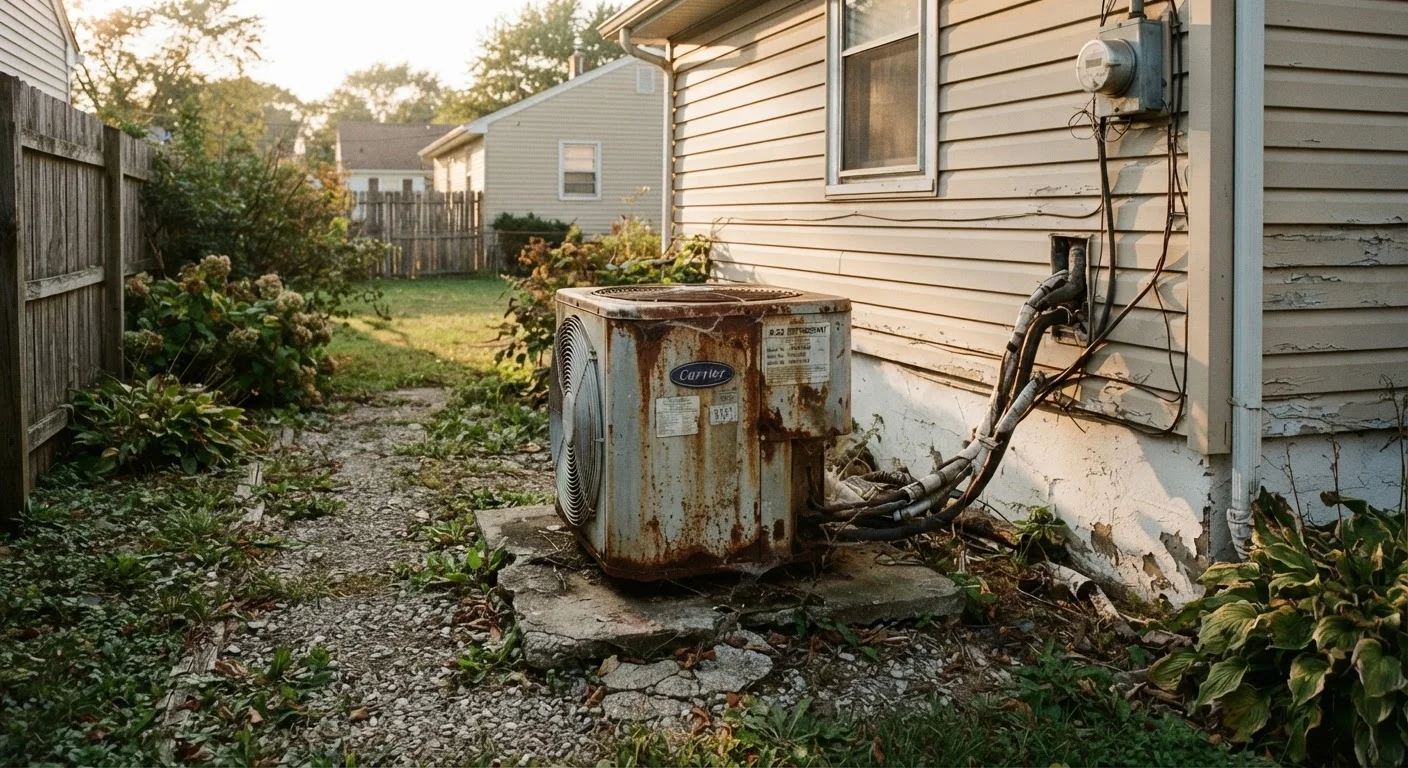
Most central air conditioners are designed to perform reliably for roughly 15 to 20 years with proper maintenance. Once a unit passes that range, its efficiency tends to decline noticeably, even if it still runs. Older systems also rely on refrigerants that are no longer manufactured, which can make servicing them expensive or difficult. Age alone isn't a reason to replace a unit, but it is important context for every other warning sign on this list.
Once a unit passes 15–20 years, efficiency declines even if the system still runs.
Repair Bills Are Adding Up Quickly
One or two modest repairs over a decade is normal wear. But if you've needed a technician out multiple times in a single season — or if a single repair is estimated at more than half the cost of a new unit — the math often stops making sense. HVAC professionals sometimes refer to a general guideline: if a repair costs more than about one-third to one-half the price of replacement, replacement is worth serious consideration. Ask your technician to walk you through both scenarios honestly.
If a single repair costs more than half the price of a new unit, replacement deserves serious consideration.
Cooling Is Uneven Throughout the House
Rooms that feel consistently warmer than the thermostat setting — especially ones that used to cool fine — can point to a weakening compressor, failing ductwork, or low refrigerant levels. While some of these issues are repairable, they can also indicate that the system no longer has the capacity to do its job. If you've noticed this pattern, the article Why Your Air Conditioner Is Running But Not Cooling the House explores the common causes in more detail.
Rooms that stay warm despite a running AC can signal a compressor or capacity problem.
Energy Bills Have Climbed Without Explanation
An air conditioner losing efficiency has to work harder and longer to achieve the same indoor temperature. That extra effort shows up on your electricity bill. If your cooling costs have risen noticeably over the past two or three summers — and you haven't changed your habits or thermostat settings — the system may be declining. Review your utility bills year over year for a clearer picture, and consider having an HVAC technician check the unit's energy efficiency rating (measured as SEER — Seasonal Energy Efficiency Ratio) against what it was rated at when new.
Rising summer electricity bills, without other explanation, often reflect a system that is losing efficiency.
Unusual Sounds or Smells Have Appeared
Grinding, banging, or rattling noises often indicate mechanical components — like the blower motor or fan belt — are worn or failing. A burning smell can point to an electrical issue, while a musty odor may suggest mold growth in the unit or ductwork. Neither should be ignored. These problems aren't always terminal, but they do require prompt professional attention. Persistent or returning symptoms, especially in an older unit, are a strong signal that the system is struggling. Poor air quality can also be linked to ventilation issues — see Signs Your Home Isn't Breathing Properly for related guidance.
Grinding, burning smells, or recurring musty odors all require prompt inspection by a qualified technician.
Humidity Levels Feel Out of Control
A well-functioning central air conditioner doesn't just cool — it removes humidity from indoor air. If your home feels sticky and uncomfortable even when the AC is running, the system may have lost its ability to dehumidify effectively. This can result from a failing compressor, low refrigerant, or an oversized unit cycling on and off too quickly. High indoor humidity also creates conditions that encourage mold and dust mites, which can affect air quality and health. A licensed HVAC technician can determine whether the issue is correctable or a sign of deeper system decline.
A sticky indoor atmosphere despite a running AC often points to a system that has lost its dehumidifying capacity.
What to Do When You Spot These Warning Signs
If one or more of these signs sounds familiar, the right first step is scheduling an assessment with a licensed HVAC technician — not an emergency callout if the system is still functional, but a planned visit where you can walk through the unit's history, recent repairs, and performance concerns together.
When to Call a Professional
Any of the signs listed here warrants a call to a licensed HVAC technician — not a DIY inspection. AC systems involve electrical components, refrigerant handling (which requires EPA certification), and pressurized parts that can be hazardous without proper training and tools. A qualified professional can accurately diagnose whether repair or replacement is the more practical path for your specific system and budget.
Ask for an honest comparison of what continued repairs would cost versus what a replacement system would run — including estimated energy savings from a more efficient unit. If you've been through a similar evaluation process with a heating system, the decision framework is comparable. The article Heating System Lifespan and When Repairs Stop Making Financial Sense covers that parallel scenario in useful detail.
No single warning sign guarantees a system needs immediate replacement, but multiple signs together — especially in an older unit — are a strong signal that it's time for a professional conversation rather than another repair appointment.
This article is for informational purposes only. Always consult a licensed HVAC professional for diagnosis, repair, or replacement decisions specific to your home and system. Requirements for permits or certified technicians may apply in your area — verify local rules before any work begins.