

Key Takeaways
Option A
Roof Repair
The targeted, lower-cost fix for isolated damage.
Best for: Homeowners whose roof is structurally sound and has a remaining useful life, facing limited or localized damage.
Option B
Roof Replacement
The comprehensive, long-term solution for aging or extensively damaged roofs.
Best for: Homeowners whose roof is nearing the end of its expected lifespan or has widespread deterioration that repairs cannot cost-effectively address.
If your roof is under 15 years old with one or two isolated problem areas
Roof Repair
A younger roof with limited damage still has significant useful life remaining. Targeted repairs preserve that value without the larger upfront cost of full replacement.
If your roof is 20 or more years old and showing widespread wear
Roof Replacement
An aging roof approaching the end of its design lifespan will require increasingly frequent repairs. Replacement resets that clock and reduces ongoing maintenance costs.
If you are planning to sell your home within the next few years
Roof Replacement
A new roof is a strong selling point and can prevent deal-breaking inspection findings. Buyers and their lenders often require a roof with remaining useful life.
If repair costs are approaching half the price of full replacement
Roof Replacement
Spending 50% or more of replacement cost on repairs rarely makes financial sense, especially if the underlying roof deck or underlayment is also degraded.
How to Frame the Decision
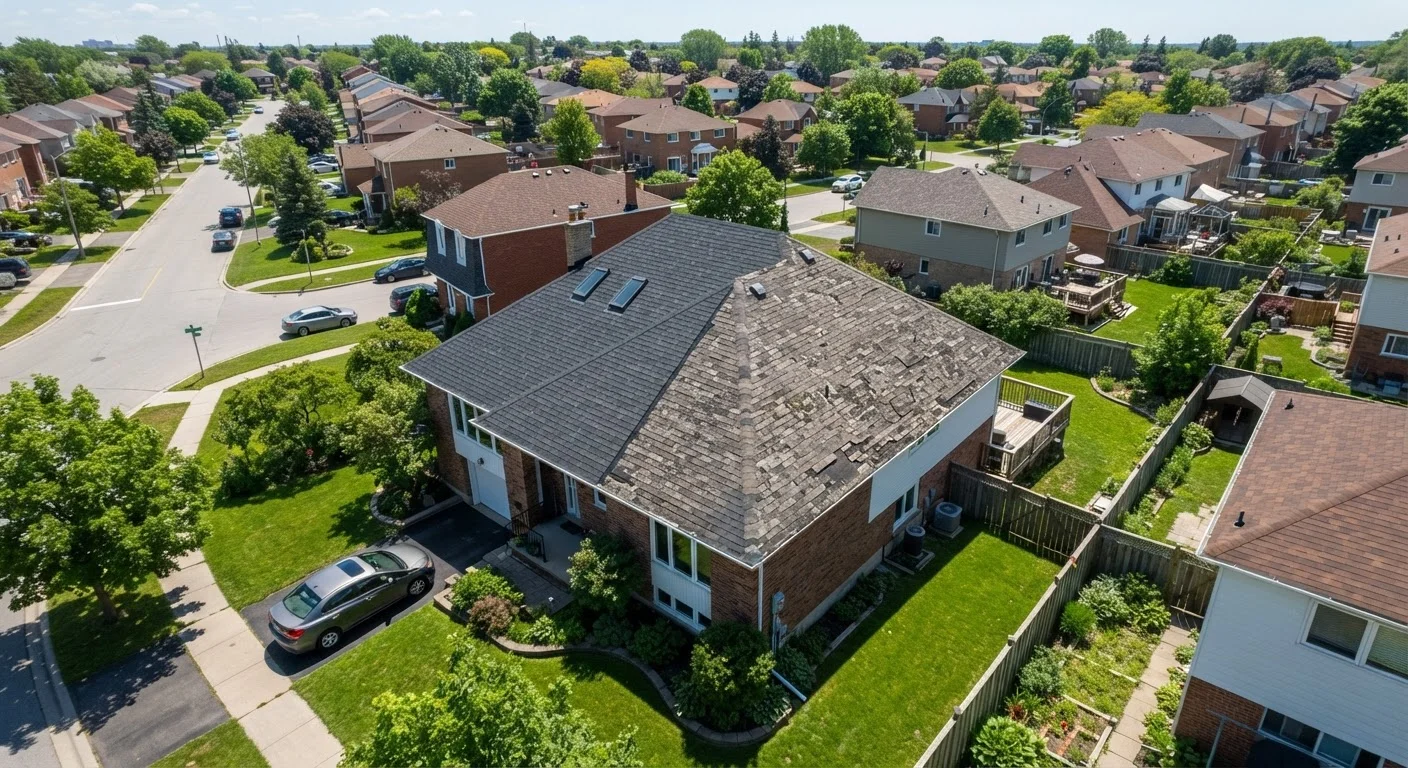
When a roof starts leaking or shingles begin to fail, homeowners face an immediate choice: patch what is broken or replace the whole system. Neither answer is automatically correct — the right path depends on the age of your roof, the extent of the damage, and your longer-term plans for the home.
Think of it this way: a roof repair addresses a specific problem in a specific area. A roof replacement removes and rebuilds the entire roofing system, including shingles, underlayment (the water-resistant layer beneath the shingles), and often the flashing (the metal strips that seal joints around chimneys and vents). Replacement is a bigger project, a bigger cost, and a longer-lasting solution.
A useful starting framework is the 50% rule: if the estimated repair cost exceeds roughly half the cost of a full replacement, most roofing professionals recommend replacing the roof instead. This is not a hard law, but it reflects a straightforward financial logic — spending heavily to extend a limited-life asset rarely pays off. The same principle applies to other major home systems, as discussed in our article on when heating system repairs stop making financial sense.
| Criterion | Roof Repair | Roof Replacement |
|---|---|---|
| Typical cost range | Hundreds to low thousands | Several thousand to $15,000+ |
| Best suited for | Isolated, localized damage | Widespread or systemic failure |
| Roof age suitability | Under 15 years old | 20+ years or near end of lifespan |
| Lifespan added | Extends existing roof modestly | Resets to full new-roof lifespan |
| Disruption level | Low — hours to one day | Higher — typically one to several days |
| Warranty outcome | Repair area only, often limited | Full new material and workmanship warranty |
| Impact on home sale | May still flag inspector concerns | Strong selling point, fewer inspection flags |
Key Factors That Tip the Balance
Roof age. Most asphalt shingle roofs — the most common type in the US — are designed to last 20 to 30 years, depending on the product grade and local climate. If your roof is under 15 years old and damage is isolated, repair is often sufficient. Once a roof approaches or exceeds 20 years, the underlying materials (felt underlayment, decking fasteners, flashing seals) are also aging. Repairs on old infrastructure tend to create new vulnerabilities nearby.
Scope of damage. A single missing shingle or a small flashing failure is a repair job. Multiple active leaks, widespread granule loss (the mineral coating on asphalt shingles), sagging sections, or daylight visible through the attic are signs of systemic failure. These conditions rarely improve with spot fixes.
Hidden structural damage. Water intrusion that has gone undetected can rot roof decking — the plywood or OSB (oriented strand board) panels that shingles are nailed to. When decking is compromised, a repair will not hold reliably. A contractor will need to pull back shingles to assess the decking, which is why a professional inspection matters before you commit to any approach. See our guide to hiring a roofer for what to look for in a qualified contractor.
Your timeline for the home. Planning to stay another 20 years? A replacement built with durable materials — you can explore options in our roof materials overview — may be the most economical long-term choice. If you intend to move within two or three years, the calculus may be different, though buyers and home inspectors will scrutinize an aging roof carefully.
Understanding the Cost Gap
Repair costs vary widely based on the type of damage, roof pitch, and local labor rates, but minor repairs — replacing a handful of shingles or resealing flashing — typically cost a few hundred dollars. Moderate repairs addressing larger areas of damage can run into the low thousands.
Full replacement on a typical single-story home is a significantly larger investment, generally ranging from several thousand dollars to well above $10,000 depending on roof size, material choice, and regional labor costs. That gap can feel intimidating, but replacement also comes with a new material warranty and a fresh lifespan — factors worth weighing against the cumulative cost of repeated repairs on an aging roof.
If financing a replacement is part of your planning, our article on how roofing financing options work walks through the common structures without sales pressure. For homeowners 50 and older specifically, there are additional long-term considerations covered in planning a roof replacement later in life.
Permits and Inspections May Be Required
In many US jurisdictions, a full roof replacement requires a building permit and a final inspection by a local code official. Some areas also regulate tear-off disposal and require licensed contractors. Requirements vary significantly by state and municipality. Always ask your contractor which permits apply to your project, and verify directly with your local building department before work begins.
This article is for informational purposes only. Roofing costs and conditions vary by location, home type, and contractor. Always obtain multiple written estimates from licensed roofing professionals and verify local permit requirements before beginning any roofing project.