

Key Takeaways
Why Roofing Myths Are So Persistent
Roofing decisions are high-stakes and infrequent. Most homeowners replace a roof only once or twice in a lifetime, which means there's little opportunity to learn from experience — and a lot of opportunity to rely on half-remembered advice, neighborhood hearsay, or outdated information passed along by well-meaning friends.
Some myths originate from genuine misunderstandings of how materials behave. Others are older truths that no longer apply, because roofing technology has changed significantly. A few are simply the result of a single bad experience being generalized into a universal rule.
The good news is that separating fact from fiction isn't complicated once you know what to look for. The myth-and-fact pairs below address the most common misconceptions homeowners encounter when evaluating long-lasting roofing materials.
Myth
Metal roofs attract lightning and are therefore dangerous during storms.
Fact
Metal roofing does not increase the likelihood of a lightning strike. Lightning targets the tallest nearby object, regardless of material.
This is one of the most persistent roofing myths. Lightning is attracted to height and the path of least resistance — not to specific building materials. A metal roof on a single-story home is far less likely to be struck than a tall tree in the same yard.
Importantly, if a metal roof is struck, the material actually provides an advantage: metal is non-combustible, meaning it won't catch fire the way wood shingles might. Many fire safety organizations recognize metal's non-flammable properties as a benefit, not a hazard. For a balanced look at metal roof trade-offs, see our detailed metal roof trade-off guide.
Myth
Slate roofs never need maintenance — once installed, they last forever without any attention.
Fact
Slate is exceptionally durable, but individual tiles can crack or slip over time and flashings around chimneys still deteriorate and need replacement.
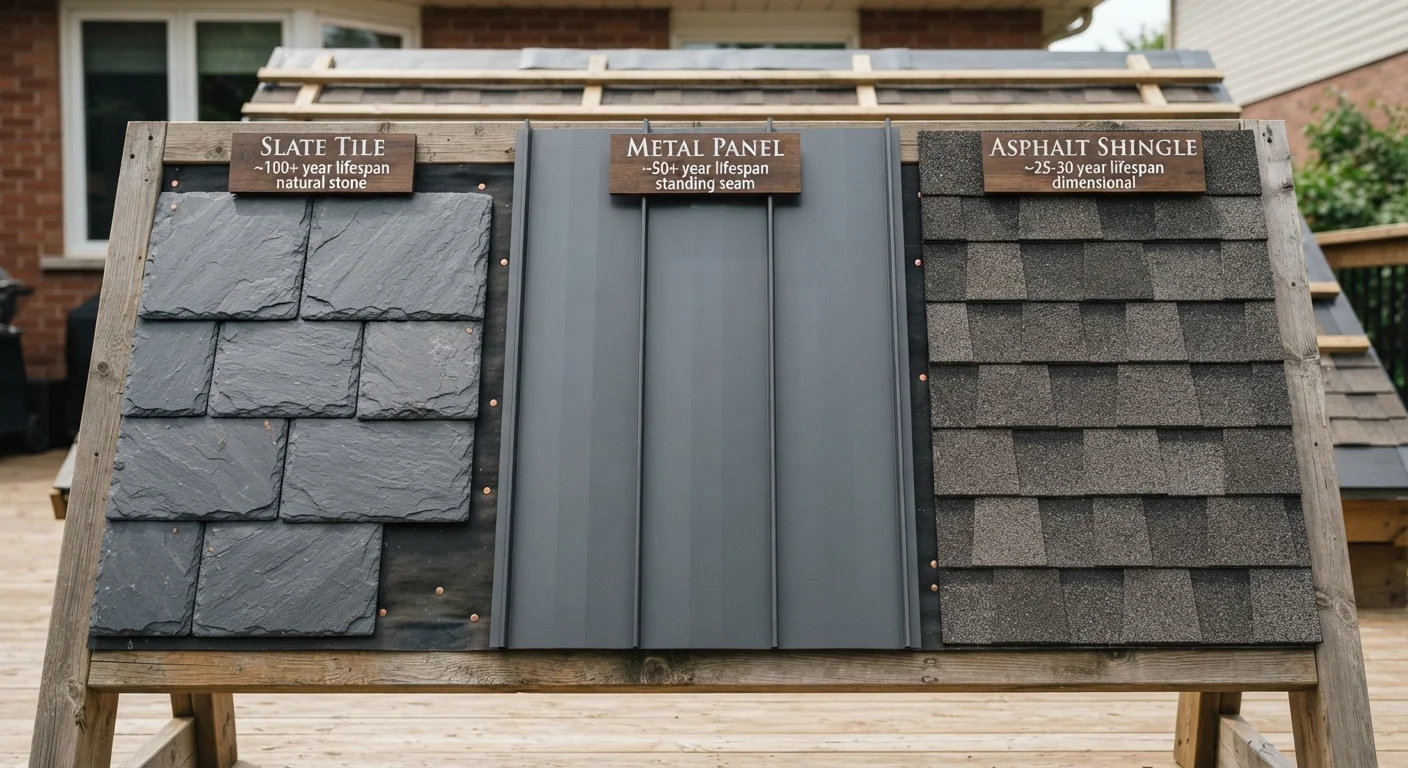
Natural slate tiles can last well over a century under the right conditions, but that longevity depends on the system as a whole — not just the stone itself. The copper or lead flashings, ridge caps, and underlayment installed alongside slate have shorter lifespans and will eventually require attention.
Cracked or slipped tiles should be replaced promptly to prevent water infiltration. A qualified roofing contractor familiar with slate should perform periodic inspections, ideally every five to ten years. Learn more about what slate roofing actually involves in our slate roofing overview.
Myth
The longest-lasting roofing material is always the most cost-effective choice.
Fact
Longevity is only one factor. Installation cost, structural requirements, and local climate all affect whether a premium material delivers real long-term value for a specific home.
A 150-year slate roof sounds like the obvious winner — but if your home's framing cannot support slate's significant weight without structural reinforcement, the upfront cost rises substantially. Similarly, premium materials often require specialized contractors whose labor rates reflect that expertise.
Total cost of ownership should account for installation, any required structural upgrades, maintenance over time, and how long you plan to stay in the home. Our asphalt vs. metal cost breakdown walks through how these numbers compare in practice.
Myth
Synthetic or composite roofing materials are cheap imitations that perform poorly.
Fact
Modern synthetic roofing products are engineered to replicate the appearance of slate, wood, or tile while offering competitive durability, lighter weight, and lower cost.
Composite and synthetic roofing has improved considerably in recent decades. Many products are manufactured from recycled rubber, plastic, or polymer blends and are rigorously tested for impact resistance, wind uplift, and UV degradation. Some carry Class 4 impact ratings — the highest available under industry testing standards.
For homeowners who want the aesthetic of natural slate or wood shake without the structural demands or price, synthetic options deserve serious consideration. Our article on synthetic roofing materials explains how these products are made and how they perform.
Myth
Any roofing material can be installed on any home — it's just a matter of preference.
Fact
Heavy materials like slate and concrete tile require a structural assessment to confirm your home's framing can safely bear the added load.
Natural slate can weigh two to four times more per square foot than asphalt shingles. Installing it on a roof framed for lighter materials without engineering review can put the structure at risk. A licensed contractor or structural engineer should evaluate the framing before any premium heavy material is specified.
Local building codes may also govern which materials are permitted in certain fire-prone or wind-prone regions. Always verify permit requirements with your local building authority before committing to a material. For broader planning guidance, visit our Roof Costs and Planning hub.
How to Use This Information When Talking to a Contractor
Understanding the real characteristics of roofing materials puts you in a much stronger position during contractor conversations. Rather than accepting a recommendation at face value, you can ask specific questions: What is the expected lifespan of this material on my specific roof? Will my home's structure support this weight? What maintenance will be required and at what intervals?
A trustworthy contractor welcomes these questions. If a contractor discourages you from asking or dismisses your concerns, that is worth noting. Our guide to hiring a roofer outlines what to look for when vetting candidates and what red flags to watch for.
It is also worth reading about roofing cost misconceptions separately — material myths and cost myths often travel together and can compound into poor decisions. Our article on common roofing cost myths is a useful companion read.
This article is for general informational purposes only. Roofing decisions involve structural, safety, and code considerations that vary by location — always consult a licensed roofing professional and your local building authority before beginning any roofing project.