

Key Takeaways
Summary
18 items · 20–40 minutes
Why These Questions Matter Before You Commit
Choosing a roofing material feels like a big decision — because it is. Most roofs are expected to last 20 to 50 years depending on the material, so agreeing to something that doesn't suit your home, climate, or budget can mean expensive corrections later. The problem is that homeowners often rely entirely on whatever a contractor recommends without knowing which follow-up questions would reveal whether that recommendation is genuinely appropriate.
This checklist gives you a structured way to evaluate any material recommendation before you sign anything. It isn't about second-guessing the contractor — it's about making sure both of you are working from the same set of facts. A confident, experienced roofer will welcome these questions. If a contractor seems impatient or vague in response, that itself is useful information.
For a broader look at common decision-making mistakes, see things that trip up homeowners when choosing a roofing material. And once you're evaluating bids, getting a roofing estimate: questions to ask and red flags to watch covers the cost and contract side in detail.
What You'll Need Before Starting
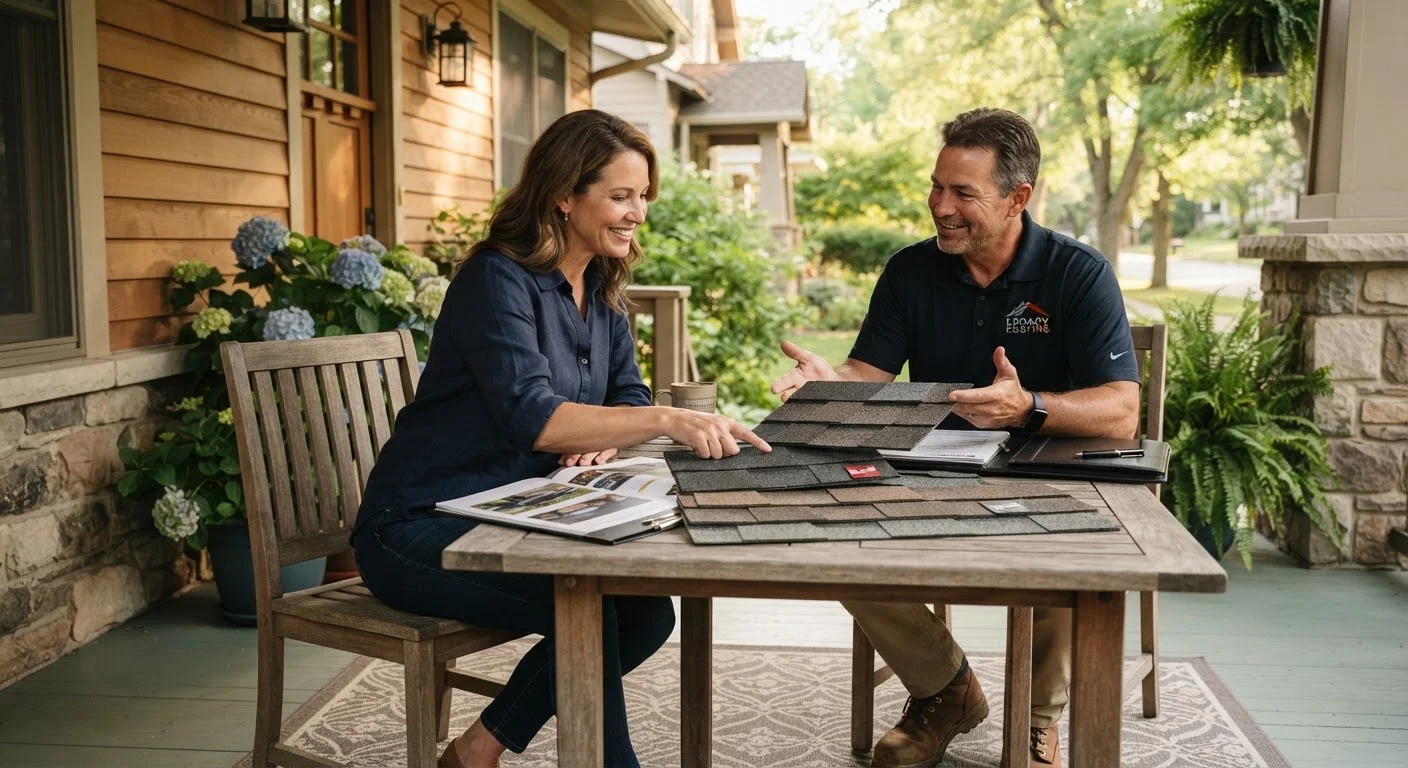
Before your contractor meeting, gather a few basics so you can evaluate their answers in context. Having this information on hand also signals to the contractor that you're an engaged, informed homeowner — which tends to improve the quality of the conversation.
Notepad or recording device
Capture contractor answers during the meeting so you can review and compare them accurately afterward.
Copy of your HOA rules (if applicable)
Verify whether your association restricts approved roofing materials, colors, or styles.
Basic home details
Know your roof's approximate square footage, pitch, and age so the contractor can tailor their recommendation.
Prior roofing records or permits
Show the contractor what material is currently on the roof and whether any past work was permitted.
The Checklist: Questions to Ask Before Agreeing on a Material
Work through these questions during your contractor consultation. You don't need to ask them all at once — some will arise naturally from the conversation. The goal is to leave the meeting with clear, documented answers to each one.
Understanding the Recommendation
Structural and Site Compatibility
Code, Permits, and HOA Rules
Cost, Warranty, and Long-Term Considerations
Once you've worked through these questions with one contractor, repeat the process with at least one other. Comparing how two professionals answer the same questions often reveals a lot about their experience and priorities. You can find additional vetting guidance at questions worth asking before a roofer sets foot on your property.
Never Skip the Permit Question
A surprising number of roofing jobs are completed without the required permits, which can create serious problems when you sell your home or file an insurance claim. Always ask your contractor directly whether a permit is needed and confirm they will pull it before work begins. You can also call your local building department to verify permit requirements independently — this takes only a few minutes and removes any ambiguity.
After the Consultation: What to Do With Your Answers
When the meeting ends, review your notes while the details are fresh. Look for gaps — questions the contractor answered vaguely, topics they steered away from, or items they said they'd follow up on but didn't. These gaps are worth addressing before any agreement is signed.
If the recommended material requires a building permit (which is common for full replacements or structural changes), ask who pulls the permit and confirm it before work begins. Your local building department can verify whether a permit is required for the specific scope of work — this is worth a quick phone call if you're unsure. Unpermitted roofing work can create complications when you sell the home or file an insurance claim.
For homeowners researching the full planning process, the Roof Costs & Planning hub and the Hiring a Roofer hub both offer step-by-step guidance across every stage of a roofing project.
This article is for informational and educational purposes only. Roofing requirements, material suitability, and code regulations vary by location. Always verify local building codes and consult a licensed roofing professional before making decisions about your home.