

Key Takeaways
Why Accessibility Budgets So Often Fall Short
Many homeowners begin planning a bathroom accessibility renovation with a single number in mind — the cost of the main feature, whether that's a walk-in shower, a walk-in tub, or a grab bar installation. What that figure rarely includes are the supporting costs that make the project safe, code-compliant, and structurally sound.
This gap between the quoted price and the final invoice is especially common among homeowners doing this type of renovation for the first time. If you're weighing whether to retrofit your current bathroom or start fresh, this guide on adapting versus replacing can help clarify the full scope of either path before you commit.
Understanding where hidden costs tend to appear — and why they're so easy to overlook — puts you in a much stronger position when reviewing contractor bids.
Ignoring permit and inspection fees when setting a project budget.
Why it happens: Contractors sometimes quote the construction cost alone, and homeowners assume that covers everything required to complete the job legally.
Underestimating the cost of widening doorways or reinforcing the floor.
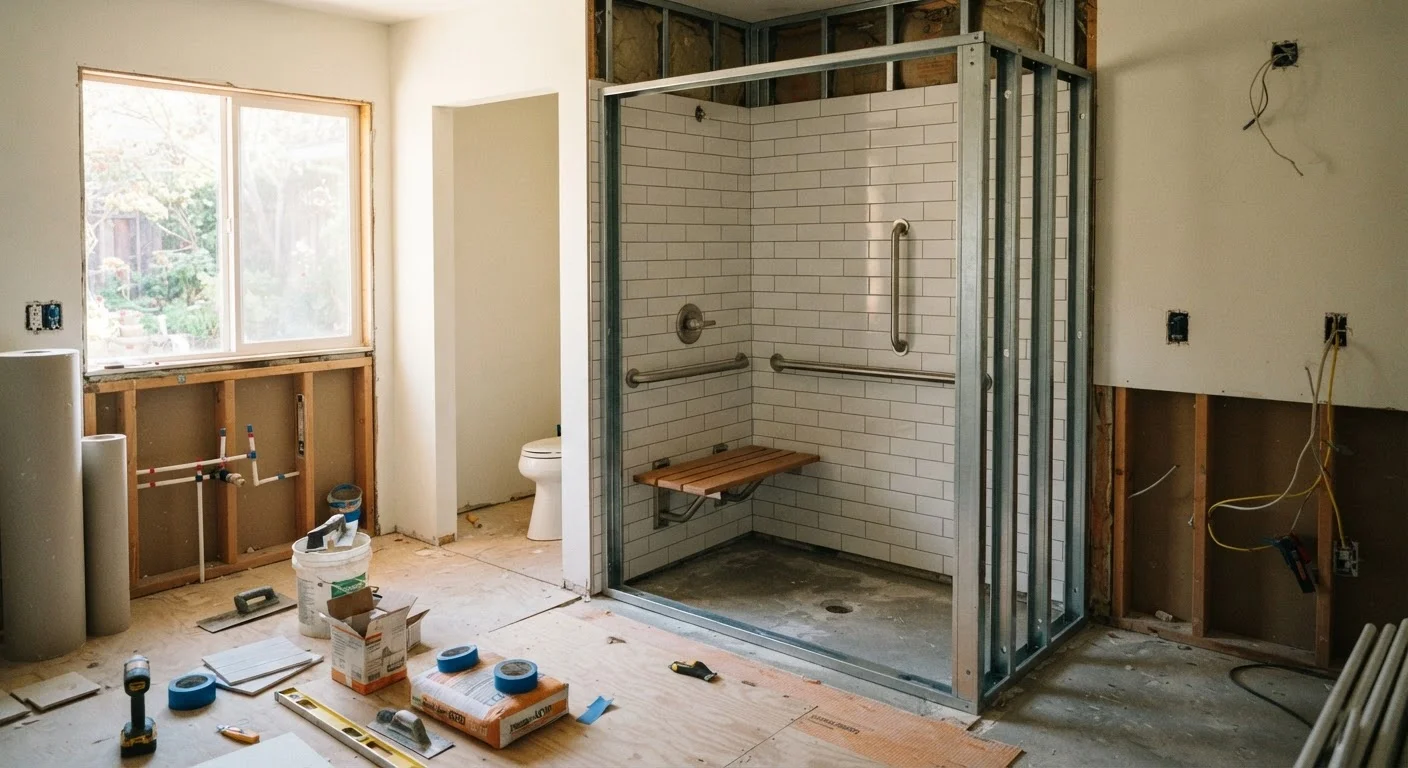
Why it happens: Structural modifications sound minor on paper, but they often involve opening walls, reframing, and restoring finishes — all of which add labor and material costs that aren't part of a fixture-focused quote.
Overlooking plumbing rerouting costs when moving or replacing fixtures.
Why it happens: Moving a shower drain even a short distance, or repositioning a tub for better accessibility, can require significant changes to drain lines and supply pipes — especially in older homes with cast iron or galvanized plumbing.
Skipping waterproofing and ventilation upgrades to save money upfront.
Why it happens: These components aren't visible once the renovation is complete, so it's tempting to treat them as optional. Some lower bids omit them entirely.
Forgetting to budget for blocking — the reinforcement inside walls needed for grab bars.
Why it happens: Grab bars must be anchored to structural blocking inside the wall, not just drywall. This requirement is easy to miss if grab bars are added as an afterthought rather than planned from the start.
How to Protect Your Budget Before Work Begins
The most effective way to avoid budget shock is to ask the right questions before any contracts are signed. Request an itemized estimate that separates labor, materials, permits, and contingency costs. A line-by-line breakdown makes it far easier to spot what's missing.
Beware of Quotes That Seem Unusually Low
A headline price that's significantly below other bids may mean certain costs — permits, structural work, waterproofing — have simply been left out rather than reduced. Always ask what the estimate does and does not include before comparing figures. An incomplete low bid can end up costing more than a comprehensive higher one once the missing items are added back in.
It also helps to understand that accessibility renovations often interact with systems that aren't visible during an initial walkthrough — plumbing behind walls, subfloor condition, and electrical capacity near wet zones. Reputable contractors will flag these risks upfront rather than surface them mid-project. For a deeper look at how bathroom renovation budgets can escalate once work is underway, see why walk-in shower renovations go over budget.
Finally, build a contingency buffer — commonly suggested in the range of 10–20% of the project estimate — to absorb unexpected findings without derailing the renovation. A bathroom that works safely for years to come is worth planning carefully from the very first conversation.
This article is for general informational purposes only. Costs, permit requirements, and code standards vary by location. Always consult a licensed contractor and your local building authority before beginning any renovation work.