

Key Takeaways
Lower upfront cost than full replacement
Adding grab bars, a walk-in shower liner, or a handheld showerhead costs a fraction of a full gut renovation. This makes retrofitting accessible to more homeowners on a fixed budget.
Less disruption to daily life
Most retrofit work can be completed in days rather than weeks. You're less likely to need an alternative bathroom arrangement during the project.
Targets specific safety gaps quickly
If the main concern is fall prevention, strategically placed grab bars and non-slip flooring can address the risk without touching the rest of the room.
Often avoids complex permit requirements
Many cosmetic and fixture-level changes don't trigger the same permitting process as structural work, though this varies by locality and project scope.
Cannot fix fundamental layout problems
A bathroom that's too narrow for a walker or wheelchair will remain so after retrofitting. Structural changes require a fuller renovation.
Piecemeal upgrades may cost more over time
Adding accessibility features in stages can result in repeated contractor visits and cumulative costs that approach or exceed what a planned replacement would have cost.
May not address hidden plumbing or structural issues
Aging pipes, water-damaged subfloors, or mold behind tiles can go undetected in a retrofit and worsen over time, creating larger expenses later.
Limited design and accessibility optimization
Retrofitting works within existing constraints. Features like a curbless shower floor or an optimally positioned drain often require starting from scratch.
Our Verdict
For most homeowners aged 50 and older, retrofitting is the practical first step — it costs less, causes less disruption, and can meaningfully improve safety. However, if your bathroom has a cramped layout, aging plumbing, or structural issues, a full replacement may deliver better long-term value and accessibility. Neither choice is universally right; the best decision depends on your specific home, budget, and mobility goals.
Retrofitting suits homeowners who need targeted safety upgrades in a functional bathroom; a full replacement is worth considering when the existing space cannot adequately support your accessibility needs.
Understanding the Two Paths
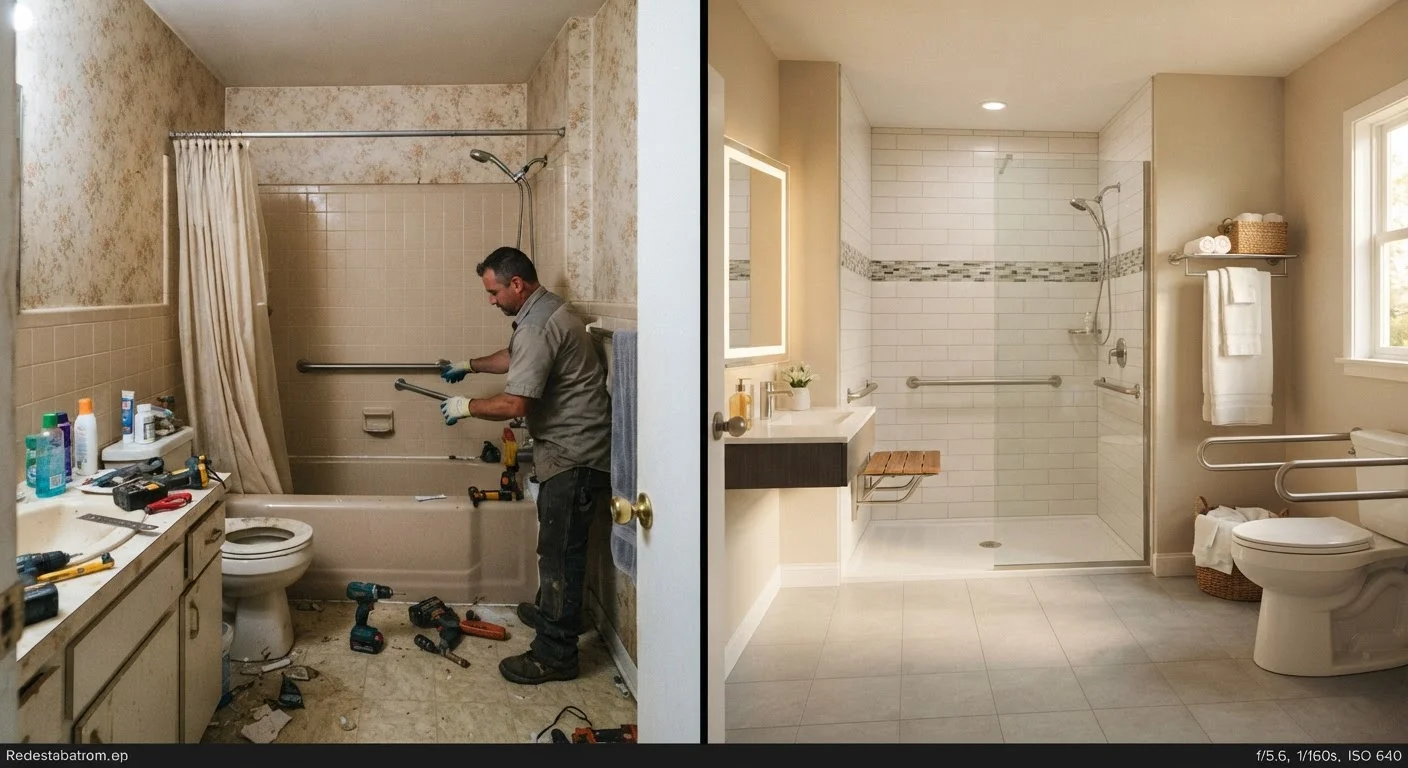
When an aging bathroom no longer feels safe or functional, homeowners generally face two options: adapt what's already there (retrofitting) or tear it out and start over (a full replacement). Both approaches can meaningfully improve accessibility and safety, but they differ substantially in cost, complexity, and disruption.
Retrofitting means adding or swapping specific features — grab bars, a handheld showerhead, a walk-in shower insert, or a raised toilet seat — without reconfiguring the room's fundamental layout. A full replacement involves removing existing fixtures, potentially moving plumbing, altering the floor plan, and rebuilding from the subfloor up.
The right choice depends on factors specific to your home: the current bathroom's size and condition, how much the layout works for your mobility needs, and what you want the space to accomplish long term. Our guide to hidden bathroom accessibility costs outlines expenses that catch many homeowners off guard at the planning stage.
Pros and Cons of Retrofitting Your Existing Bathroom
Retrofitting is the more common starting point for homeowners 50 and older, and for good reason. It targets specific safety gaps without upending the entire space.
Lower upfront cost than full replacement
Adding grab bars, a walk-in shower liner, or a handheld showerhead costs a fraction of a full gut renovation. This makes retrofitting accessible to more homeowners on a fixed budget.
Less disruption to daily life
Most retrofit work can be completed in days rather than weeks. You're less likely to need an alternative bathroom arrangement during the project.
Targets specific safety gaps quickly
If the main concern is fall prevention, strategically placed grab bars and non-slip flooring can address the risk without touching the rest of the room.
Often avoids complex permit requirements
Many cosmetic and fixture-level changes don't trigger the same permitting process as structural work, though this varies by locality and project scope.
That said, retrofitting has real limits. If your bathroom is small, has a high-threshold tub, or has plumbing issues lurking behind the walls, adding grab bars and a shower seat will only go so far.
Cannot fix fundamental layout problems
A bathroom that's too narrow for a walker or wheelchair will remain so after retrofitting. Structural changes require a fuller renovation.
Piecemeal upgrades may cost more over time
Adding accessibility features in stages can result in repeated contractor visits and cumulative costs that approach or exceed what a planned replacement would have cost.
May not address hidden plumbing or structural issues
Aging pipes, water-damaged subfloors, or mold behind tiles can go undetected in a retrofit and worsen over time, creating larger expenses later.
Limited design and accessibility optimization
Retrofitting works within existing constraints. Features like a curbless shower floor or an optimally positioned drain often require starting from scratch.
For a deeper look at which accessible fixture might suit your space, see our comparison of walk-in tubs and walk-in showers.
When a Full Replacement Makes More Sense
A full bathroom replacement is a bigger undertaking — in cost, timeline, and disruption — but it's sometimes the more practical long-term investment. Consider it if any of the following apply:
- The existing layout is too narrow or awkwardly arranged to accommodate a wheelchair, walker, or safe turning radius.
- Plumbing is outdated or poorly positioned, making fixture upgrades difficult without major work anyway.
- The subfloor or walls show signs of water damage that would need addressing regardless of approach.
- You want a curbless (zero-threshold) shower or a walk-in tub that requires repositioning the drain.
In these situations, incremental fixes can end up costing more over time than a single well-planned renovation. A licensed contractor can evaluate whether your current bathroom's bones support the changes you need, or whether starting fresh is the sounder choice. If your home is older, read about walk-in shower limitations in older homes before committing to either path.
Permits and Inspections May Apply
Plumbing relocations, structural modifications, and certain electrical changes typically require a permit and inspection, even within a bathroom renovation. Requirements vary by municipality and project scope. Ask your contractor which elements of the planned work require permits in your area, and be cautious of any professional who suggests skipping this step. Unpermitted work can create problems when you sell your home or file an insurance claim.
Key Questions to Ask Before You Decide
Before speaking to a contractor, it helps to work through a few practical questions:
- What are your specific mobility needs today — and in five to ten years? Planning for future needs often justifies a more comprehensive renovation now.
- Is your current bathroom layout fundamentally workable? If a standard 5×7-foot bathroom already struggles to accommodate a walker, retrofitting may not solve the problem.
- What is your realistic budget? Retrofitting typically runs from a few hundred to several thousand dollars depending on scope; a full replacement can range from roughly $10,000 to $25,000 or more depending on your region, materials, and whether plumbing needs to move.
- How long do you plan to stay in the home? A full replacement investment makes more sense if you intend to remain for many years.
For a side-by-side breakdown of specific accessible fixtures, our article on walk-in showers vs. walk-in tubs covers space requirements and daily practicality in detail. You can also explore the full walk-in shower guide or the walk-in tub guide for installation considerations.
This article is for general informational purposes only. Renovation costs, permit requirements, and structural considerations vary by location and home condition. Always consult a licensed contractor and verify local building codes before beginning any bathroom project.