

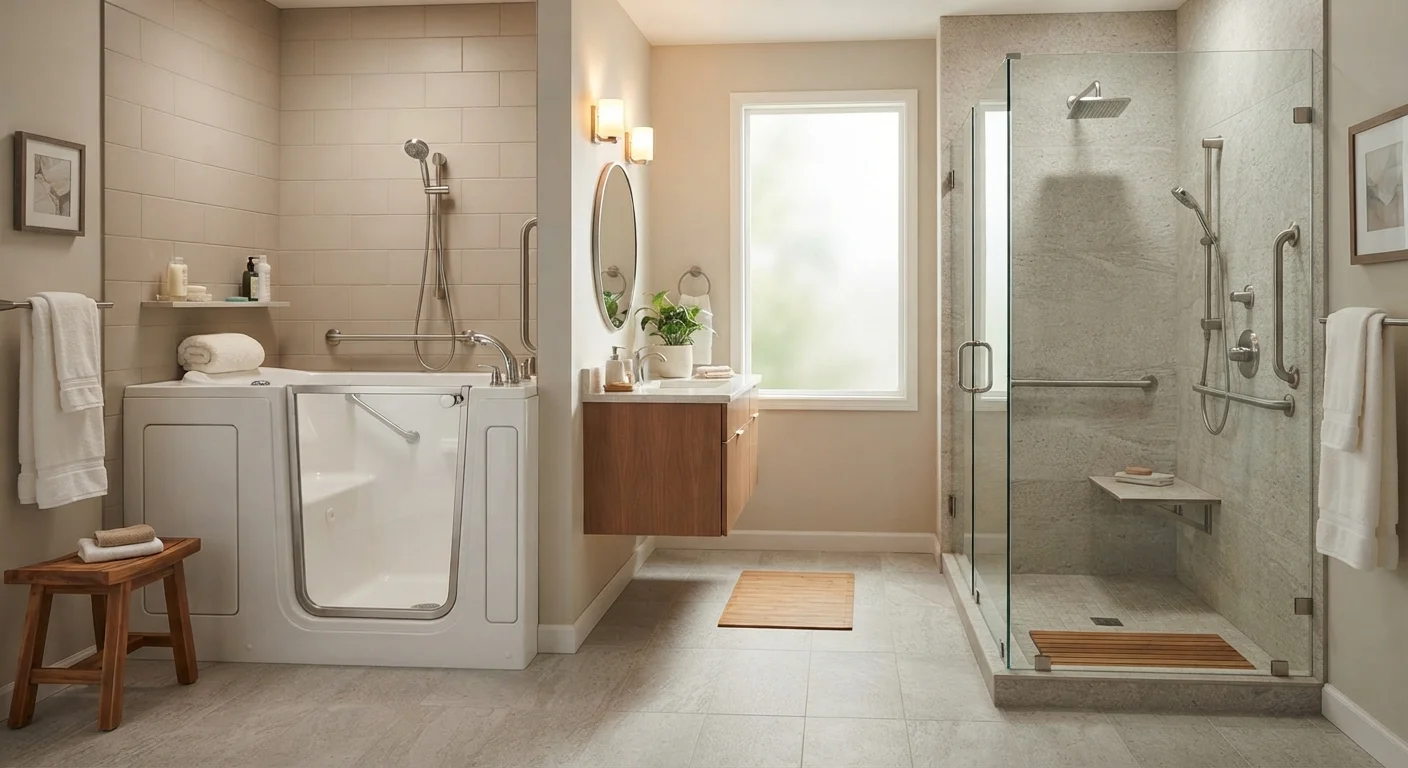
Key Takeaways
Option A
Walk-In Tub
The therapeutic, seated bathing solution.
Best for: Homeowners who want a full soak, hydrotherapy features, or require a low-threshold entry while remaining seated throughout bathing.
Option B
Walk-In Shower
The streamlined, quick-access daily option.
Best for: Homeowners seeking fast, low-effort bathing with minimal wait time and maximum ease of entry and exit.
If you value therapeutic soaking for joint pain or circulation
Walk-In Tub
Walk-in tubs, especially jetted or air bath models, are specifically designed to deliver hydrotherapy benefits that a shower cannot replicate.
If quick, daily bathing with minimal effort is your priority
Walk-In Shower
With no fill or drain wait and immediate access, a walk-in shower fits naturally into a fast-paced morning routine and suits those with limited standing endurance when paired with a seat.
If you have very limited mobility or use a wheelchair
Walk-In Shower
A curbless or low-threshold walk-in shower is generally easier to navigate with mobility aids, while the door-seal mechanism of a walk-in tub can present a challenge.
If you live alone and want added safety while bathing
Walk-In Tub
Built-in grab bars, anti-slip floors, and a watertight door mean the tub is designed with solo bathing safety in mind, though you should always inform someone when bathing alone.
If your bathroom is compact or older construction
Walk-In Shower
Walk-in showers can be configured in tighter spaces and typically involve less structural modification than a full walk-in tub installation.
How Each Option Actually Works
Understanding the day-to-day mechanics of each fixture is the most important starting point. A walk-in tub has a watertight door built into its side wall. You step in, close and seal the door, then fill the tub — and critically, you must wait inside while the water drains before you can open the door and exit. This is a key practical reality that surprises many first-time buyers.
A walk-in shower eliminates that wait entirely. You step in, bathe, and step out on your own schedule. When paired with a fold-down seat, handheld showerhead, and well-placed grab bars, a walk-in shower can meet the needs of many older adults safely and comfortably. For a closer look at how walk-in tubs are built and who they're designed to serve, see our walk-in tubs explained guide.
Both fixtures can include anti-slip flooring, grab bars, and barrier-free entry — but they approach bathing in fundamentally different ways. The fill-and-drain sequence of a walk-in tub isn't a flaw; it's a design trade-off that suits some users well and frustrates others. Knowing which camp you fall into is essential before making a decision.
| Criterion | Walk-In Tub | Walk-In Shower |
|---|---|---|
| Entry method | Door in tub side wall; must seal before filling | Open entry; step in and out freely |
| Bathing position | Seated, fully immersed | Standing or seated on fold-down bench |
| Time per session | Longer — fill and drain time adds 15–30+ min | Faster — no fill or drain wait |
| Therapeutic features | Jets, air bath, or soaker options available | Limited; handheld heads available |
| Typical installation cost | Generally higher | Generally lower |
| Space requirements | Larger footprint; heavier unit | Flexible; can fit existing tub space |
| Best mobility fit | Those who can step in and sit comfortably | Wider range including wheelchair users |
| Permit requirements | Typically required (plumbing, sometimes electrical) | Typically required (plumbing, waterproofing) |
Safety Features: What Each Offers
Both options are designed with safety as a priority, but their protective features work differently. Walk-in tubs typically include a low-threshold door sill (often just a few inches), a built-in seat, anti-slip flooring, and grab bars positioned for entry and seated bathing. Many models also include a fast-fill faucet to reduce time spent waiting in the tub. You can explore how different tub door configurations affect safety in our article on inward- vs. outward-opening tub doors.
Walk-in showers address safety through barrier removal and strategic fixture placement. A curbless or low-curb entry eliminates the step that causes most bathroom falls. Combined with a fold-down bench, a handheld showerhead on an adjustable slide bar, and properly anchored grab bars, a walk-in shower can be highly accessible. Flooring material matters enormously in both options — our guide on choosing the right bathroom flooring explains which materials genuinely reduce slip risk.
Neither option is universally safer — safety comes from how well the fixture matches your specific mobility, balance, and strength.
Cost, Space, and Installation Realities
Walk-in tubs generally cost more to purchase and install than walk-in showers. The units themselves are larger and heavier, and installation often involves plumbing modifications, reinforced flooring, and in some cases electrical work for jet or air bath systems. Older homes may require additional structural updates. For a broader look at what the installation process involves, our walk-in tubs and aging in place overview covers the key steps.
Walk-in showers typically demand less floor area and can sometimes be installed within an existing tub footprint. However, curbless designs require careful waterproofing and proper drainage slope — work that should be done by a licensed contractor. If your home is older or has a compact bathroom, our article on walk-in shower limitations in older homes outlines the structural challenges to anticipate.
Permits Are Typically Required for Both
In most U.S. states, installing either a walk-in tub or a walk-in shower involves plumbing work that requires a permit and inspection. Walk-in tubs with jet or air bath systems may also require electrical permits. Always verify local requirements with your contractor or municipal building department before work begins. Unpermitted work can create problems when you sell your home or file an insurance claim.
Always obtain written quotes from at least two or three licensed contractors before committing to either project. Ask specifically about permit requirements, since both fixture types typically require plumbing permits and inspections in most U.S. jurisdictions.
Making the Right Choice for Your Situation
There is no single correct answer — the right fixture is the one that fits your body, routine, and home. If soaking relieves chronic joint discomfort and you have the patience for the fill-and-drain process, a walk-in tub may provide real daily value. If you want quick, independent bathing with minimal barriers, a walk-in shower is likely the more practical long-term choice.
Consider these questions before deciding: Do you currently struggle to stand in the shower for more than a few minutes? Do you benefit from warm water immersion for pain or circulation? How is your balance when stepping over even a low threshold? Can someone assist you, or do you bathe alone? Your honest answers will point toward one option more clearly than any feature comparison.
You might also find it helpful to read our side-by-side mobility comparison and our guide on whether to adapt or replace your existing bathroom. Both can help sharpen your thinking before you speak with a contractor.
This article is for general informational purposes only. It does not constitute medical or professional installation advice. Consult a licensed contractor and, where relevant, an occupational therapist before making any accessible bathroom modifications.