

Key Takeaways
Walk-In Tub
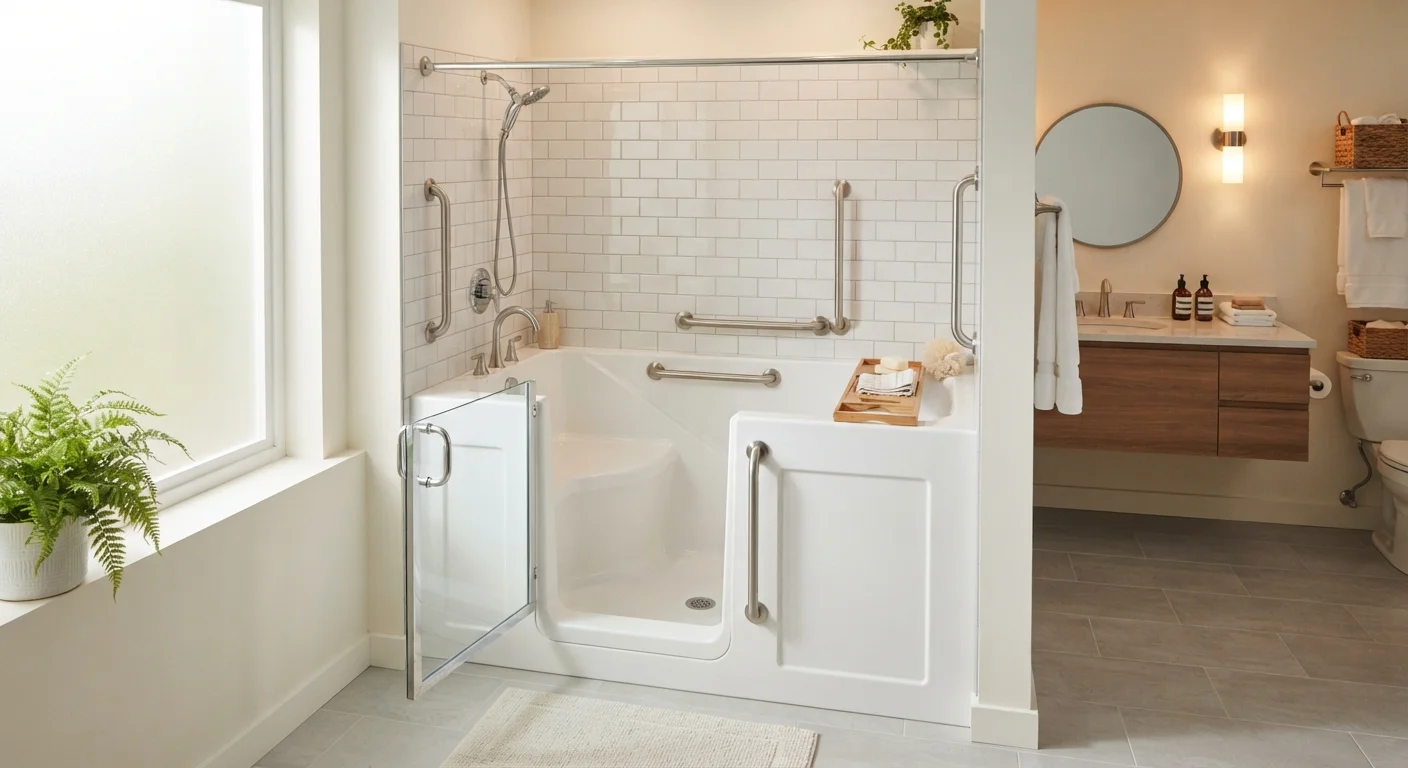
A walk-in tub is a bathtub fitted with a watertight door built into its side, allowing a bather to step directly into the tub without climbing over a high edge. Once inside, the door seals shut and the tub fills with water. Walk-in tubs are specifically engineered with older adults and people with limited mobility in mind, incorporating safety features such as built-in grab bars, anti-slip flooring, and low step-in thresholds.
Most walk-in tubs are certified to meet ANSI (American National Standards Institute) standards for accessibility bathing products, which specify door seal integrity, threshold height, and slip resistance requirements.
What Sets a Walk-In Tub Apart From a Standard Bathtub
A conventional bathtub requires stepping over a side wall that typically stands 15 to 18 inches above the floor. For many older adults, that single step carries real risk — particularly for anyone managing arthritis, reduced balance, or joint pain. Walk-in tubs address this directly.
The defining feature is a built-in door set into the tub wall, usually on the short end or long side. This door swings inward, seals watertight, and allows a bather to simply walk in — rather than climb over. Once seated, the door is latched and the tub fills. After bathing, the water is drained fully before the door is opened to exit.
Beyond the door, walk-in tubs are structurally different from standard tubs in several ways:
- Built-in seat: A contoured bench seat is molded into the tub, so bathing is done in a seated position throughout.
- Grab bars: Strategically placed bars provide support while entering, bathing, and exiting.
- Non-slip surfaces: Textured flooring reduces the risk of slipping on wet surfaces.
- Low threshold: Step-in height is typically under 3 inches, compared to the 15+ inches of a standard tub.
These features work together as a system rather than individual add-ons — which is why a walk-in tub is considered a distinct product category, not simply a modified conventional tub. For a side-by-side look at how walk-in tubs compare with another accessible option, see Walk-In Shower vs. Walk-In Tub.
Who Walk-In Tubs Are Designed For
Walk-in tubs were developed with a specific user in mind: adults who want to bathe safely and independently as their mobility changes with age. However, the range of people who benefit is broader than many assume.
Plan Ahead, Not After a Fall
Many homeowners wait until a bathroom fall or mobility crisis occurs before considering a walk-in tub. Planning the upgrade proactively — while you're comfortable and have time to research — allows for better decision-making, more contractor options, and less pressure to install quickly under difficult circumstances.
Older adults aging in place are the primary audience. Many homeowners in their 60s, 70s, and beyond choose a walk-in tub not because they currently struggle to bathe, but as a forward-looking decision — ensuring their bathroom remains safe and usable as physical changes occur gradually over time.
Others who commonly benefit include:
- People with arthritis who find bending, gripping, or climbing painful
- Those with balance disorders or a history of falls
- Individuals recovering from joint replacement surgery, such as hip or knee procedures
- People with chronic pain conditions who use warm-water soaking as part of symptom management
It's worth noting that walk-in tubs are not exclusively a medical product. Many homeowners simply prefer the seated bathing experience and added safety margin — especially when a bathroom renovation is already planned. To understand the broader context of accessible bathroom planning, the Accessible Bathrooms hub provides a useful overview.
Types of Walk-In Tubs and What They Offer
Not every walk-in tub delivers the same bathing experience. The core safety features remain consistent across models, but the hydrotherapy options vary significantly. Understanding these differences helps you have a more informed conversation with a contractor or installer.
The three main categories are:
- Soaker tubs
- Fill with heated water and allow for a quiet, traditional soak. These are the simplest option and tend to have fewer mechanical components.
- Jetted (whirlpool) tubs
- Use water jets to circulate water around the body. Often chosen by people who want targeted pressure relief for sore muscles or joints.
- Air bath tubs
- Emit warm air bubbles through small holes in the tub floor and walls, creating a gentler, more enveloping sensation. Considered a softer alternative to water jets.
Some models combine air and water jets. Each type has different electrical and plumbing requirements, so confirming compatibility with your existing bathroom infrastructure is an important step before purchase. For a more detailed breakdown, see Soaker, Jetted, and Air Bath Walk-In Tubs: Understanding Your Options.
What to Consider Before Installation
A walk-in tub installation is more involved than swapping out a standard tub. Several practical factors should be assessed before committing to a purchase.
Bathroom size and layout: Walk-in tubs are generally longer and deeper than standard tubs. Your existing space may need modification to accommodate the unit, especially if doorway widths or surrounding fixtures are involved.
Plumbing and electrical requirements: Jetted and air bath models typically require a dedicated electrical circuit. Drain placement and water supply connections must align with the specific tub model. Always engage a licensed plumber and electrician for this assessment.
Permits and codes: Bathroom renovations often require local building permits, particularly when plumbing or electrical work is involved. Check with your local building authority or ask your contractor to confirm what approvals are needed in your area.
Hot water capacity: Walk-in tubs hold more water than standard tubs — often 40 to 80 gallons. Your water heater may need upgrading to ensure the tub fills with adequately warm water. A contractor can evaluate this during an in-home assessment.
For a comprehensive look at the full installation process and cost considerations, Walk-In Tubs From Start to Finish covers the entire journey from planning to completion.
This article is for informational purposes only. Always consult licensed professionals for plumbing, electrical, and structural work, and verify local permit requirements before beginning any renovation.