

Key Takeaways
Our Verdict
Soaker, jetted, and air bath walk-in tubs each serve a distinct purpose. Soakers suit those wanting simplicity and low upkeep; jetted tubs benefit those seeking targeted hydrotherapy; and air baths offer a gentler, skin-friendly experience. No single type is universally superior — the right choice depends on your health considerations, bathroom layout, and long-term comfort goals.
| Best for | Recommended |
|---|---|
| Those seeking a low-maintenance, straightforward bathing experience | Soaker walk-in tub |
| Homeowners who want targeted massage for sore joints or muscles | Jetted walk-in tub |
| Those with sensitive skin or who prefer gentle, even warmth | Air bath walk-in tub |
| Homeowners wanting both water and air therapy in one unit | Combination jetted and air bath tub |
Why the Type of Walk-In Tub You Choose Matters
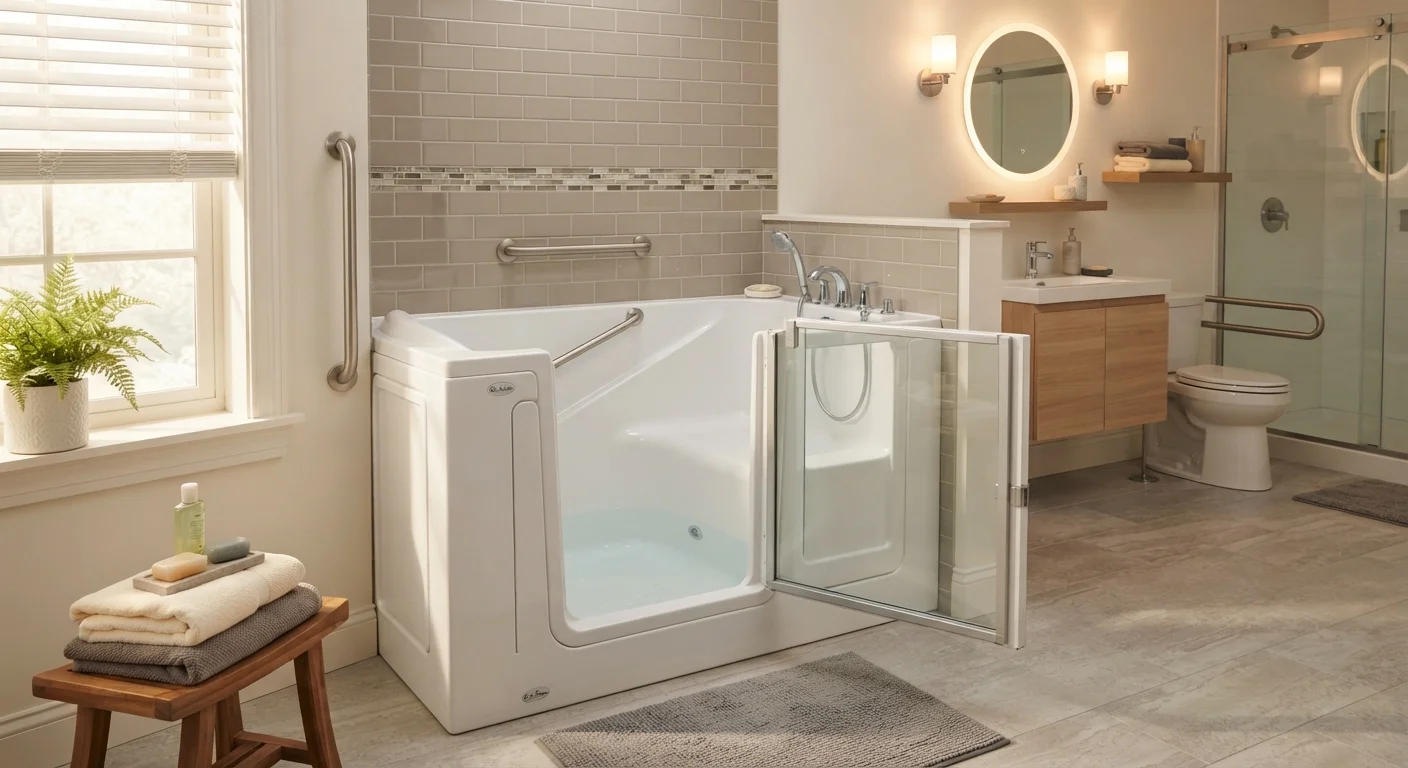
Not all walk-in tubs function the same way. While they all share core safety features — a low step-in threshold, a watertight door, and a built-in seat — the bathing experience they deliver varies considerably depending on the internal system they use. For homeowners exploring accessible bathroom upgrades, understanding these differences upfront can prevent a costly mismatch between expectations and reality.
If you're new to walk-in tubs altogether, our introduction to walk-in tubs explains the core features and who these units are designed for. This article focuses specifically on the three main tub types: soaker, jetted, and air bath.
Soaker Walk-In Tubs: Simple and Straightforward
A soaker tub is the most basic walk-in tub style. It fills with hot water — and that's it. There are no jets, no pumps, and no motors. The therapeutic benefit comes entirely from the warmth and buoyancy of the water itself, which can help relax muscles and ease joint stiffness.
Because soaker tubs have fewer mechanical components, they tend to cost less upfront and require minimal maintenance over time. They're also quieter than jetted or air bath models, which some users find more relaxing. Cleaning is straightforward since there are no internal pipes or jet ports where residue can build up.
The main limitation is that soaker tubs offer less targeted therapeutic benefit than other types. If you're specifically seeking hydrotherapy — water-based treatment intended to relieve pain or improve circulation — a soaker tub may feel underwhelming. That said, for many homeowners, the combination of safety features and warm immersion is exactly what they need.
Ask About a Drain and Fill System
One practical consideration for any walk-in tub type is the wait time involved — you must enter, close the door, then fill the tub, and drain it before exiting. Look for models with fast-fill faucets and quick-drain systems to minimize the time spent sitting and waiting. A licensed contractor can help you assess which configurations are compatible with your existing plumbing.
Jetted Walk-In Tubs: Targeted Hydrotherapy
Jetted walk-in tubs use a pump to circulate water through a series of nozzles positioned along the tub walls. The pressurized water streams can be directed at the back, hips, legs, or feet — areas commonly affected by arthritis, poor circulation, or chronic pain.
Many jetted models allow users to adjust the pressure and direction of individual jets, giving a customizable experience. This can be particularly beneficial for those managing specific musculoskeletal conditions, though it's always worth discussing hydrotherapy with a healthcare provider before relying on it therapeutically.
The trade-offs are worth knowing. Jetted tubs have motors, pumps, and internal tubing that require periodic cleaning to prevent mold or bacterial growth inside the jet lines. They also typically require dedicated electrical circuits — something a licensed electrician must install. Installation costs and ongoing maintenance needs are higher than with soaker models.
| Soaker | Jetted | Air Bath | |
|---|---|---|---|
| Therapeutic mechanism | Hot water immersion | Pressurized water jets | Warm air bubbles |
| Targeted relief | General relaxation | Specific muscle/joint areas | Full-body gentle sensation |
| Typical cost range | Lower | Moderate to high | Moderate to high |
| Maintenance complexity | Low | Higher (jet line cleaning) | Moderate (air line drying) |
| Electrical requirements | Minimal | Dedicated circuit needed | Dedicated circuit often needed |
| Good for sensitive skin | Generally yes | Varies by user | Often recommended |
| Noise level | Very quiet | Moderate (pump motor) | Moderate (air pump) |
Air Bath Walk-In Tubs: Gentle and Skin-Friendly
Instead of circulating water, air bath tubs pump warm air through dozens of small holes — called air jets — along the floor and sides of the tub. The result is a soft, effervescent sensation that envelops the entire body rather than targeting specific areas.
Air baths are often recommended for people with sensitive skin conditions, as the experience is gentler than water jets and doesn't require bath salts or oils that could irritate skin. Because only air flows through the internal lines, cleaning is generally easier than with water-jet systems.
One drawback: air injection can cool the water more quickly than a soaker or jetted tub, since air is introduced continuously. Many air bath models include an in-line water heater to compensate, but this adds to the unit's cost and electrical requirements. As with jetted tubs, installation should be handled by a licensed professional familiar with both plumbing and electrical work.
For a broader look at how walk-in tubs compare to other accessible bathroom options, see our guide to walk-in tubs versus walk-in showers.
Choosing the Right Type for Your Situation
Before settling on a tub type, consider these key factors:
- Health needs: Speak with your physician or physical therapist about whether hydrotherapy jets are appropriate for your conditions. Some circulatory or skin conditions may make certain tub types unsuitable.
- Bathroom space: All walk-in tubs require sufficient floor area and appropriate plumbing access. A contractor can assess what your bathroom can accommodate.
- Budget: Soaker tubs generally carry the lowest purchase and installation cost. Jetted and air bath models involve more complex installation and may require electrical upgrades.
- Maintenance willingness: Jets and air systems need regular cleaning. If simplified upkeep matters to you, a soaker tub may be the better fit.
You may also want to consider door configuration alongside tub type — our article on inward- versus outward-opening tub doors covers how that choice affects safety and usability. This article is part of our complete walk-in tub resource for homeowners, where you'll find guidance on costs, installation, and contractor selection.