

Key Takeaways
Option A
Inward-Opening Walk-In Tub Door
The traditional design found in most standard walk-in tub models.
Best for: Bathrooms where exterior door clearance is limited and water containment is a top priority.
Option B
Outward-Opening Walk-In Tub Door
The newer, accessibility-focused alternative gaining favor among aging-in-place specialists.
Best for: Homeowners who prioritize ease of exit and faster emergency access over compact design.
If your bathroom has limited floor space outside the tub
Inward-Opening Walk-In Tub Door
An inward-opening door requires no swing clearance on the bathroom floor, making it more practical in compact spaces.
If you or a caregiver need fast, unobstructed tub access in an emergency
Outward-Opening Walk-In Tub Door
An outward-opening door allows someone to assist you from outside the tub without the door being blocked by your body or water pressure.
If prolonged sitting while the tub drains is a physical concern
Outward-Opening Walk-In Tub Door
You can exit immediately after bathing without waiting for water to fully drain, reducing fatigue and discomfort.
If water-tight sealing and leak prevention are your primary concerns
Inward-Opening Walk-In Tub Door
Water pressure inside the tub naturally pushes the door against its seal, creating a more reliable watertight barrier.
Why Door Direction Matters More Than You Might Think
When homeowners research walk-in tubs, they often focus on features like jets, heated seats, or grab bar placement. The direction the door opens rarely makes the shortlist — yet it affects nearly every bathing experience. Before exploring specific models, it helps to understand what a walk-in tub door actually does and why the swing direction carries real consequences for safety and daily usability.
Walk-in tub doors are built into the side of the tub wall, allowing entry without stepping over a high threshold. Once inside, you close and latch the door before filling the tub with water. This sequence is identical for both inward- and outward-opening styles. Where the designs diverge is in how they handle exit — and what happens if something goes wrong mid-bath.
If you're still deciding whether a walk-in tub is right for you at all, the Walk-In Tubs Explained guide is a useful starting point before comparing door styles.
How Each Door Type Works
Inward-opening doors swing into the tub basin when you enter. Once latched, water pressure from inside the tub reinforces the seal, pressing the door firmly against the frame. This natural pressurization is why inward doors have historically been the more common design — they're mechanically straightforward and rarely leak when properly installed. The trade-off is that you must remain seated inside the tub until the water drains completely before opening the door. Attempting to open an inward door against standing water risks spillage onto the bathroom floor.
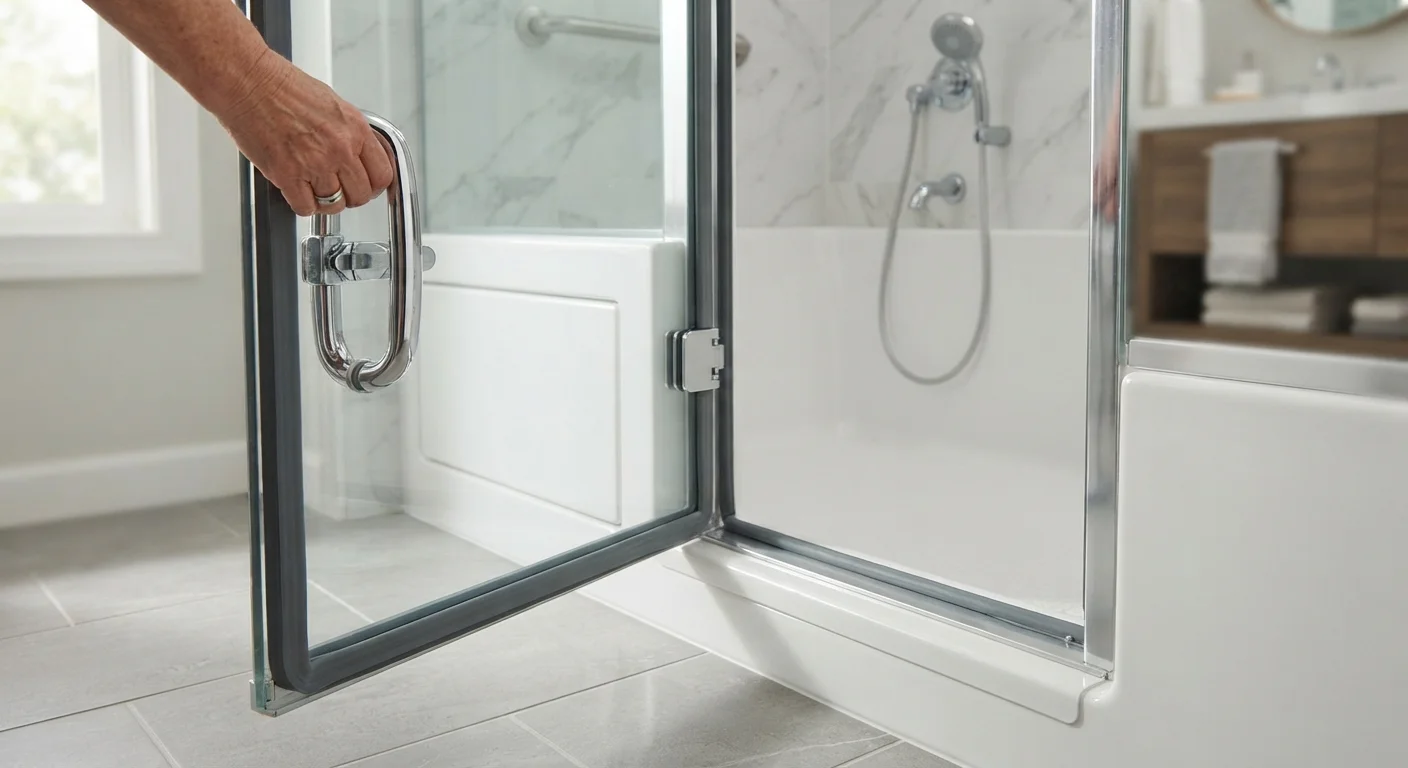
Outward-opening doors swing away from the tub basin toward the bathroom floor. Because they open outward, you can exit immediately after bathing without waiting for the tub to drain fully — the door simply swings clear of the water. This design is increasingly favored by aging-in-place specialists because it allows faster exit and makes it easier for a caregiver standing outside the tub to assist. The limitation is physical clearance: the door needs unobstructed space to swing open, which may not be available in all bathrooms.
| Criterion | Inward-Opening Door | Outward-Opening Door |
|---|---|---|
| Water seal reliability | Reinforced by water pressure | Depends on gasket quality |
| Exit timing | Must wait for full drain | Can exit before full drain |
| Emergency caregiver access | More restricted from outside | Easier access from outside |
| Floor clearance required | None outside the tub | Swing space needed on floor |
| Availability | More common in standard models | Growing but less widespread |
| Leak risk if door fails | Lower due to pressure seal | Higher without quality gasket |
| Best bathroom size | Compact or standard bathrooms | Larger bathrooms with clear space |
Safety Considerations for Each Design
Both door types can be safe when correctly specified and installed. The key is matching the design to the user's mobility, bathroom layout, and caregiver situation.
With an inward-opening door, the primary safety concern is the wait time. Sitting in a cooling, draining tub for several minutes is uncomfortable and, for some users with circulatory conditions or joint pain, it may be physically taxing. Ensure any model you consider has a fast drain to minimize this period. Grab bars positioned near the door latch are also important for stable entry and exit.
Outward-opening doors address the drain-wait problem but introduce a different concern: the door's outward swing must not be blocked by a toilet, vanity, or wall. A contractor measuring your bathroom before installation can confirm adequate clearance. Additionally, because water pressure does not reinforce an outward-opening seal in the same way, quality of the door gasket (the rubber seal around the door edge) becomes especially important to prevent leaks.
Regardless of door direction, look for tubs with low step-in thresholds, textured non-slip flooring inside the basin, and sturdy grab bars on at least two sides. These features matter more to everyday safety than door swing alone. For a broader look at accessible bathroom planning, the Accessible Bathrooms hub covers grab bars, flooring, and layout in greater depth.
Choosing Based on Your Space and Lifestyle
There is no universally superior door style — the right choice depends on your specific circumstances.
Consider an inward-opening door if: your bathroom has limited clearance around the tub, you bathe independently without caregiver assistance, and you can comfortably sit for a few minutes while the tub drains.
Consider an outward-opening door if: a caregiver or family member assists you during bathing, you want faster exit for comfort or safety, or you have sufficient floor space outside the tub for the door to swing freely.
It's also worth asking any contractor you consult about door width. Standard walk-in tub doors vary, and a wider door opening can make entry easier for users with hip replacements, walkers, or significant mobility limitations. This detail is often overlooked during the planning stage.
If you're also weighing whether a walk-in tub is the right choice versus a roll-in or barrier-free shower, the Walk-In Shower or Walk-In Tub guide compares both options by mobility need. And once you've settled on a walk-in tub, understanding soaker, jetted, and air bath styles can help you narrow down the right model type.
Installation Requires Professional Assessment
Walk-in tub installation typically involves plumbing connections and may require a building permit depending on your local jurisdiction. Always verify permit requirements with your local authority before work begins. A licensed plumber or bathroom remodeling contractor can confirm whether your existing plumbing and floor structure are compatible with the tub you're considering.
This article is for informational purposes only. Consult a licensed contractor to evaluate your bathroom's specific layout, local building codes, and accessibility requirements before purchasing or installing a walk-in tub.