

Key Takeaways
Option A
Walk-In Shower
The streamlined, everyday-accessible choice.
Best for: Homeowners who prioritize quick, low-effort bathing and minimal mobility barriers.
Option B
Walk-In Tub
The therapeutic, full-immersion bathing solution.
Best for: Homeowners who want to continue soaking baths safely while managing joint pain or circulation concerns.
If you want the quickest, easiest bathing routine with minimal fall risk
Walk-In Shower
Curbless or low-threshold shower entries eliminate stepping over barriers entirely, and there is no waiting time inside the unit while it fills or drains.
If you have joint pain, arthritis, or muscle stiffness and value hydrotherapy
Walk-In Tub
Soaking in warm water and optional jetted features can provide meaningful comfort for those managing chronic pain conditions.
If bathroom space is limited or you are working with an older home's existing footprint
Walk-In Shower
Walk-in showers can often fit within a smaller footprint and may require less structural modification than a full tub replacement.
If you anticipate needing caregiver assistance during bathing
Walk-In Shower
Open shower designs give caregivers easier access to assist safely, without the physical constraints of a tub enclosure.
If you live alone and strongly prefer full-immersion bathing
Walk-In Tub
Walk-in tubs are specifically engineered for solo use with safety features — though the fill-and-drain wait time is an important factor to plan around.
How Each Option Works — and Why It Matters for Mobility
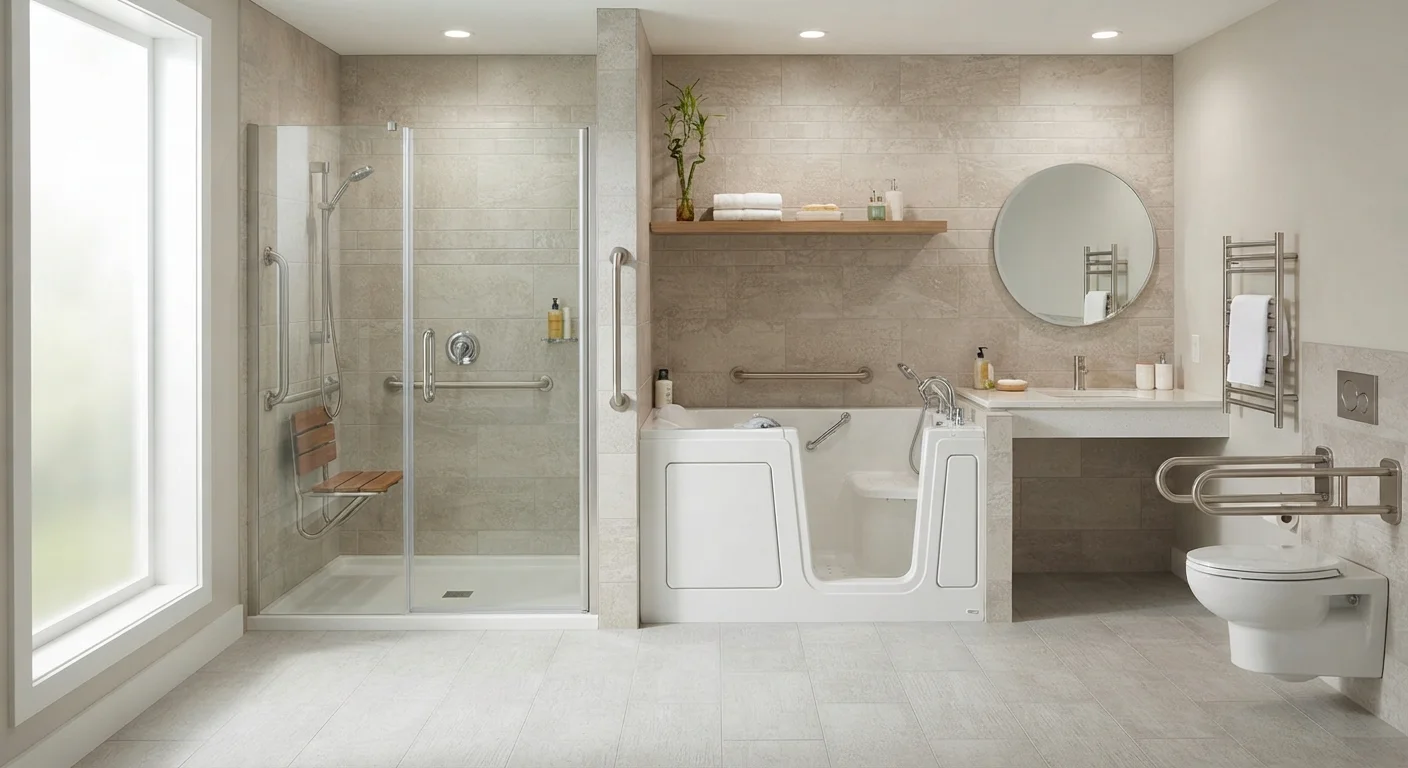
Understanding the core mechanics of each fixture helps clarify which one fits your lifestyle. A walk-in shower — whether curbless, low-threshold, or barrier-free — allows you to step directly into the bathing area without climbing over a tub wall. Many designs include a built-in bench, grab bars, and a handheld showerhead. You can learn more about entry style differences in our guide to walk-in shower entry styles.
A walk-in tub, by contrast, has a watertight door built into the side of the tub. You enter the tub before it fills, then wait inside while it drains before exiting. This design eliminates the need to step over a traditional tub wall — but it does mean spending time seated inside a wet enclosure after bathing. For a thorough introduction to how walk-in tubs function, see Walk-In Tubs Explained.
Neither option is universally superior. The right choice depends on your daily routine, mobility level, and how your bathroom is currently configured.
| Criterion | Walk-In Shower | Walk-In Tub |
|---|---|---|
| Entry barrier | None to minimal (curbless or low-threshold) | Low door threshold (typically 2–4 inches) |
| Time to complete bathing | Short — enter, bathe, exit quickly | Longer — must wait for fill and drain cycles |
| Seated bathing option | Yes, via fold-down bench or built-in seat | Yes, built-in contoured seat inside tub |
| Therapeutic features | Limited (handheld spray, steam options) | Available (jets, air bath, soaking options) |
| Caregiver accessibility | High — open design allows easy assistance | Moderate — enclosed design limits access |
| Typical space requirement | Flexible — can fit smaller bathrooms | Similar to standard tub footprint |
| Best suited for | Daily independent use, limited mobility | Soaking, joint relief, those who can sit and wait |
Safety Features: What Each Option Offers
Both walk-in showers and walk-in tubs are designed with safety as a priority, but they address different risks in different ways.
Walk-in showers typically include: non-slip floor surfaces, grab bars at entry and along walls, fold-down or built-in seating, and thermostatic valves (which maintain a set water temperature to prevent scalding). Our article on safety features worth asking your contractor about covers what to discuss before installation begins.
Walk-in tubs commonly feature low door thresholds (typically 2–4 inches high), anti-scald valves, contoured seating with armrests, grab bars inside the tub, and quick-drain systems designed to minimize the time you wait inside. For a detailed breakdown, see the safety features built into walk-in tubs.
One often-overlooked safety consideration applies to both: the flooring immediately outside the fixture. Wet feet on a slippery floor remain a hazard regardless of which bathing option you choose. Choosing the right bathroom flooring is a decision worth making alongside your fixture upgrade.
Practical Considerations Before You Decide
Beyond safety features, several practical factors should shape your decision:
- Time per bathing session: Walk-in showers are faster — you enter, bathe, and exit within minutes. Walk-in tubs require filling time (typically 5–10 minutes) and draining time before you can safely open the door.
- Space requirements: Walk-in showers can be configured in smaller bathrooms. Walk-in tubs generally require a footprint similar to a standard bathtub, plus additional clearance for the door swing. Door direction matters too — see our comparison of inward-opening vs. outward-opening walk-in tub doors.
- Future needs: Consider where your mobility may be in five to ten years. A curbless shower that works well today will likely remain accessible as needs change. Walk-in tubs require the ability to sit, rise from a seated position, and wait comfortably during draining.
- Installation complexity: Both options typically require professional plumbing and may require permits depending on your municipality. Older homes can present additional structural or plumbing challenges — our article on walk-in showers in older homes addresses this directly.
If you are exploring the walk-in tub option further, Walk-In Tubs and Aging in Place is a useful starting point for first-time buyers. For a broader look at both options together, choosing the right accessible bathroom upgrade offers additional perspective.
This article is for general informational purposes only. Always consult a licensed contractor and verify local permit requirements before beginning any bathroom renovation project.