

Key Takeaways
Why Bathroom Flooring Is a Safety Decision First
Bathrooms are consistently among the most hazardous rooms in any home. Wet surfaces, limited space, and reduced mobility create conditions where a single misstep can lead to a serious fall. For homeowners over 50, falls in the bathroom are not just a minor inconvenience — they can mean significant injury and lengthy recovery.
What many people don't realize is that flooring choice has a direct, measurable impact on slip risk. The material, finish, tile size, and even grout layout all affect how much traction a surface provides when it's wet. Choosing flooring based on appearance alone — without considering slip resistance — is one of the most common and costly oversights in bathroom renovations.
Understanding what makes a bathroom floor safe means asking different questions when you're planning a renovation: not just "does it look nice?" but "how does this perform when wet?" Good lighting and contrast also work alongside flooring to reduce fall risk — see our article on lighting and visibility in bathroom safety for the full picture.
Best Practices for Choosing Safer Bathroom Flooring
Not all floor materials perform equally in a wet bathroom environment. Here are the proven practices that help homeowners make genuinely safer choices.
Choose tiles rated for wet-area slip resistance using the DCOF standard.
The Dynamic Coefficient of Friction (DCOF) rating measures how much traction a surface provides under wet conditions. Tiles with a DCOF of 0.42 or higher are generally considered suitable for wet bathroom floors. This rating is a more reliable guide than appearance or general descriptions like 'non-slip.'
Opt for smaller tiles or mosaic formats to increase the number of grout lines.
Grout lines act as grip channels across the floor surface, giving feet something to catch on when conditions are wet. Larger tiles mean fewer grout lines and a smoother overall surface — which can become hazardous. Smaller mosaic tiles significantly improve traction without requiring textured surfaces.
Avoid high-gloss and polished finishes on bathroom floors.
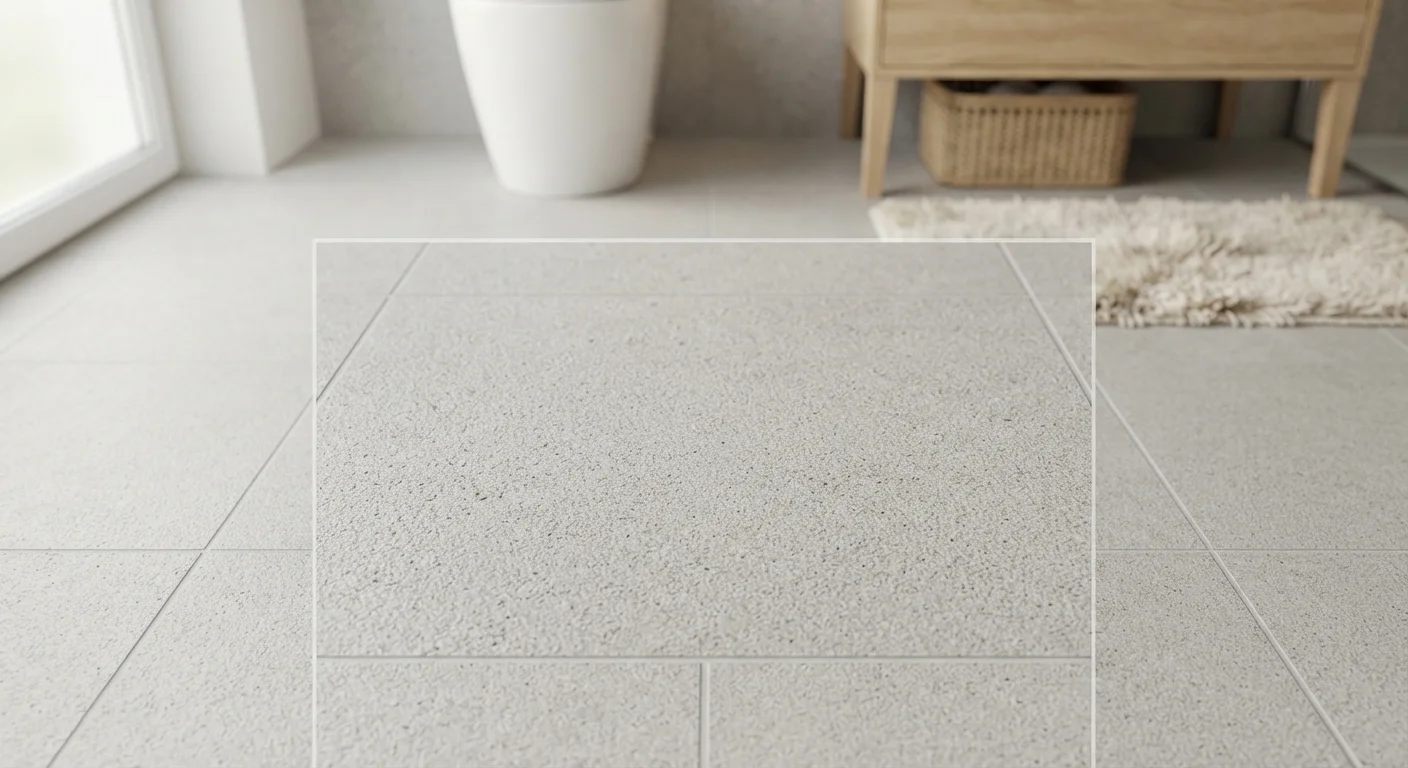
Polished stone and high-gloss ceramic or porcelain tiles are designed to reflect light beautifully — but that same smooth finish becomes dangerously slippery when wet. Matte, honed, or textured finishes maintain traction even with water, soap, or steam on the surface.
Ensure proper floor slope and drainage to minimize standing water.
Even the best slip-resistant tile loses effectiveness when water pools and stands on the surface. A correctly sloped floor — typically a quarter-inch drop per foot toward the drain — channels water away quickly and reduces the area of wet surface at any given time.
Consider non-tile options like luxury vinyl plank with textured finishes.
Tile is not the only safe option. Quality luxury vinyl plank (LVP) products designed for wet areas often feature embossed, textured surfaces that provide grip and are also softer underfoot — which can reduce injury severity in the event of a fall. They are also generally warmer to the touch than ceramic.
Quick Steps You Can Take Now
If you're not yet ready for a full floor replacement, some immediate actions can reduce risk while you plan a longer-term upgrade.
When you're ready to look at broader bathroom accessibility improvements — including walk-in showers and walk-in tubs — be sure to ask your contractor specifically about flooring as part of that scope. Our guide on safety features to discuss with your contractor covers what to raise before work begins.
Working With a Contractor on Flooring Safety
A contractor experienced in accessible bathroom renovations can do more than lay tile — they can assess your specific situation, recommend materials with verified slip-resistance ratings, and ensure the installation meets local building codes. When interviewing contractors, ask them directly: "What slip-resistance rating do you recommend for a wet bathroom floor, and why?"
If you're considering a walk-in shower or walk-in tub alongside new flooring, your flooring choice should be coordinated with those decisions. See our comparison guide — walk-in shower or walk-in tub: which suits your needs? — to understand how these elements work together as part of a cohesive safety plan.
This article is for general informational purposes only. Flooring performance varies by product and installation. Always consult a qualified contractor and verify local building codes before beginning any bathroom renovation.