

Key Takeaways
Start here
What Is a Walk-In Tub?
Next
Who Benefits Most from a Walk-In Tub?
Then
Key Safety Features to Look For
Going deeper
What Installation Involves
Final step
How to Find a Qualified Contractor
What Is a Walk-In Tub?
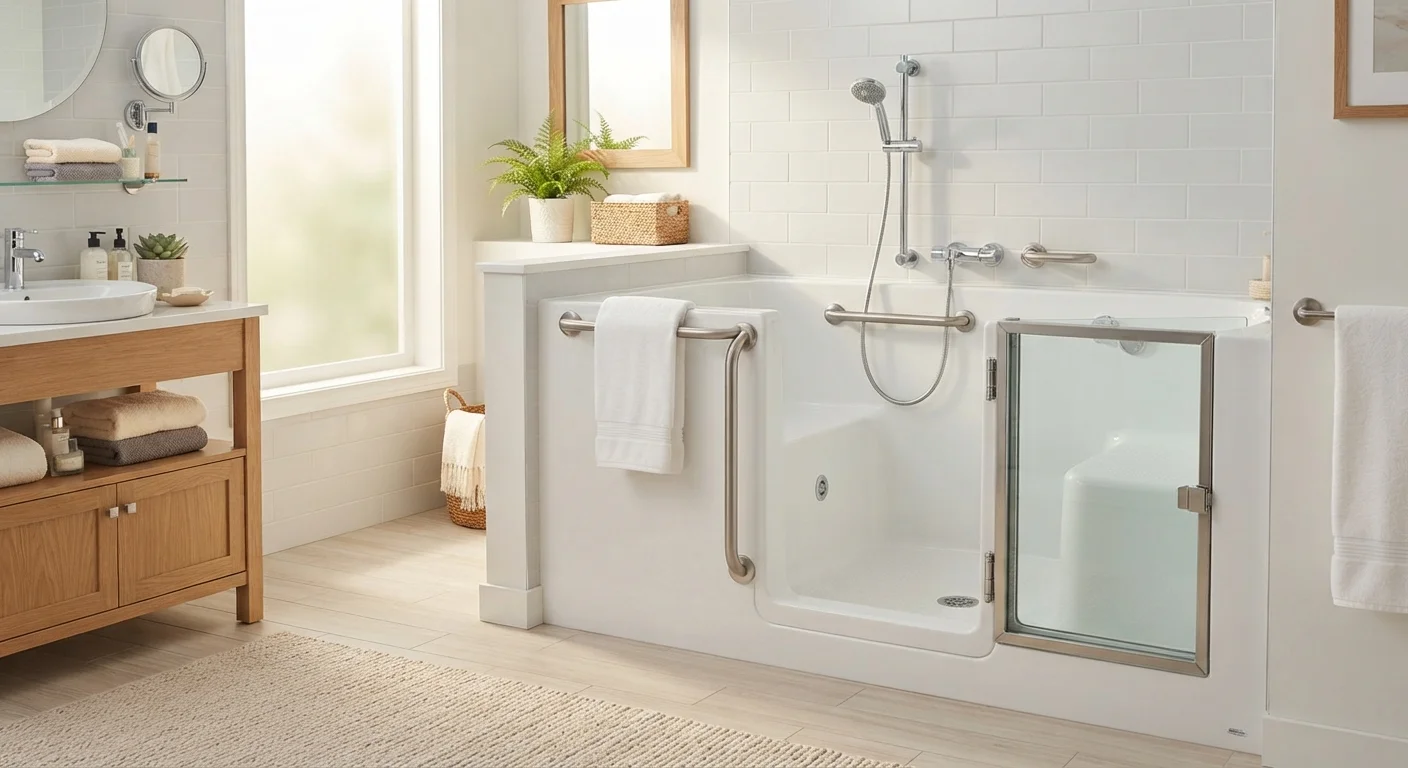
A walk-in tub is a bathtub with a hinged, watertight door built into its side wall. Instead of stepping over a tall tub ledge — which can be 15 inches or higher on a standard bath — you open the door, step through a low threshold (often 3 to 7 inches), and close the door before filling the tub with water.
This design addresses one of the most common fall hazards in the home: the act of climbing in and out of a conventional bathtub. Walk-in tubs also typically include a built-in seat so you bathe in a seated position, which reduces the risk of slipping while standing in water.
For a deeper look at how these tubs differ from conventional baths, see our article Walk-In Tubs Explained, which covers the design principles in detail. You can also explore accessible bathroom planning more broadly to understand the full range of options available.
Step-in threshold
The height of the barrier you must step over to enter the tub. Lower thresholds reduce the risk of tripping — walk-in tubs typically range from 3 to 7 inches, compared to 15 inches or more on a standard tub.
Watertight door seal
The rubber gasket that lines the tub door and keeps water from leaking out when the door is closed and the tub is filled.
Inline water heater
An optional heating element that keeps the water warm while the tub fills or while you soak, since walk-in tubs can take longer to fill than standard baths.
Alcove installation
A tub placement style where the tub is surrounded on three sides by walls — the most common bathroom layout and the configuration walk-in tubs are most often designed to fit.
Hydrotherapy jets
Optional water or air jets built into some walk-in tubs that produce a massaging effect. They require an electrical connection and add to the installation complexity and cost.
Aging in place
The practice of making modifications to your home so you can continue living there safely and comfortably as you grow older, rather than moving to a care facility.
Who Benefits Most from a Walk-In Tub?
Walk-in tubs are particularly well-suited to adults who experience any of the following:
- Balance or stability challenges that make stepping over a tub wall risky
- Arthritis or joint pain that limits bending, crouching, or gripping
- Recovery from surgery where low-impact bathing is recommended by a healthcare provider
- A preference for soaking baths rather than showers, even as mobility changes
They are not the right fit for everyone. If you primarily shower and rarely bathe, or if your mobility needs are better served by a roll-in design, a walk-in shower may be a more practical choice. Our side-by-side comparison can help clarify which upgrade suits your daily routine.
It is also worth reading what an accessible bathroom actually means to frame this decision within a broader home-safety context.
Key Safety Features to Look For
Not all walk-in tubs are designed equally. When evaluating options with a contractor or showroom, pay attention to these features:
- Low step-in threshold
- A threshold of 3 to 4 inches is considered low-entry and reduces trip risk for most adults.
- Built-in grab bars
- These should be present on the door frame side and near the seat, positioned to support both entry and lowering into the seat.
- Non-slip floor surface
- Textured or anti-slip flooring on the tub interior is a standard safety expectation, not an upgrade.
- Comfortable, contoured seat
- A seat at a comfortable height (generally 17 to 19 inches from the floor) reduces strain when sitting and standing.
- Handheld showerhead
- Allows rinsing while seated and provides flexibility if you need to shower without filling the tub.
- Fast-drain system
- Because you must wait inside the tub while it drains before opening the door, a faster drain reduces the time spent seated in cooling water.
Ask About Fill and Drain Times
One practical concern with walk-in tubs is that you must enter before filling and wait inside while the tub drains after bathing. Ask any contractor or showroom about the specific fill rate (gallons per minute from your water supply) and the drain speed of each model you consider. A faster drain — ideally under two minutes for a full tub — is a comfort feature worth prioritizing.
What Installation Involves
Walk-in tub installation is not a DIY project. It requires licensed plumbing work at minimum, and may also involve electrical work if the tub includes heated jets or inline water heating. Here is a general sequence of what happens:
- Old tub removal: The existing tub (and sometimes surrounding tile) is removed and disposed of.
- Plumbing assessment and adjustment: A plumber confirms the drain location aligns with the new tub and that your water heater can fill the tub adequately. Upgrades may be needed.
- Tub placement and leveling: The new tub is set and leveled in the alcove or space.
- Surround installation: Wall panels or tiles are fitted around the tub to seal and finish the space.
- Final connections and testing: Water supply lines and the drain are connected, the door seal is tested, and the entire installation is checked for leaks.
Local building codes in many areas require a permit for plumbing modifications. Your contractor should obtain any required permits — not doing so can create problems when you sell your home. For a full plain-language walkthrough, see what walk-in tub installation actually involves.
How to Find a Qualified Contractor
Selecting the right contractor matters as much as selecting the right tub. Here are practical steps to guide your search:
- Verify licensing and insurance. Ask for proof of a current contractor's license and general liability insurance in your state. A legitimate contractor will provide these without hesitation.
- Request at least three written quotes. A written estimate should detail labor, materials, permit costs, and a projected timeline — not just a lump sum.
- Ask for references from similar projects. Speak with past customers who had walk-in tub or accessible bathroom work done, not just general remodeling.
- Confirm who does the plumbing. Some contractors subcontract plumbing work. Know in advance who will be in your home and that they are also licensed.
- Get the warranty in writing. Understand what is covered: the tub itself (manufacturer warranty) versus the installation workmanship (contractor warranty) are separate things.
For broader guidance on planning an accessible bathroom renovation, our complete homeowner's resource on walk-in tubs covers contractor selection, cost ranges, and what to expect at each stage of the process.
This article is for general informational purposes only. Consult a licensed contractor and, where relevant, a healthcare provider before making decisions about bathroom modifications for medical or mobility needs. Local building codes and permit requirements vary — always verify with your local authority.