

| Typical home gutter length | 100–200 linear feet (Varies by home size and footprint) |
| Common gutter width (K-style) | 5 or 6 inches (5-inch is most common on residential homes) |
| General guard installation range | $1–$13+ per linear foot (Reflects wide range from basic screen to premium micromesh; verify locally) |
| Manufacturer warranty range | 5–25+ years (Depends heavily on product type and brand; read the fine print) |
| Number of quotes recommended | At least 2–3 (Allows comparison of itemized labor and material costs) |
| Permit requirement | Varies by municipality (Check with your local building department before work begins) |
Why These Terms Show Up on Your Quote
When a contractor hands you a gutter guard estimate, it often reads like a foreign language. Words like linear footage, fascia, and drip edge appear alongside dollar figures, and it can be hard to tell what you're actually paying for. That uncertainty makes it easy to accept a quote without fully understanding it — or to feel uneasy asking questions you think you should already know the answers to.
This glossary exists to close that gap. Before you request quotes or compare prices, spend a few minutes with these definitions. When you can match each term on an estimate to its real-world meaning, you'll ask sharper questions, spot potential padding, and negotiate with more confidence.
For a broader look at what drives overall pricing, see our plain-language cost breakdown after reviewing the glossary below.
Linear footage
A measurement of length in feet running along a straight line. Contractors use it to measure how many feet of gutters your home has, because guard materials are priced per linear foot. A typical single-story home may have 100–200 linear feet of gutter.
Fascia
The long, flat board that runs along the edge of your roofline, directly behind the gutter. Many gutter guards attach to or rest against the fascia, so its condition matters — a rotted fascia board often needs to be replaced before installation can proceed.
Soffit
The underside of the roof overhang — the horizontal surface you see when you look up at your eaves from outside. Some guard and gutter systems are anchored near the soffit, and good ventilation there prevents moisture buildup in the attic.
Drip edge
A metal strip installed along the edge of the roof that directs water off the roof and into the gutter rather than letting it seep behind the gutter or rot the fascia. Quotes may include drip edge repair or replacement if the existing one is damaged or missing.
Pitch (or slope)
How steep your roof is, usually expressed as a ratio like 6:12 (rising 6 inches for every 12 inches of horizontal distance). Steeper pitches can complicate installation and sometimes raise labor costs because working safely takes more time and equipment.
Gutter profile
The shape and size of your existing gutters — most commonly K-style (which looks like crown molding from the side) or half-round (a simple half-circle). Not all guard systems fit every profile, so the contractor needs to know yours before specifying materials.
Downspout
The vertical pipe that carries water from the gutter down to the ground or a drainage system. Quotes may include downspout guards or leaf strainers at the top of each downspout as part of the overall installation.
Labor rate
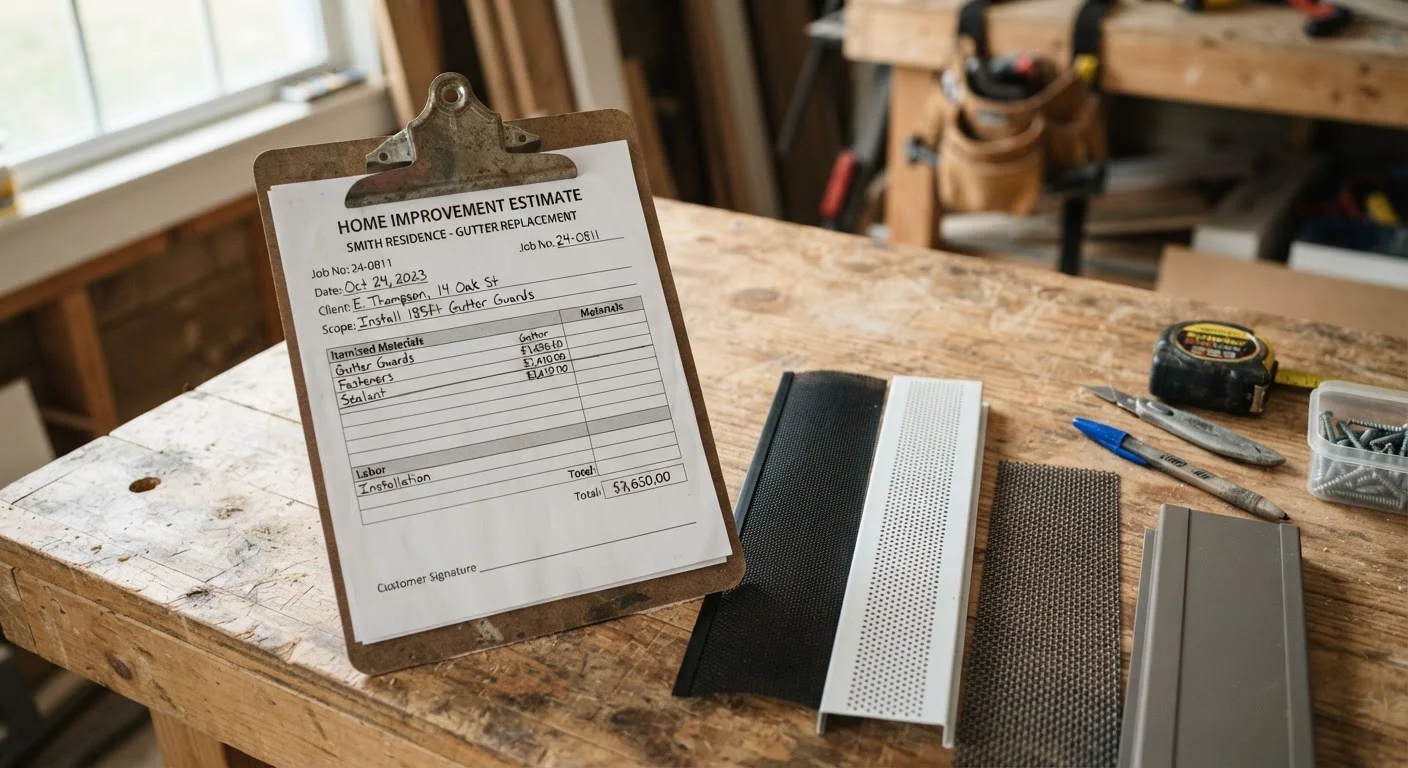
The hourly or per-linear-foot charge for the installer's work, separate from material costs. Always ask for labor and materials to be listed separately on an estimate so you can compare quotes on equal terms.
Warranty
A written promise covering defects or performance failures for a stated period — typically separate warranties exist for materials (from the manufacturer) and workmanship (from the installer). Read both carefully; they may have different lengths and coverage conditions.
Debris bypass
A feature of certain guard designs that allows small particles — pine needles, seed pods, shingle grit — to flush off the surface rather than accumulating. Its presence or absence affects long-term maintenance requirements.
Micromesh
An extremely fine woven or stamped metal screen used in high-end guard systems to block tiny debris while still allowing water flow. Micromesh guards are generally priced higher per linear foot than basic screen or foam alternatives.
Permit
A formal approval from your local building authority that may be required for certain gutter or roofline work, depending on your municipality. Ask your contractor whether a permit is required in your area; skipping a required permit can create issues during a home sale.
Quick Reference: Key Numbers at a Glance
Contractors measure and price gutter guard projects using a consistent set of figures. The quick facts below give you realistic benchmarks so you can gauge whether a quote's numbers are in the right range before you sign anything.
| Typical home gutter length | 100–200 linear feet (Varies by home size and footprint) |
| Common gutter width (K-style) | 5 or 6 inches (5-inch is most common on residential homes) |
| General guard installation range | $1–$13+ per linear foot (Reflects wide range from basic screen to premium micromesh; verify locally) |
| Manufacturer warranty range | 5–25+ years (Depends heavily on product type and brand; read the fine print) |
| Number of quotes recommended | At least 2–3 (Allows comparison of itemized labor and material costs) |
| Permit requirement | Varies by municipality (Check with your local building department before work begins) |
Keep in mind that prices vary significantly by region, roof complexity, and guard type. These figures are general reference points, not guarantees. Always obtain at least two or three written quotes and ask each contractor to itemize labour and materials separately.
If you're still sorting out which guard style suits your home, our quick reference on gutter guard types explains the differences between mesh, foam, reverse-curve, and other common designs in plain language.
Once installed, guards still need periodic attention. The maintenance and cleaning hub covers what upkeep typically looks like year-round.