

Key Takeaways
Why Roof Safety Deserves Serious Attention
Gutter guard maintenance sounds straightforward — remove debris, rinse, repeat. But the moment a task moves you off the ground and onto a ladder or roofline, the risk profile changes significantly. According to the Consumer Product Safety Commission, ladders are involved in hundreds of thousands of emergency room visits every year in the United States, and adults aged 55 and older are disproportionately represented in serious fall statistics.
That isn't meant to alarm you — it's meant to reframe how you approach the job. Cleaning gutter guards is a manageable task for many homeowners, but only when safety planning comes first. The sections below outline the practices that matter most, starting from the ground up.
If you'd prefer to start by understanding what you can observe without climbing at all, see our guide on ground-level vs. roof-level gutter inspection — many issues are visible without leaving solid ground.
Core Safety Practices Before You Climb
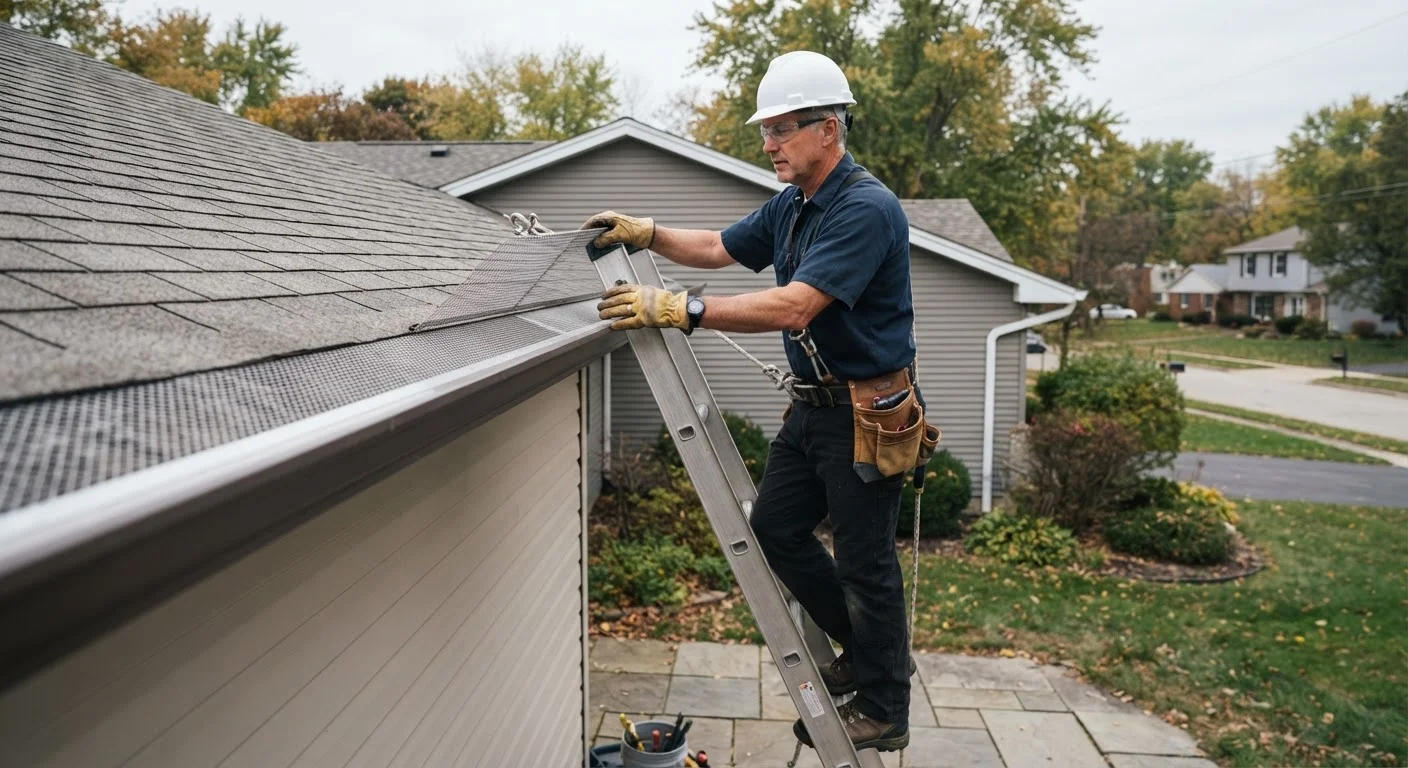
Preparation is where most preventable accidents are avoided. Running through the following checklist before any ladder work can make a meaningful difference.
Inspect your ladder for damage before every use
Cracked rungs, bent rails, or missing feet can fail without warning under load. A visual check takes less than two minutes and catches problems before they become emergencies.
Wear slip-resistant footwear with closed toes
Smooth-soled shoes dramatically increase slip risk on ladder rungs and roof surfaces. Rubber-soled work boots or dedicated ladder shoes provide the grip needed to maintain footing.
Keep three points of contact with the ladder at all times
Two feet and one hand, or two hands and one foot — keeping three points anchored prevents the off-balance shifts that precede most ladder falls. This means tools should be secured to a belt or bucket, not carried in your hands.
Never lean or reach beyond the sides of the ladder
Overreaching shifts your center of gravity outside the ladder's base, dramatically increasing tip-over risk. Moving the ladder frequently is inconvenient but far safer than stretching.
Tell someone you are working at height before you start
If a fall or injury does occur, having a second person nearby means help can be summoned quickly. Solo roofline work leaves no margin for error.
Once you've confirmed these conditions, you're in a much better position to work efficiently and without unnecessary risk.
Conditions That Should Stop the Job
Even experienced contractors postpone roofline work when conditions aren't right. Knowing when not to proceed is just as important as knowing how to proceed safely.
- Wet or icy surfaces: Moisture on ladder rungs, fascia boards, or roof decking dramatically reduces traction. Wait for dry conditions — even a light morning dew is enough to increase slip risk.
- Wind above a light breeze: Gusty conditions affect ladder stability and your balance at height. If leaves are moving actively, consider rescheduling.
- Steep roof pitch: Roofs with a pitch above 6:12 (meaning 6 inches of rise for every 12 inches of horizontal run) are considered steep-slope by most standards and require specialized equipment that typical homeowners don't own.
- Working alone: Always have another adult present when using a ladder. They don't need to hold it the entire time, but they should be reachable and aware of what you're doing.
If any of these conditions apply, it's worth exploring whether a professional is the right call. Our article on when to call a professional for gutter guard maintenance walks through the specific situations where hiring out is the sensible choice.
Consider a Telescoping Wand Instead
Some gutter guard systems can be rinsed or lightly brushed using a telescoping extension wand attached to a standard garden hose — keeping your feet on the ground the entire time. This won't work for every guard type or every blockage, but it's worth exploring before setting up a ladder. Check your gutter guard manufacturer's guidance on approved cleaning methods first.
Ladder Selection and Positioning
Not every ladder is suitable for roofline work. A stepladder, for instance, is not designed to lean against a structure — it's self-supporting and most stable on flat ground away from walls. For gutter access, an extension ladder is the appropriate tool.
Key positioning rules to follow:
- Set the ladder at a 4:1 angle — for every four feet of height, the base should be one foot away from the wall. This is often called the "one-in-four rule" and is a widely recognized safety standard.
- The ladder should extend at least three feet above the roofline or gutter edge so you have something stable to hold as you transition.
- Place the feet on firm, level ground. Avoid soft soil, gravel, or uneven pavers without using adjustable leg levelers designed for the purpose.
- Use rubber-footed ladder standoffs (sometimes called ladder stabilizers) to prevent the top of the ladder from resting directly on gutters — contact pressure can dent or dislodge gutter guard panels.
If the gutter guard system requires actual roof access — not just ladder access — read about flushing out a gutter guard system without causing damage before proceeding, since water pressure and footing on roof surfaces introduce additional hazards.
Deciding Between DIY and Professional Help
Knowing your own limits is a genuine safety practice, not an admission of failure. Many homeowners — particularly those dealing with two-story homes, limited mobility, or little prior ladder experience — find that the math simply favors hiring a professional when they factor in safety, equipment costs, and peace of mind.
A side-by-side look at DIY versus professional gutter guard cleaning can help you work through those trade-offs honestly. And if you do decide to bring someone in, our guidance on questions to ask a contractor before booking a cleaning helps you evaluate the right person for the job.
Whether you proceed yourself or delegate, the goal is the same: clean, functional gutter guards — reached safely.
This article provides general home maintenance safety information and is not a substitute for professional safety training or assessment. Always verify local regulations and consult a qualified contractor when in doubt about the safety of any roofline task.