

Key Takeaways
Start here
What Gutter Guards Actually Do
Next
The Main Types of Gutter Guards
Then
Matching a Guard Type to Your Home
When you're ready
How to Talk Confidently with a Contractor
What Gutter Guards Actually Do
Gutters channel rainwater away from your roof, walls, and foundation. When they clog with leaves, pine needles, or compacted debris, water can back up under shingles, spill over the gutter edge, or pool against your home's foundation — all costly problems over time.
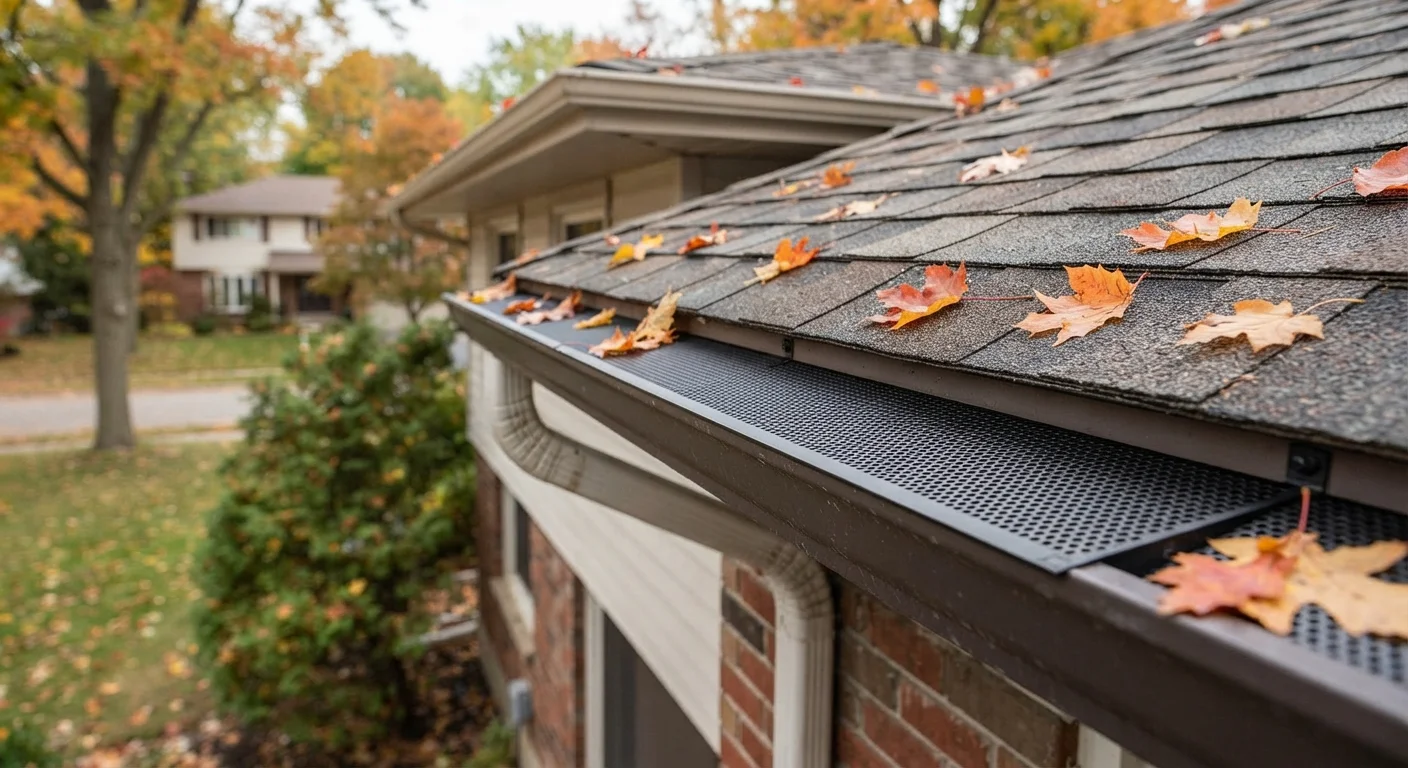
Gutter guards are covers or inserts that sit over or inside the gutter channel. Their job is to let water in while keeping the bulk of debris out. They don't make gutters maintenance-free, but most homeowners find they significantly reduce how often cleaning is needed.
It's worth being clear about what guards cannot do: they won't fix gutters that are already sagging, improperly sloped, or leaking. Any underlying gutter issues should be addressed before installation.
Guards Don't Fix Existing Gutter Problems
Installing a guard over a sagging, leaking, or improperly pitched gutter will not correct those underlying issues. Before installation, have a contractor inspect your existing gutters to confirm they are in sound working condition. Skipping this step can lead to water damage that no guard can prevent.
The Main Types of Gutter Guards
Five guard styles are commonly available to homeowners. Each takes a different approach to the debris problem:
- Screen guards — flat or slightly curved metal or plastic screens that sit over the gutter opening. They block larger debris but can allow smaller particles through.
- Micro-mesh guards — fine metal mesh stretched over a frame. The small openings filter out pine needles, shingle grit, and even some seed pods. Generally considered the most thorough option for fine debris.
- Reverse-curve (surface tension) guards — a curved solid cover that uses water's natural tendency to follow a curved surface. Water bends into the gutter; leaves are supposed to fall away. Performance varies by water flow rate and debris type.
- Foam inserts — porous foam fitted inside the gutter channel. Water seeps through the foam while debris sits on top. Lower upfront cost, but foam can harbor plant growth over time.
- Brush inserts — cylindrical brushes placed inside the gutter. Debris is meant to sit on top of the bristles. Simple to install, but smaller debris can become trapped in the bristles.
For a side-by-side comparison of these styles, the Gutter Guard Types at a Glance reference is a useful companion to this article.
Gutter guard
A cover or insert placed over or inside a gutter channel to keep leaves, debris, and pests out while allowing rainwater to drain through.
Micro-mesh
A type of gutter guard made of very fine metal mesh that filters out small debris like pine needles and shingle grit while letting water pass freely.
Reverse-curve guard
A curved guard designed so water bends around its surface and into the gutter while leaves and debris fall off the edge to the ground.
Roof pitch
The steepness of a roof, usually expressed as a ratio. A steeper pitch means water runs off faster, which can affect how well certain guard styles perform.
Fascia board
The horizontal board that runs along the edge of your roofline to which gutters are attached. Some gutter guard styles clip onto the fascia rather than sliding under roof shingles.
Matching a Guard Type to Your Home
No single guard type is right for every home. Three factors are most important when narrowing your options:
- Type and density of nearby trees
- Maples and oaks shed large leaves that most guards handle easily. Pine trees produce small, slender needles that slip through screen guards — micro-mesh is a better fit in those conditions.
- Roof pitch
- Steeply pitched roofs shed water quickly. Some reverse-curve designs struggle to pull fast-moving water into the gutter rather than over it. A contractor familiar with your roof style can advise on this.
- Rainfall intensity
- Heavy downpours can overwhelm fine-mesh guards if the mesh surface is not large enough relative to the gutter size. In high-rainfall regions, this is worth raising explicitly with any contractor you consult.
For a more thorough examination of these variables, Everything You Need to Know Before Choosing a Gutter Guard covers the full decision-making process.
Walk Your Property Before Calling a Contractor
Before requesting a quote, spend a few minutes noting the types of trees near your home, how heavily they shed, and where your gutters sit relative to your roofline. This information helps a contractor recommend the right guard type for your specific conditions — and helps you evaluate whether their suggestion makes sense.
What to Expect from Installation and Upkeep
Installation complexity ranges considerably. Foam and brush inserts can often be placed by a capable homeowner comfortable on a ladder at single-story height. Screen and micro-mesh guards typically require clips, screws, or sliding under the first row of shingles — work that carries more risk and may affect your roof warranty if done incorrectly.
Reverse-curve systems are usually installed by professionals and may involve modifying how the guard sits against the fascia board.
Regardless of guard type, plan to inspect your gutters at least once a year — ideally in late autumn after the main leaf drop and again in spring. Even well-performing guards can accumulate debris on top of the guard surface over time. Information on what to look for during inspections is covered in the Maintenance and Cleaning hub.
Ladder Work Carries Real Safety Risks
Inspecting or installing gutter guards requires working at height, which poses genuine fall risks — especially on multi-story homes or steeply pitched roofs. If you are not confident and properly equipped for ladder work, hire a licensed professional rather than attempting this yourself.
How to Talk Confidently with a Contractor
Walking into a contractor conversation with a few clear questions puts you in a much stronger position. You don't need to know every technical detail — you just need to understand what you're agreeing to.
Key things to clarify before any work begins:
- Which guard type are they recommending, and why does it suit your specific roof and tree situation?
- What materials are used, and what is the expected lifespan?
- Will installation require sliding anything under the first row of shingles, and could that affect your roof warranty?
- What does their workmanship warranty cover, and for how long?
- Will they inspect and clean the gutters before installing the guards?
For a complete list of practical questions to bring to any contractor meeting, see Questions to Ask a Contractor Before Gutter Guard Installation Begins. And when you're ready to understand pricing, Gutter Guard Installation Costs: A Plain-Language Breakdown walks through what drives the numbers.