

Key Takeaways
Cools the entire home from a single system
One central unit conditions air for every room simultaneously, making it easier to maintain a consistent temperature throughout the house without managing multiple devices.
Equipment stays largely out of sight
The indoor air handler and outdoor condenser are tucked away, and vents blend into ceilings or floors — preserving your home's appearance far better than window or portable units.
Can improve indoor air quality with proper filtration
Central systems circulate air through filters that trap dust, pollen, and other particles. Upgrading to a higher-efficiency filter or adding an air purifier to the system can meaningfully reduce airborne allergens.
Controlled by a single thermostat
A programmable or smart thermostat lets you set schedules, adjust remotely, and monitor energy use — all from one straightforward interface.
Can add resale value to a home
Buyers in warm climates typically expect central AC; homes without it often sell for less or sit longer on the market, according to real estate industry research.
High upfront installation cost
Installing a central AC system — particularly in a home without existing ductwork — can run into thousands of dollars. Duct installation alone is a major expense that often surprises first-time buyers.
Ducts can leak and reduce efficiency
The U.S. Department of Energy has noted that leaky or poorly insulated ducts can waste a significant portion of a system's conditioned air before it ever reaches the living space, driving up energy bills.
Cools all zones equally — no easy room-by-room control
Standard central AC systems treat the whole house as one zone. Cooling a seldom-used guest room costs the same as cooling the living room, which can feel wasteful.
Requires professional maintenance annually
To run efficiently and reliably, central systems need an annual tune-up by a licensed HVAC technician, plus regular filter changes — ongoing costs that some homeowners underestimate.
Not practical in homes without ductwork
Older homes, historic properties, or homes built with radiant or baseboard heating often lack ducts entirely, making central AC installation disruptive and expensive.
Our Verdict
Central air conditioning remains one of the most practical whole-home cooling options for houses that already have ductwork in place. It delivers consistent, invisible comfort and adds real value to a property — but the upfront costs, ongoing maintenance demands, and energy use are not trivial. Homeowners without existing ducts or with only a few rooms to cool should carefully weigh alternatives before committing.
Best for homeowners in hot climates who own a larger home with existing ductwork and want whole-home comfort without visible equipment in every room.
How Central Air Conditioning Actually Works
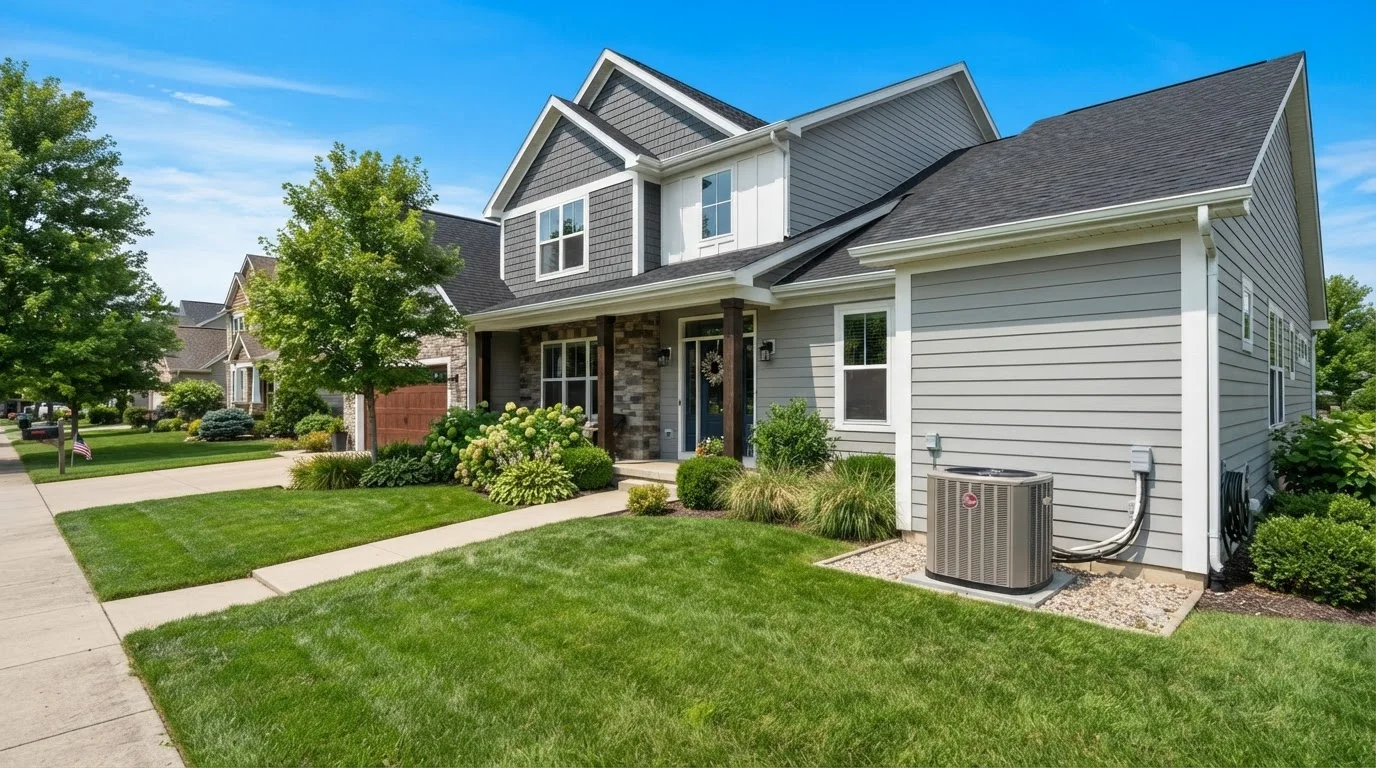
Central air conditioning uses a closed loop of refrigerant to move heat from inside your home to the outdoors. The indoor air handler pulls warm room air across a cold evaporator coil, which absorbs the heat. That heat travels through refrigerant lines to the outdoor condenser unit, where it's released outside. Cooled air then flows through a network of ducts and out through vents in each room.
This process runs continuously in cycles, regulated by your thermostat. Understanding this basic loop helps explain both why central AC is so effective at whole-home comfort — and why any break in the chain, like a dirty filter or a duct leak, can undermine the entire system. For a broader look at how different systems compare, see The Complete Homeowner's Guide to Air Conditioning Systems.
The Real Advantages of Central AC
For homes already equipped with ductwork, central AC offers a level of whole-home comfort that's difficult to match. Here's what it genuinely does well:
Cools the entire home from a single system
One central unit conditions air for every room simultaneously, making it easier to maintain a consistent temperature throughout the house without managing multiple devices.
Equipment stays largely out of sight
The indoor air handler and outdoor condenser are tucked away, and vents blend into ceilings or floors — preserving your home's appearance far better than window or portable units.
Can improve indoor air quality with proper filtration
Central systems circulate air through filters that trap dust, pollen, and other particles. Upgrading to a higher-efficiency filter or adding an air purifier to the system can meaningfully reduce airborne allergens.
Controlled by a single thermostat
A programmable or smart thermostat lets you set schedules, adjust remotely, and monitor energy use — all from one straightforward interface.
Can add resale value to a home
Buyers in warm climates typically expect central AC; homes without it often sell for less or sit longer on the market, according to real estate industry research.
The quiet operation and consistent airflow are particular advantages for older adults who may be more sensitive to noise or temperature swings. A well-maintained central system running in a properly insulated home can be one of the most energy-efficient ways to cool a large living space.
Where Central AC Falls Short
No cooling system is perfect, and central AC has real limitations that homeowners should understand before installation — or before assuming a new system will solve existing comfort problems.
High upfront installation cost
Installing a central AC system — particularly in a home without existing ductwork — can run into thousands of dollars. Duct installation alone is a major expense that often surprises first-time buyers.
Ducts can leak and reduce efficiency
The U.S. Department of Energy has noted that leaky or poorly insulated ducts can waste a significant portion of a system's conditioned air before it ever reaches the living space, driving up energy bills.
Cools all zones equally — no easy room-by-room control
Standard central AC systems treat the whole house as one zone. Cooling a seldom-used guest room costs the same as cooling the living room, which can feel wasteful.
Requires professional maintenance annually
To run efficiently and reliably, central systems need an annual tune-up by a licensed HVAC technician, plus regular filter changes — ongoing costs that some homeowners underestimate.
Not practical in homes without ductwork
Older homes, historic properties, or homes built with radiant or baseboard heating often lack ducts entirely, making central AC installation disruptive and expensive.
Permits and Professional Installation Required
Central air conditioning installation involves electrical work, refrigerant handling, and often structural changes — all of which are regulated in most U.S. jurisdictions. A licensed HVAC contractor is required by law in most states to handle refrigerants. Always verify local permit requirements before any installation work begins; unpermitted work can create problems when selling your home.
If your central AC is running constantly but rooms still feel warm, the issue may not be the system itself — it could be duct leaks, insulation gaps, or an undersized unit. Learn what causes an AC to run without cooling effectively to diagnose before spending money on a replacement.
Central AC vs. Other Cooling Options
Central air isn't the only path to a cool home. Ductless mini-splits, window units, and portable ACs all have their place — particularly in homes without existing ducts, in single rooms, or in spaces with unusual layouts.
~90%
U.S. homes with air conditioning that use central systems
According to U.S. Energy Information Administration residential energy data, central AC accounts for the large majority of air-conditioned American homes.
Up to 30%
Energy lost through leaky duct systems
The U.S. Department of Energy estimates that duct leakage can waste up to 30% of the air a central system produces, particularly in unconditioned spaces like attics.
If your home lacks ductwork, a ductless mini-split system may actually be more cost-effective to install and operate. Compare central AC and ductless mini-splits side by side to understand which approach suits your specific home. For smaller spaces or rental situations, window and portable unit options may be a more practical fit.
This article is for informational purposes only. HVAC installation involves regulated work — always consult a licensed professional and verify local permit requirements before proceeding with any system installation or modification.