

Key Takeaways
Indoor Air Pollutants in Sealed Homes
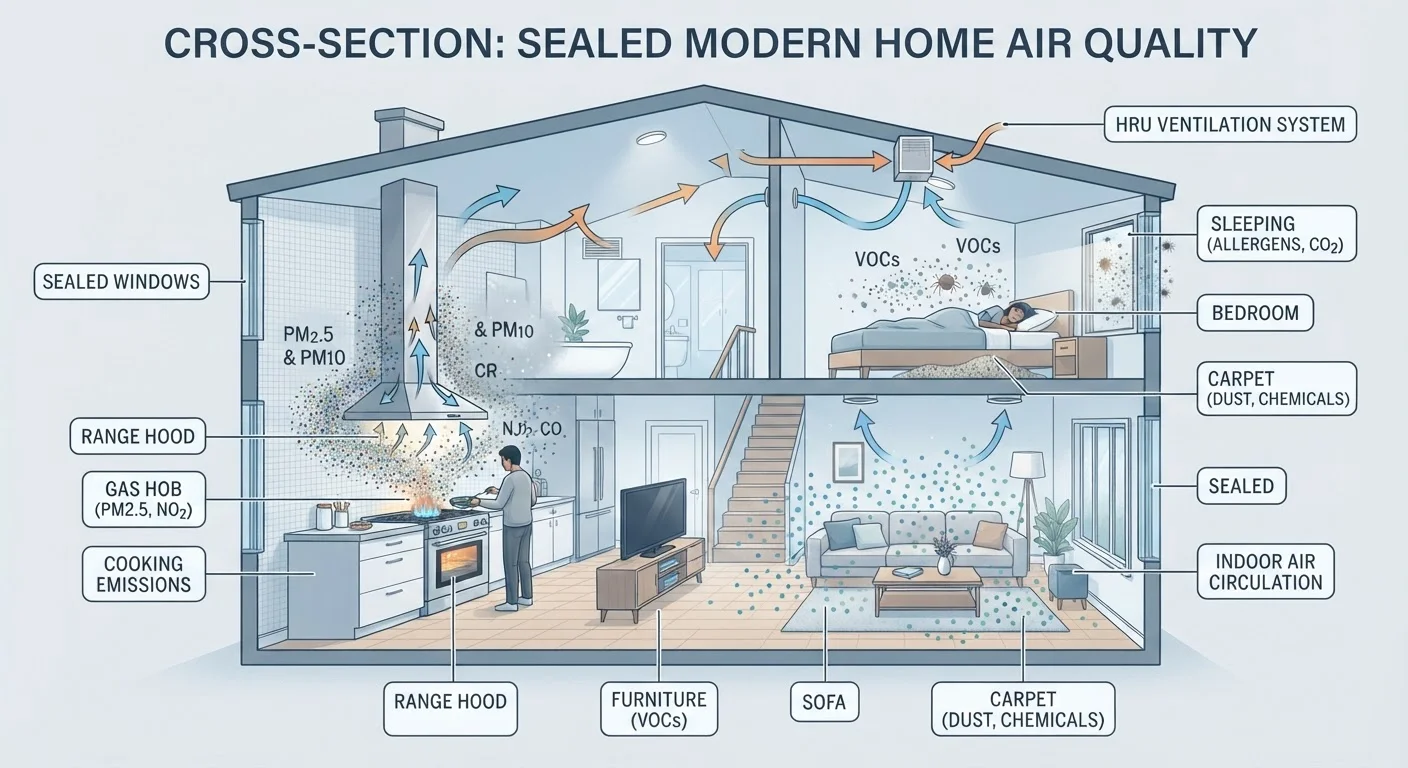
When a home is tightly sealed to conserve energy, everyday activities release gases, particles, and moisture that have no easy way to escape. These substances accumulate indoors over time, sometimes reaching concentrations significantly higher than outdoor air. Common culprits include combustion gases, volatile organic compounds, mold spores, and fine particles from cooking or cleaning products.
The EPA has noted that indoor air can be two to five times more polluted than outdoor air in some homes — a figure that can worsen in well-insulated, low-ventilation environments.
Why Sealed Homes Create a Pollutant Problem
Over the past few decades, homes have been built — and retrofitted — to hold in conditioned air as efficiently as possible. Better insulation, double-pane windows, and sealed gaps all contribute to lower energy bills. But that same airtight envelope that keeps warmth inside also keeps airborne pollutants from escaping.
In older, draftier homes, air moved in and out naturally through gaps and cracks, diluting indoor pollutants without any deliberate effort. Modern construction intentionally eliminates those pathways. The result is that pollutants released by ordinary household activities have nowhere to go unless a ventilation system actively moves air in and out.
For more context on how this fits into the broader picture of home air quality, see our plain-language guide to indoor air quality.
Sealed Homes and Energy Efficiency Aren't at Odds
Improving your home's ventilation does not mean sacrificing energy efficiency. Modern systems like heat recovery ventilators (HRVs) and energy recovery ventilators (ERVs) are specifically designed to bring in fresh air while recovering most of the energy from the air being exhausted. You can also explore how energy-efficient window features interact with your home's overall air sealing strategy.
The Most Common Pollutants That Build Up Indoors
Understanding what you're dealing with is the first step. Several categories of pollutants are especially likely to accumulate in sealed homes:
- Volatile Organic Compounds (VOCs): These gases are released by paints, varnishes, adhesives, cleaning sprays, and even new furniture or carpeting. They off-gas continuously, often long after a product was first used.
- Combustion byproducts: Gas stoves, fireplaces, and attached garages can introduce carbon monoxide, nitrogen dioxide, and fine particles. Even low-level exposure over time is a concern.
- Radon: This naturally occurring radioactive gas seeps up from soil and rock beneath the home. It's colorless, odorless, and requires a dedicated test to detect. It is the leading cause of lung cancer among non-smokers in the United States, according to the EPA.
- Mold spores and biological pollutants: Moisture that can't escape leads to mold growth. Spores then circulate through the air, aggravating respiratory conditions.
- Fine particulate matter: Cooking, candles, and even vacuuming without a HEPA filter can release tiny particles that stay suspended in still indoor air.
For a deeper look at the most serious invisible threats, our article on radon, carbon monoxide, and VOCs explains what each one means for your health.
How Ventilation Addresses the Buildup
Mechanical ventilation is the primary tool for managing indoor pollutants in a sealed home. Unlike simply cracking a window, a properly designed system provides consistent, controlled air exchange — removing stale, pollutant-laden air and bringing in fresh outdoor air, often with filtration or heat recovery built in.
Common approaches include exhaust-only fans, balanced systems that supply and remove air simultaneously, and energy recovery ventilators (ERVs) or heat recovery ventilators (HRVs), which transfer heat between outgoing and incoming air streams to minimize energy loss. The right solution depends on your climate, home size, and existing HVAC setup — a licensed HVAC contractor can assess what your home needs.
Everyday habits also play a meaningful supporting role. Running kitchen and bathroom exhaust fans during and after cooking or showering, storing paints and solvents in sealed containers in detached spaces, and choosing low-VOC products all reduce the load on your ventilation system. See our guide on practical habits that support good ventilation for specific steps you can take today.
If you're unsure whether your home is ventilating properly, warning signs your home isn't breathing properly — such as condensation on windows or persistent musty smells — can point you toward the right next question to ask a professional.
This article is intended for general informational purposes only. Consult a licensed HVAC professional and qualified testing specialist to evaluate the specific air quality and ventilation needs of your home. Verify any local permit or code requirements before making changes to your HVAC system.