

Key Takeaways
Option A
Storm-Chasing Contractors
Out-of-town crews who follow disaster events for quick work.
Best for: Nobody in particular — homeowners are almost always better served by alternatives.
Option B
Local Roofing Contractors
Established professionals with roots and accountability in your community.
Best for: Any homeowner needing reliable, warrantied roof repairs after storm damage.
If your roof sustained serious storm damage
Local Roofing Contractors
A local contractor has a fixed address, verifiable license, and long-term accountability — critical when complex repairs or insurance claims are involved.
If you are feeling pressured to sign on the spot
Local Roofing Contractors
Legitimate local roofers do not use high-pressure doorstep tactics. Taking time to vet a contractor protects both your home and your money.
If an out-of-town crew has already given you a quote
Local Roofing Contractors
Before committing, get at least one comparison estimate from an established local contractor so you can judge the scope and price fairly.
Why Storm Chasers Show Up — and Why That's a Problem
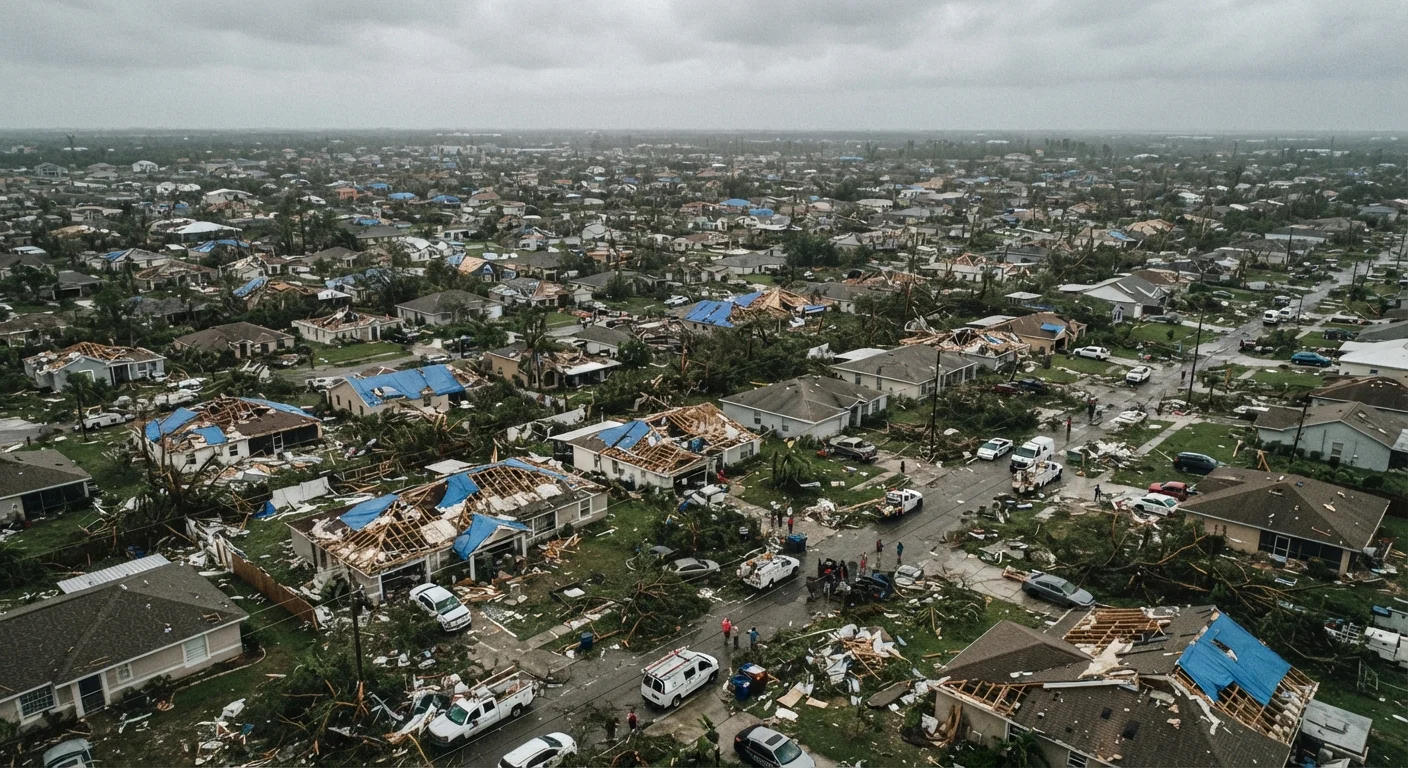
After a significant hailstorm, tornado, or hurricane, it is common for neighbourhoods to see a wave of unfamiliar vans and door-to-door salespeople within days — sometimes hours — of the event. These are often called storm chasers: contractors who travel from disaster to disaster specifically to capture work before local roofers can respond.
The appeal is understandable. They are there immediately, they speak confidently about insurance claims, and they project urgency. But speed and confidence are not the same as competence. Many storm-chasing operations are loosely organised, rely heavily on transient labor, and have no permanent business presence in your state. When problems emerge — a leak six months later, a voided manufacturer warranty, missing flashing — there may be no one left to call.
This does not mean every out-of-town contractor is fraudulent. But the structure of storm-chasing work creates conditions where accountability is difficult to enforce, which puts homeowners at real risk. Learn to recognise the warning signs before any contractor — local or not — gets your signature.
Head-to-Head: What Separates Local Roofers from Storm Chasers
The differences between an established local contractor and a storm-chasing crew often come down to verifiability and long-term accountability. The table below outlines the key distinctions to evaluate before you agree to any work.
| Criterion | Storm-Chasing Contractors | Local Roofing Contractors |
|---|---|---|
| Permanent local presence | Rarely — often out of state | Yes — fixed business address |
| State license verification | Difficult to confirm independently | Verifiable through state licensing board |
| Insurance accountability | Policies may lapse after departure | Ongoing, verifiable coverage |
| Warranty enforceability | Hard to enforce once they leave town | Contractor remains reachable locally |
| Community reputation | No local track record to check | Reviews and references available |
| Pressure tactics | Common — urgency-based doorstep sales | Less common among established firms |
| Subcontractor transparency | Often unclear who performs work | Easier to confirm crew and coverage |
Licensing requirements vary by state, so always verify directly with your state contractor licensing board rather than relying on documentation a contractor hands you at the door.
How to Protect Yourself in the Days After a Storm
The post-storm period is exactly when homeowners are most vulnerable to poor decisions. Stress, visible damage, and insurance deadlines can create a sense of urgency that benefits fast-talking contractors more than it benefits you. A measured approach protects both your home and your finances.
- Document damage yourself first. Photograph every area of visible damage from the ground before anyone gets on your roof. This protects you during the insurance claims process.
- Contact your insurer before any contractor. Your insurance company may require an adjuster inspection before authorising repairs. Signing a contract first can complicate your claim.
- Get multiple estimates. Gathering at least two or three written estimates helps you understand realistic costs and scope — and quickly exposes outliers.
- Verify credentials independently. Ask for a contractor's license number and look it up through your state licensing board. Confirm their insurance certificates are current by calling the insurer listed.
- Never pay the full amount upfront. A reasonable deposit is normal; full payment before work begins is a red flag regardless of who is asking.
For a thorough walkthrough of the hiring process from start to finish, see our complete guide to finding a roofer you can trust.
Questions to Ask Any Contractor Before You Commit
Whether a contractor shows up at your door or you found them through a referral, the same core questions apply. The goal is to establish accountability before work begins — not after a problem surfaces.
- Do you have a permanent business address in this state? A post-office box or out-of-state address is a meaningful concern.
- Can I see your state contractor's license and verify it myself? Legitimate contractors will not hesitate.
- Will you provide a certificate of general liability and workers' compensation insurance? If a worker is injured on your property without proper coverage, you may face liability.
- Who will actually perform the work? Understanding who ends up on your roof — and whether they are covered by the same insurance — matters for accountability.
- What does the written warranty cover, and who stands behind it? A warranty is only as good as the company issuing it. If the contractor has left your area, enforcing it becomes difficult.
This article is for informational purposes only. Licensing laws, insurance requirements, and contractor regulations vary by state. Always verify current local requirements with your state licensing authority before hiring any contractor.