

Key Takeaways
Access to specialised installation skills
Some subcontractors focus exclusively on specific roofing systems, such as metal roofing or flat membrane installations, meaning you may get more experienced hands for niche work than a general crew could provide.
Faster project completion during peak seasons
By pulling in additional crews, a contractor can avoid scheduling backlogs that would otherwise delay your project by weeks, especially following storm damage when demand spikes.
Established subcontractor relationships signal experience
A long-tenured contractor often maintains ongoing relationships with reliable subcontracting crews they have vetted over many jobs — which can be a marker of an organised, experienced operation.
General contractor retains overall accountability
In a well-structured arrangement, the contractor you hired remains legally and contractually responsible for the finished work, meaning your warranty and recourse path stay with the company you signed with.
Insurance gaps can leave you exposed
If a subcontractor is not covered under the general contractor's workers' compensation policy and is injured on your property, you could face unexpected liability. Always verify coverage in writing before work starts.
Workmanship warranty may be ambiguous
Some workmanship warranties are tied to the specific crew performing the work. If a subcontractor installs your roof but later goes out of business, the general contractor may dispute responsibility for defects.
Less on-site supervision from the company you hired
When subcontractors manage their own crews, the contractor you vetted and trusted may have limited presence during installation, reducing direct quality oversight on your project.
Accountability becomes harder to enforce
If something goes wrong — a leak, improper flashing, or damaged property — determining whether the general contractor or subcontractor is responsible can complicate and delay resolution significantly.
Lack of disclosure undermines trust
When a contractor fails to mention subcontracting upfront, it raises legitimate questions about what else they may not be forthcoming about, including licensing status and actual experience levels.
Our Verdict
Subcontracting is a common and often legitimate business practice in the roofing industry. The real risk is not whether a company uses subcontractors, but whether they are transparent about it and maintain full accountability for quality, insurance, and warranty coverage. A contractor who openly discloses their use of subs, carries appropriate insurance, and puts responsibility clearly in the contract can still be an excellent choice.
Homeowners who take time to ask direct questions, review contracts carefully, and verify insurance before work begins are best positioned to have a positive experience regardless of whether subcontractors are involved.
What Subcontracting in Roofing Actually Means
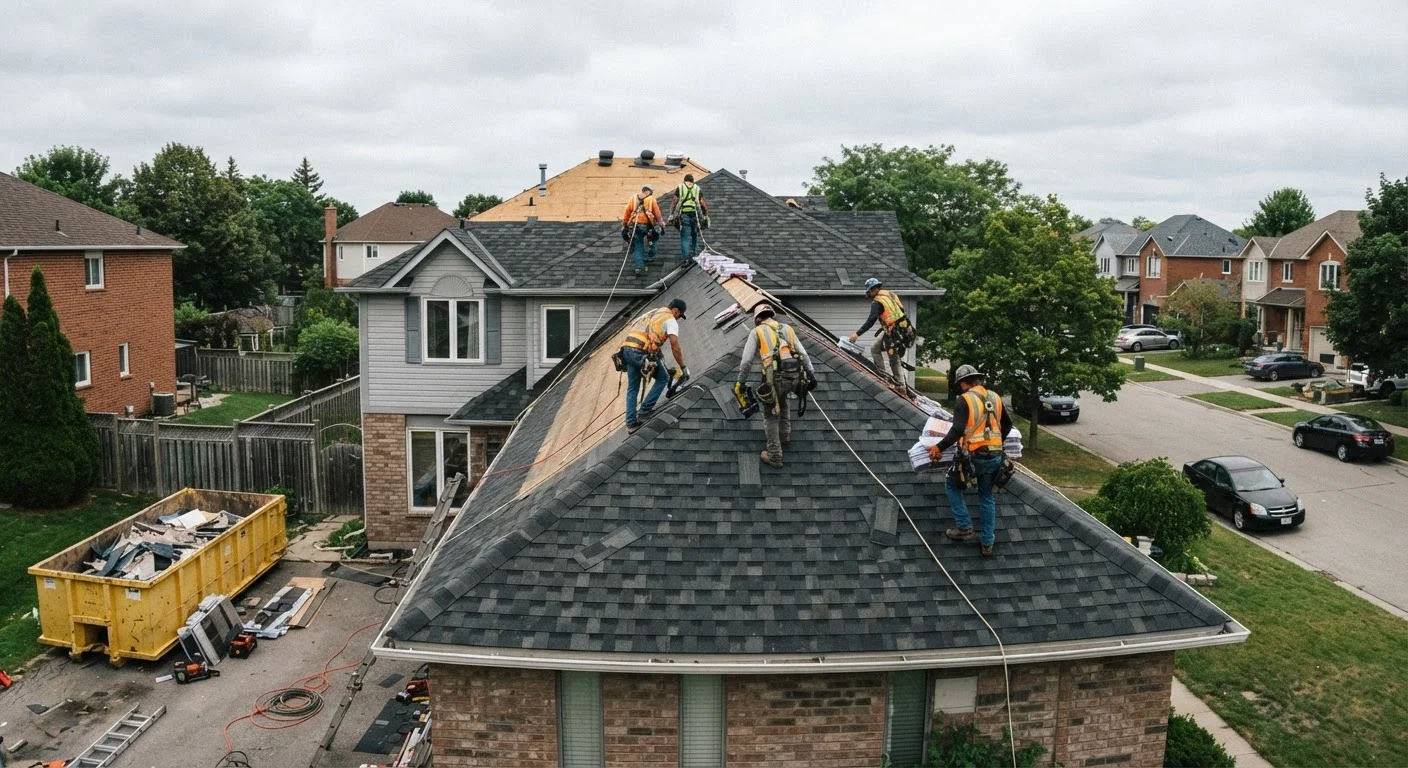
When you hire a roofing company, you may assume the crew that shows up is employed directly by that company. In many cases, that assumption is wrong. A roofing contractor — the business you sign a contract with — often acts as a project manager, hiring independent crews, known as subcontractors, to perform the physical installation work.
This arrangement is widespread in the construction industry and not automatically a problem. Large roofing companies frequently use it to scale capacity during busy seasons. Smaller operations may subcontract specialty tasks like flashing or skylight work. The concern is not the practice itself but the lack of transparency that often surrounds it — and the real implications it has for insurance, accountability, and your warranty. See our guide to workmanship warranties to understand what coverage you may be relying on.
The Pros of Subcontractors on Your Roofing Job
Subcontracting is not without genuine advantages. Understanding these helps you see why legitimate contractors use the model and when it can work in your favour.
Access to specialised installation skills
Some subcontractors focus exclusively on specific roofing systems, such as metal roofing or flat membrane installations, meaning you may get more experienced hands for niche work than a general crew could provide.
Faster project completion during peak seasons
By pulling in additional crews, a contractor can avoid scheduling backlogs that would otherwise delay your project by weeks, especially following storm damage when demand spikes.
Established subcontractor relationships signal experience
A long-tenured contractor often maintains ongoing relationships with reliable subcontracting crews they have vetted over many jobs — which can be a marker of an organised, experienced operation.
General contractor retains overall accountability
In a well-structured arrangement, the contractor you hired remains legally and contractually responsible for the finished work, meaning your warranty and recourse path stay with the company you signed with.
The Cons: Where Homeowner Risk Increases
Despite the benefits, subcontracting introduces layers of complexity that can create real problems if you are not prepared for them. These are not hypothetical risks — they show up regularly in homeowner disputes.
Insurance gaps can leave you exposed
If a subcontractor is not covered under the general contractor's workers' compensation policy and is injured on your property, you could face unexpected liability. Always verify coverage in writing before work starts.
Workmanship warranty may be ambiguous
Some workmanship warranties are tied to the specific crew performing the work. If a subcontractor installs your roof but later goes out of business, the general contractor may dispute responsibility for defects.
Less on-site supervision from the company you hired
When subcontractors manage their own crews, the contractor you vetted and trusted may have limited presence during installation, reducing direct quality oversight on your project.
Accountability becomes harder to enforce
If something goes wrong — a leak, improper flashing, or damaged property — determining whether the general contractor or subcontractor is responsible can complicate and delay resolution significantly.
Lack of disclosure undermines trust
When a contractor fails to mention subcontracting upfront, it raises legitimate questions about what else they may not be forthcoming about, including licensing status and actual experience levels.
Unexpected complications from unclear accountability are also a common source of hidden roofing costs that surface after work begins.
Questions to Ask Before Signing Anything
Protecting yourself starts before anyone sets foot on your roof. These are the specific questions worth raising with any contractor during the vetting stage:
- Do you use subcontractors on this type of job? A straightforward question that a trustworthy contractor will answer honestly.
- Are all subcontractors covered under your general liability and workers' compensation insurance? If not, ask for certificates of insurance from the subcontracting firm directly. For more on what those terms mean, see our article bonded, insured, and licensed explained.
- Who supervises the crew on-site day to day? Is it someone employed by the contractor, or the subcontractor's own foreman?
- Does the workmanship warranty apply regardless of who does the work? Get this confirmed in writing.
- Will the subcontractor's name appear anywhere in the contract? If the general contractor resists naming them, that warrants caution.
For a full breakdown of what a solid roofing contract should include, see The Paper Trail That Protects You. And for broader warning signs during contractor vetting, review the red flags homeowners often miss.
Permits and Subcontractors: Who Is Responsible?
In most jurisdictions, the general contractor — the company you signed a contract with — is legally responsible for pulling any required roofing permits, even when subcontractors do the physical work. Subcontractors generally cannot pull permits in their own name for work they are performing under another company's contract. If a contractor suggests the subcontractor will handle permits independently, verify that claim with your local building department before work begins. Unpermitted work can affect your homeowner's insurance and home resale value.
What Your Contract Should Spell Out
Whether or not subcontractors are involved, your signed agreement with the general contractor is your primary legal protection. When subs are in the picture, the contract should go further than usual. At minimum, look for language that:
- Confirms the general contractor remains fully responsible for all work, regardless of who performs it
- Specifies who holds the workmanship warranty and how claims are filed
- Identifies supervision responsibilities clearly
- States that all workers on your property are covered by appropriate insurance
If a contractor is vague about any of these points or pushes back when you ask for clarification, that is worth noting. Transparency here is a reasonable expectation, not an unreasonable demand. It is also worth understanding who is responsible for pulling permits, which typically falls on the general contractor even when subs do the work.