

Key Takeaways
Gutter Guard Installation on Older Homes
Installing gutter guards on an older home means fitting protective covers over existing gutters to keep out leaves and debris — but aged properties introduce complications that newer homes typically don't have. Deteriorated fascia boards, non-standard gutter dimensions, and worn flashing can all add steps, materials, and labour time to a standard installation. Understanding these differences helps homeowners plan realistically and avoid unexpected costs.
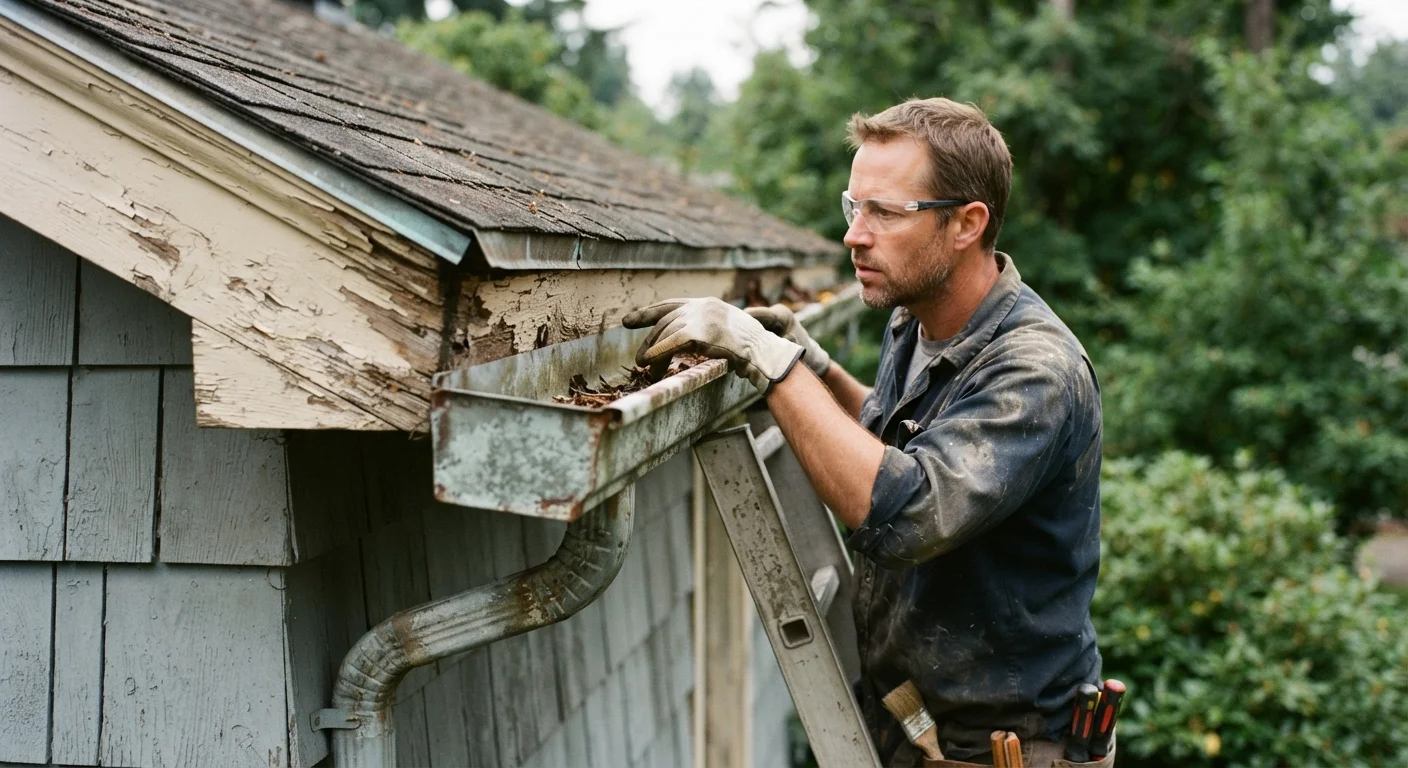
Fascia boards are the horizontal boards running behind the gutter, directly beneath the roof edge. When they rot or warp, they can no longer support gutters — or gutter guards — without repair or replacement first.
Why Older Homes Are a Different Challenge
A gutter guard installation on a home built in the 1960s or 1970s is rarely as straightforward as the same job on a recently constructed property. Decades of weathering, shifting materials, and older building standards mean that several systems around the roofline may need attention before guards can even go on.
The three most common complications are deteriorated fascia boards, non-standard gutter sizes, and worn or missing flashing. Each can independently affect the difficulty, timeline, and cost of a project. Understanding what each means — and how to spot the signs — puts you in a much stronger position when talking to contractors.
For broader context on how home age affects renovation complexity, the challenges older homes present across different projects are a useful reference point.
Fascia Boards: The Foundation Nobody Sees
Fascia boards are the first thing a contractor will inspect on an older home. These boards sit directly behind the gutter and carry much of its weight. When fascia wood rots — which happens gradually from moisture trapped between the gutter and the board — it loses the structural integrity needed to hold a loaded gutter securely, let alone gutter guards on top.
Signs of fascia trouble include paint peeling at the roofline, gutters that tilt or sag, and soft or discoloured wood visible at the gutter's back edge. A contractor will probe suspect areas before quoting. If replacement is needed, that cost sits on top of the guard installation itself.
Ask for a Pre-Installation Inspection
Before signing any contract, request that the contractor perform a hands-on inspection of your fascia, flashing, and existing gutters. A reputable contractor will include this as a matter of course. Getting inspection findings in writing protects you if additional repairs are needed mid-project.
Repairing fascia before installing guards is not optional — it is a safety requirement. Skipping this step risks gutter failure, water damage to the roof deck, and potential injury.
Non-Standard Gutter Sizes and What They Mean for Guard Selection
Today's standard residential gutters are typically 5 or 6 inches wide. Many homes built before the 1980s were fitted with 4-inch gutters — a size that most modern gutter guard products are not designed to accommodate. When guards don't fit correctly, they either need to be custom-ordered, adapted on-site, or the gutters themselves need replacing.
Custom sizing adds both material cost and lead time to a project. It also limits which guard styles are practical choices. This is explored in more depth in the article on matching guard style to older gutter profiles, which covers which designs work without stressing aging materials.
For a full breakdown of how sizing and other variables affect overall pricing, see the plain-language guide to gutter guard installation costs.
4 inches
Common gutter width in pre-1980s homes
Many homes built before 1980 used 4-inch gutters, compared to the 5–6 inch sizes standard in newer construction, limiting compatible guard options.
~40%
US homes built before 1980
According to U.S. Census Bureau housing data, a substantial share of the American housing stock predates 1980, meaning older-home installation challenges are widespread.
Flashing, Rooflines, and Hidden Complications
Flashing — the thin metal strips that seal the joint between the roof and vertical surfaces like chimneys or walls — deteriorates over time and can allow water to penetrate behind the gutter system. On older homes, flashing is frequently original to the house and may be corroded, improperly installed by historical standards, or simply missing in sections.
A thorough pre-installation inspection should include a check of the flashing condition. If a contractor spots problems during gutter guard installation and they weren't addressed in the quote, you may face a mid-project cost surprise. Asking explicitly about flashing inspection upfront avoids this.
Steep or complex older rooflines also raise labour costs by requiring more time and safety equipment. If you're thinking about broader roofline work alongside gutter guard installation, the guide on planning a roof replacement later in life outlines how to approach multiple projects strategically.
Getting the Installation Right: What to Ask a Contractor
The single most important step before any work starts on an older home is a detailed pre-installation inspection — not just a glance from the ground. A qualified contractor should physically check the fascia, the existing gutters, and the flashing before providing a written estimate.
Key questions to ask include: Will you inspect the fascia before finalising the quote? Does your estimate separate repair costs from installation costs? Are the guards you're recommending compatible with my existing gutter dimensions? What happens if you find additional issues once work begins?
Once guards are installed, routine upkeep becomes important regardless of home age. The year-round gutter guard maintenance overview explains what ongoing care involves. And if you're unsure which maintenance tasks are safe to handle yourself, the guide on when to call a professional for gutter maintenance is worth reading before climbing any ladders.
This article is for general informational purposes only. Always consult a licensed contractor before undertaking any roofline or gutter-related work, particularly on older properties. Local building codes and permit requirements vary — verify requirements with your local authority before any project begins.