

Key Takeaways
Why Older Homes Present Unique Challenges
Homes built before the 1980s were often constructed with gutter dimensions, roofing profiles, and materials that differ from today's standards. Standard modern gutters run 5 inches wide, but many older homes carry 4-inch gutters — or in some regions, gutters as wide as 6 inches. Most packaged gutter guard systems are engineered for 5-inch gutters, which means products that claim to be universal may gap, buckle, or sit unevenly on non-standard profiles.
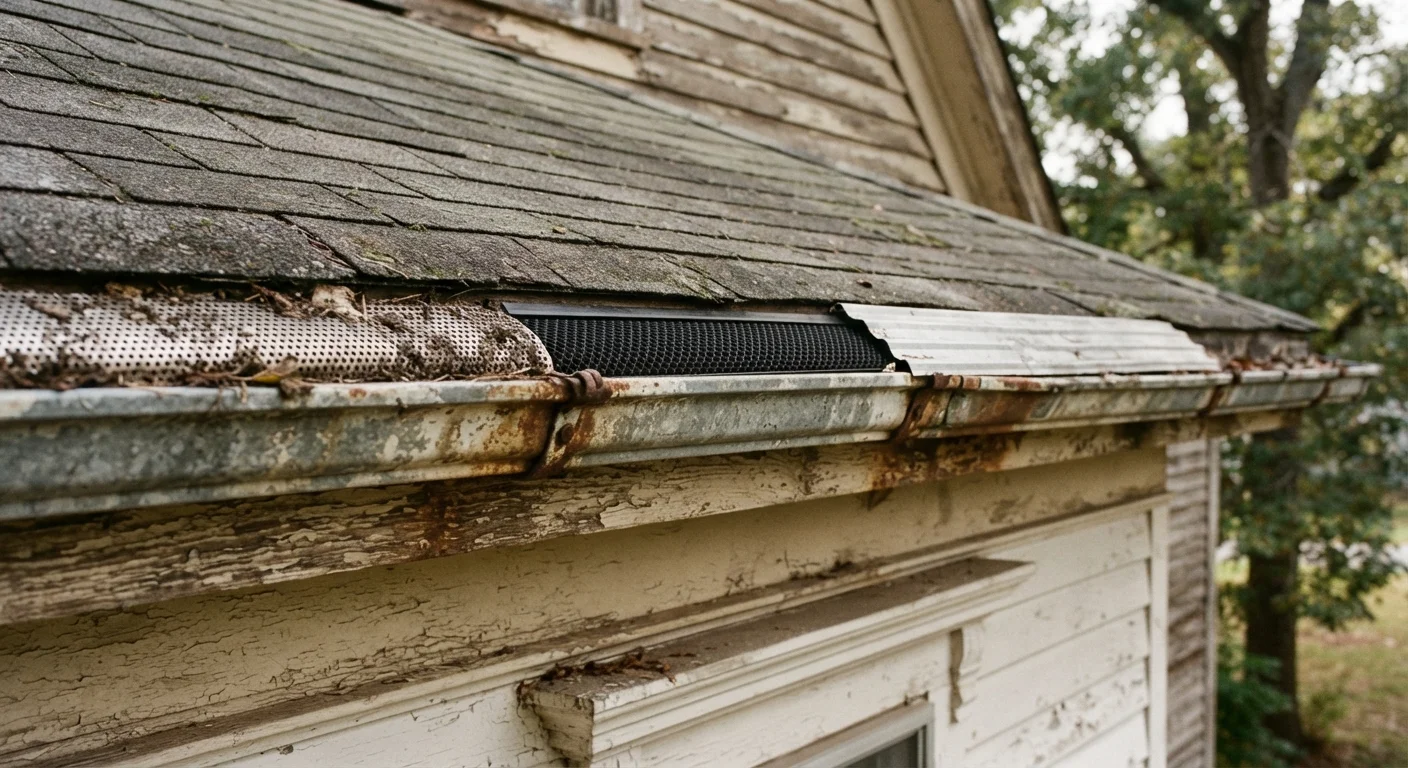
Beyond size, older rooflines often feature lower-pitch sections, decorative eave returns, or aged asphalt shingles that are brittle and closer to the end of their service life. Guards that require sliding a flange under the first row of shingles — a common installation method for some reverse-curve and surface-tension styles — can crack fragile shingles or disturb deteriorating flashing. Understanding these constraints before you shop is the most useful thing you can do. For a broader overview of what makes installation different on aging properties, see gutter guard installation for older homes.
Inspect Before You Install Anything
Installing gutter guards on a home with rotted fascia boards or sagging gutters can worsen existing damage. Before purchasing any guard system, have a qualified contractor inspect your gutters, fascia, and soffit for underlying problems. Addressing structural issues first protects your investment and prevents more costly repairs later.
Identifying Your Gutter Profile
Before evaluating guard styles, you need two measurements: gutter width (measured inside, across the top opening) and gutter depth (measured from the lip down to the bottom of the channel). Write these down. Also note the gutter shape — K-style gutters have a flat back and decorative front profile, while half-round gutters are curved like a half-pipe and are common on homes built before the mid-20th century.
Half-round gutters require specific clip-on or snap-in guards designed for their curved rim. Most flat-bottomed K-style guards will not seat properly on a curved gutter edge and can pop off in wind or heavy rain. If you are unsure which style you have, a photo taken from directly above the open gutter end is enough for most contractors or home-improvement retailers to confirm the profile. For a quick visual reference of guard types and which profiles they suit, review this gutter guard type reference.
Which Guard Styles Work Best — and Which to Approach Carefully
Once you know your gutter dimensions and shape, you can evaluate the main guard categories with your home's specific constraints in mind.
Micro-Mesh Screens
Micro-mesh guards — fine metal or synthetic screens stretched over a rigid frame — are generally the most adaptable option for older homes. Many designs rest on the gutter lip without any contact with roofing materials, avoiding stress on aged shingles. Look for models that specify your gutter width and depth, and confirm the frame material (aluminum is preferred over plastic for longevity). They perform well across a wide debris range. For maintenance expectations by material type, see maintenance across guard material types.
Reverse-Curve (Surface-Tension) Guards
These curved guards work by directing water around a rounded nose and into the gutter while debris falls away. They typically require tucking a tab under the first row of shingles, which can disturb fragile or aging roofing. If your shingles are more than 15–20 years old or show signs of brittleness, consult a roofing professional before choosing this style.
Foam Inserts and Brush Guards
Foam and brush-style guards sit inside the gutter channel and require no attachment to the roof at all, making them structurally benign for older homes. However, they tend to trap fine debris and can promote mold growth in humid climates. They may suit a temporary or low-debris situation but are rarely the best long-term solution for a home surrounded by mature trees.
Flat Snap-In Screens
Basic snap-in or drop-in screen guards are inexpensive and place no stress on roofing materials, but they require an accurate width match. On a 4-inch gutter, a 5-inch screen will either flex or overhang — neither outcome is acceptable. If you choose this style, measure carefully and source guards cut to your exact gutter width.
Your regional climate also plays a meaningful role. Freeze-thaw cycles and heavy rain affect guard performance as much as debris type does — learn how climate shapes guard durability before making a final decision.
Step-by-Step: Matching a Guard to Your Home
Work through the steps below before purchasing or scheduling installation. Each step narrows your options until you have a shortlist that genuinely fits your home's profile.
Measure your gutters accurately
Use a tape measure to record the interior width and depth of your gutters at an open end or at a downspout opening. Measure at least two locations on each run of gutter, as older gutters can sag or shift and may not be perfectly uniform. Note whether your gutters are K-style (flat back, angular front) or half-round (curved bottom and sides).
Assess the condition of fascia, gutters, and shingles
From the ground or a low, stable ladder, look for signs of rot on the fascia board (the wooden board the gutter hangs from), rust or separation at gutter joints, and curling or crumbling shingles at the roofline. Press gently on any accessible fascia — solid wood should feel firm. Any soft or spongy areas indicate rot that must be repaired before guards are added.
Identify your debris type and volume
Walk around your property and note what falls into your gutters: large leaves, pine needles, seed pods, or a mix. Heavy organic debris from mature trees close to the roofline demands a guard with fine filtration (such as micro-mesh) rather than a broad-opening screen. If debris is light and mainly large leaves, a simpler screen may suffice. For homes with significant tree cover, choosing a guard for heavy tree cover provides additional guidance.
Eliminate guard styles that require roof contact on aging shingles
If your shingles are more than 15 years old, are curling at the edges, or show granule loss (the rough, sand-like coating), cross off any guard style that requires inserting a tab or flange beneath the first shingle row. Reverse-curve guards and some micro-mesh designs use this attachment method. Focus instead on options that clip to the gutter lip or sit flush inside the gutter channel.
Confirm product fit against your exact measurements
With your gutter width, depth, and shape confirmed, compare them against the manufacturer's stated compatibility for any product you are considering. Do not assume a product labeled "standard" will fit — verify explicitly. For half-round gutters, confirm the product is designed for a curved rim. For 4-inch gutters, verify the guard is available in that width, not just 5-inch.
Get at least two professional opinions before purchasing
Before committing to a product, have at least two experienced gutter or roofing contractors inspect your gutters in person and recommend appropriate options. A professional assessment catches problems invisible from the ground and ensures the recommended guard style is compatible with your specific roof and gutter configuration. Ask each contractor to explain why they recommend a particular style for your home's profile. For a thorough pre-purchase framework, see everything to know before choosing a gutter guard.
When to Stop and Call a Professional
Some situations go beyond choosing a product. If you discover soft or spongy fascia boards while measuring, sagging gutter sections, or roofing shingles that crumble at the edge, those problems need to be resolved before any guard is installed. Attempting to mount guards on damaged infrastructure typically accelerates the underlying deterioration.
Similarly, if your roof pitch is steep, the gutters are on a two-story or taller section of the home, or you have any balance or mobility concerns, installation is not a safe DIY project for most homeowners. Understand when to call a professional for a clear breakdown of tasks that warrant licensed contractor involvement. Getting the right guard matched correctly to your home's profile — and installed safely — is more important than saving a few dollars on labor.