

Key Takeaways
Why Winter Is Hard on Gutter Guards
Cold-climate homeowners face a specific set of challenges that don't appear on the maintenance radar during warmer months. Water freezes inside and around gutter guards, debris becomes locked in place by ice, and the repeated expansion and contraction of materials through freeze-thaw cycles gradually stresses every component of the system.
Understanding these forces helps you monitor your gutters more intelligently — and know when to call a professional. For a broader view of year-round maintenance, see our year-round gutter guard maintenance overview.
Freeze-Thaw Cycles
When temperatures hover near freezing, water trapped in or around your gutter guards expands as it freezes, then contracts as it thaws. Over dozens of cycles in a single winter, this can crack plastic guards, pop mesh panels out of their channels, or cause foam and brush-style inserts to compress and lose their shape. Even metal guards can experience loosened fasteners over time.
Ice Dams and Their Effect on Guards
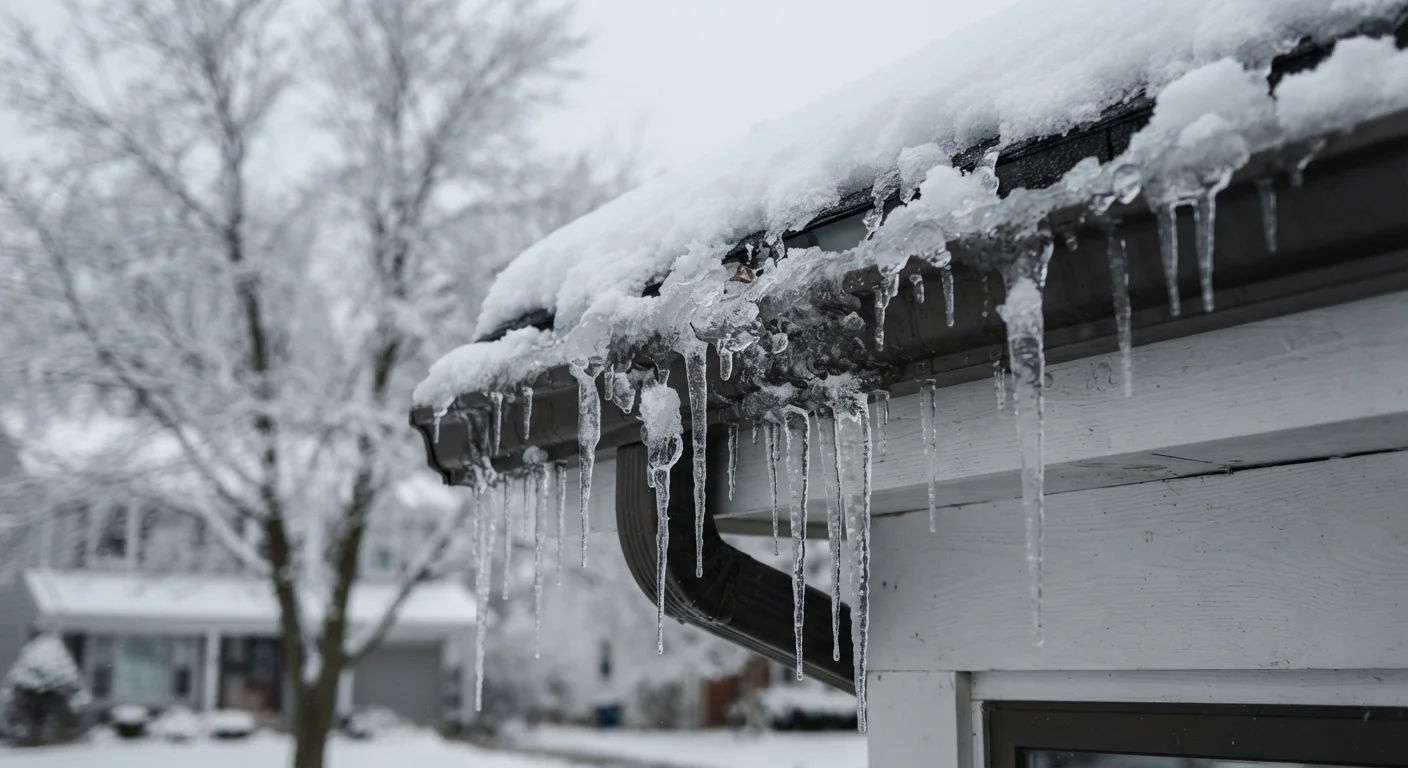
An ice dam forms when heat escaping through your roof melts snow near the ridge, and that meltwater refreezes at the colder eave. This creates a ridge of ice that traps water behind it. When an ice dam sits directly over a gutter, it can push against or beneath the guard, dislodging it or sealing the inlet entirely. Water backing up under shingles is a serious structural concern — if you notice significant ice buildup at the roofline, consulting a roofing professional is advisable.
Debris Locked by Ice
Leaves, pine needles, and shingle grit that accumulated in autumn don't simply sit on top of guards in winter — they freeze into place. This can block the small perforations or mesh openings that allow water to drain, turning your guard into a solid barrier. Fine debris and shingle grit are particularly problematic because they work their way into tight spaces before temperatures drop.
What to Inspect and When
Winter inspections don't require climbing a ladder in icy conditions — and we strongly discourage that. Most useful observations can be made safely from the ground using binoculars or a camera with zoom capability.
What you will need
Inspect from the ground after each significant storm
After heavy snowfall or an ice storm, step outside and scan your gutterline from the ground. Look for visible sagging, guards that appear lifted or dislodged, and any icicle formations that seem unusually large or clustered in one area. Large icicles directly below the gutter can indicate a blocked drain path.
Check for standing water or ice pools near your foundation
If gutters are blocked by frozen debris or ice dams, water will overflow and may pool near the foundation. Walk the perimeter of your home after a thaw and look for unusual wet patches, ice sheets on pathways, or soil erosion near downspouts. These are signs that water is not draining correctly through the system.
Clear light snow from guards when safe to do so
A light accumulation of snow on gutter guards is generally harmless and will melt on its own. However, if wet, heavy snow is compressing foam or brush guards, you can gently brush it away using a soft-bristle broom from ground level — only if you can reach safely without a ladder. Do not attempt this on icy surfaces.
Note any visible damage for post-winter repair
Use your phone to photograph any guards that appear cracked, bent, lifted, or misaligned. Note which sections of the gutter run are affected. This documentation is useful when describing the issue to a contractor after the season ends, and it helps you track whether the damage worsens between inspections.
Schedule a professional inspection before spring rainfall
Once temperatures reliably stay above freezing, arrange for a qualified gutter professional to inspect the full system. They can reseat any dislodged guards, clear frozen debris that remains trapped, check fastener integrity, and assess whether any sections of gutter have shifted due to ice weight. Early spring is prime time for this — before heavy rains test the system.
Keep in mind that gutter guards don't eliminate maintenance entirely, especially in climates with heavy snowfall or repeated freeze-thaw events. Guard style also matters: foam and brush inserts tend to hold ice more readily than low-profile micro-mesh or reverse-curve systems. Learn more about how guard design holds up in different regions in our guide on how climate affects gutter guard durability.
When winter ends, use the seasonal gutter guard maintenance checklist to do a thorough post-winter review before spring rains arrive.
Prevention Starts in Autumn
The best way to reduce winter gutter problems is thorough autumn cleaning before the first freeze. Removing leaves, pine needles, and debris from on top of and inside guards in late fall means less material available to freeze in place. A pre-winter clean is one of the highest-value maintenance tasks you can schedule.