

Key Takeaways
The Promise vs. the Reality of Gutter Guards
Gutter guards are often marketed as a set-and-forget solution — install them and never think about your gutters again. For homeowners who have spent years climbing ladders twice a year to scoop out soggy leaves, that promise is understandably appealing. The reality, however, is more nuanced.
Gutter guards genuinely do reduce the frequency and difficulty of gutter maintenance. What they don't do is eliminate it. Every guard style — regardless of price point or material — has at least one weakness that, over time, requires attention. Understanding those weaknesses by guard type helps you set realistic expectations before and after installation. For a broader look at what installation involves financially, see the Installation & Costs hub.
Myth
Once gutter guards are installed, you never have to clean your gutters again.
Fact
Gutter guards significantly reduce cleaning frequency but do not make it unnecessary. Debris still accumulates on top of or inside every guard type.
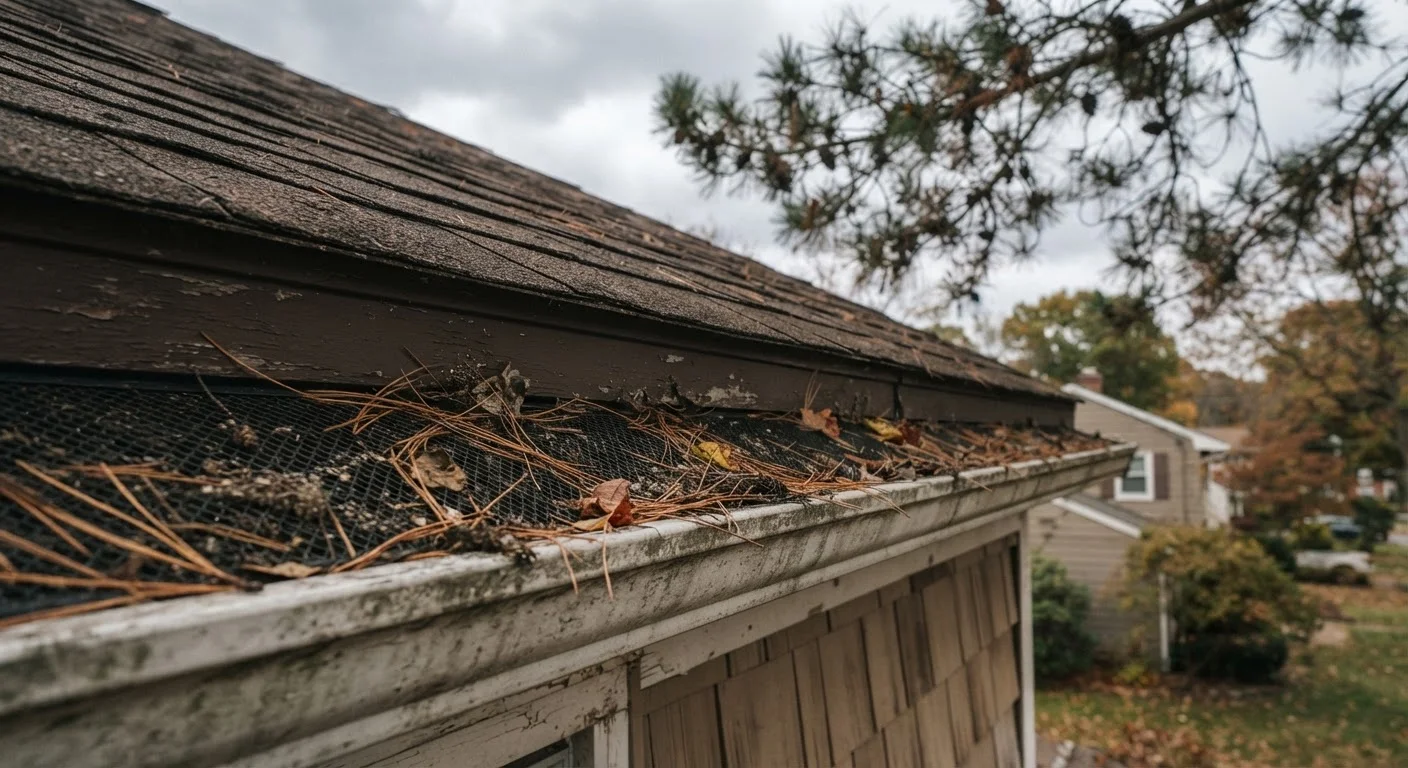
No guard design blocks 100% of debris indefinitely. Fine particles — shingle grit, pollen, seed pods, decomposed organic matter — work their way through or settle on top of almost every guard style over time. Micro-mesh guards, widely considered the most effective at blocking debris, can still develop a layer of fine sediment on the mesh surface that slows water flow. Why gutter guards still need cleaning explores exactly what accumulates and why periodic clearing remains necessary.
Myth
All gutter guard types require the same amount of upkeep.
Fact
Upkeep demands vary significantly by guard style. Brush and foam inserts tend to require more frequent attention than micro-mesh or solid-cover designs.
Brush-style inserts — cylindrical bristle rolls placed inside the gutter — trap debris within their bristles rather than shedding it away. Seeds, pine needles, and leaf fragments lodge in the bristles and are difficult to remove without pulling the insert out entirely. What nobody tells you about brush-style guards examines this maintenance reality in depth. Reverse curve guards, by contrast, redirect water inward using surface tension but can allow small debris to enter the gutter through the opening. How reverse curve guards actually work explains the physics and its limitations.
Myth
Gutter guards are a one-time investment with no further costs.
Fact
Gutter guards require ongoing — though reduced — maintenance investment. Skipping inspections can lead to water damage that costs far more to repair.
Overflow caused by a clogged guard can direct water against your fascia boards, foundation, or landscaping. Repairs to these areas often cost significantly more than the periodic gutter maintenance that prevented the problem. What manufacturers don't always tell you about upkeep addresses common gaps between marketing claims and real-world performance. It's also worth noting that some manufacturer warranties require documented maintenance — skipping inspections can void coverage.
Myth
Expensive gutter guards mean no maintenance is ever needed.
Fact
Higher price generally correlates with better performance, but even premium guards are not maintenance-free. Price reflects durability and filtration quality, not immunity from upkeep.
Premium micro-mesh guards made from stainless steel or aluminum do outperform cheaper foam or screen alternatives in debris rejection and longevity. However, they still require periodic surface cleaning — particularly in high-pollen seasons or under heavy tree cover. Roof pitch also plays a role: low-slope roofs allow debris to sit on guard surfaces longer rather than washing off during rain. Understanding what you're paying for and what you're not is essential before purchase. See weighing long-term value against upfront costs for a realistic cost-benefit breakdown.
How Your Climate and Landscape Raise the Maintenance Bar
Two homes with identical gutter guards can have very different maintenance schedules depending on where they sit. A house shaded by mature oak trees in the Mid-Atlantic will accumulate far more debris than a similar home on an open lot in Arizona. Likewise, a cold-climate home in Minnesota faces freeze-thaw cycles that can stress guard materials and create ice damming conditions that a Florida home will never encounter.
Tree type matters just as much as tree density. Pine trees shed fine needles year-round that slip through or settle on top of many guard designs. Maples drop winged seeds (samaras) in spring that can wedge into micro-mesh openings. Oaks release tannin-rich leaves and catkins that decompose slowly and can mat against screen-style guards. How tree coverage shapes your maintenance schedule explains these patterns in more detail.
In winter climates, ice and debris interact in ways that compound each other. Guards that trap moisture can freeze solid, blocking drainage entirely. Winter maintenance guidance for gutter guards covers what to monitor during cold months. Heavy rainfall also reveals guard performance gaps — overflow is one of the most common complaints homeowners report after installation. See why gutter guards overflow after heavy rain for practical context.
The takeaway: your local environment, not just the guard you choose, determines how often upkeep is needed. Homes in high-debris or cold-weather settings should plan for at least two inspections per year, even with premium guards installed. For a full seasonal framework, a year-round maintenance overview provides practical guidance. And if you're weighing whether guards are worth the investment given ongoing upkeep, a balanced look at long-term value vs. upfront costs can help you think it through.
This article is for general informational purposes only. Maintenance needs vary by product, installation, local climate, and home conditions. Always consult the manufacturer's guidelines and, where needed, a qualified contractor for advice specific to your home.