

Key Takeaways
Why Overflow Happens in the First Place
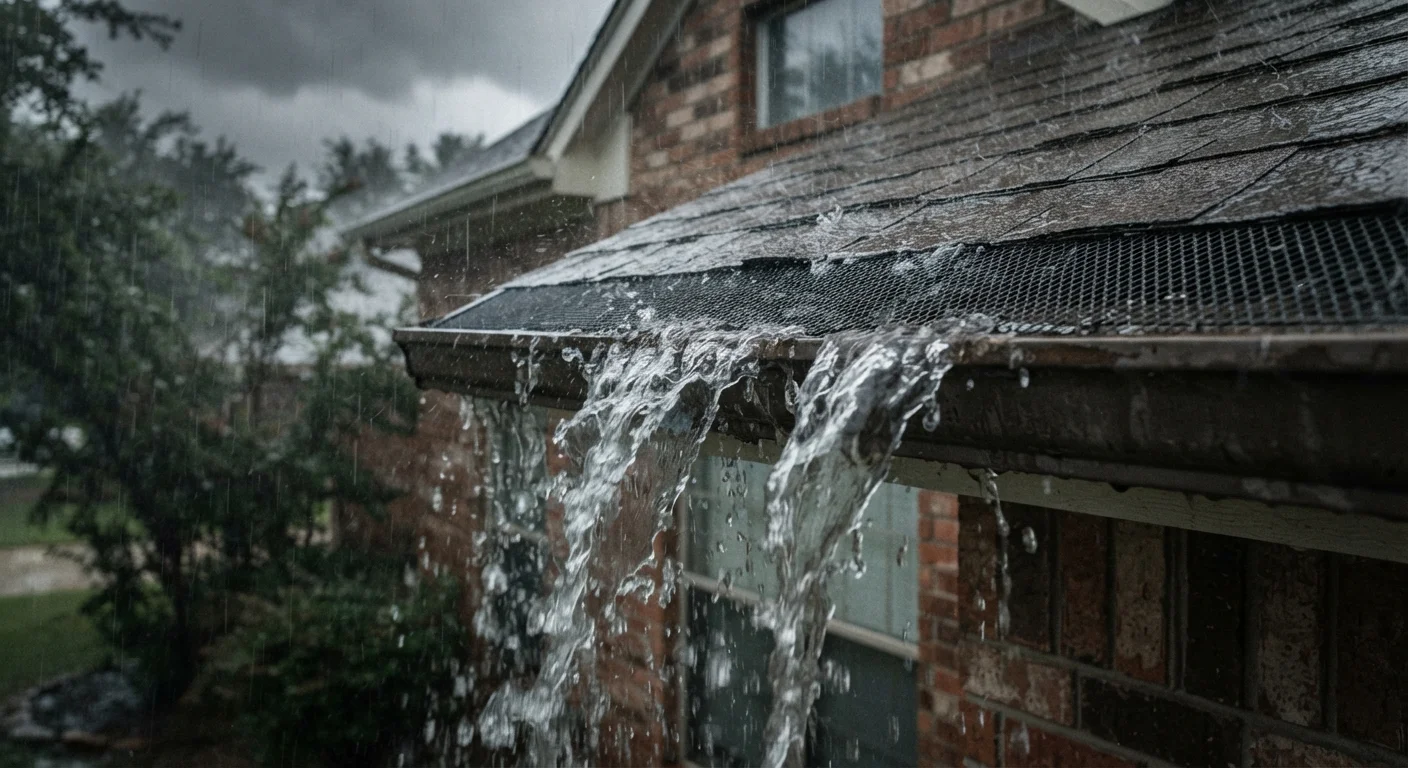
Gutter guards are designed to keep debris out while letting rainwater pass through freely. When they overflow during heavy rain, homeowners often assume the product is defective. In reality, overflow is usually the result of a combination of factors — some related to the guard itself, others tied to the gutter system beneath it or the roof above it.
Understanding those factors matters because the fix depends on the cause. Cleaning a clogged guard will not solve a problem rooted in undersized gutters, and adjusting the pitch will not help if the guard surface is coated in fine debris that slows water absorption. The sections below walk through the most common mistakes that lead to overflow — and what to do about each one.
For a broader view of ongoing upkeep, see our year-round gutter guard maintenance overview — it covers inspection schedules and seasonal tasks that can prevent many overflow situations before they start.
Common Mistakes That Cause Gutter Guard Overflow
Most overflow problems trace back to one or more of the errors listed below. Recognizing which applies to your situation is the most practical place to start.
Allowing fine debris to accumulate on the guard surface over time.
Why it happens: Homeowners often assume gutter guards are entirely self-cleaning. In practice, pollen, shingle grit, and decomposed leaf matter can form a thin film that slows water absorption significantly.
Installing a guard type that cannot handle the local rainfall rate.
Why it happens: Not all gutter guards are rated for the same water volume. A micro-mesh guard suited to light drizzle may be overwhelmed by a two-inch-per-hour downpour common in parts of the Southeast and Midwest.
Using a reverse-curve or surface-tension guard on a low-pitch roof.
Why it happens: Reverse-curve designs rely on water clinging to a curved surface and dropping into the gutter below. On low-pitch roofs, water arrives at a slower angle and is more likely to overshoot the opening entirely.
Neglecting to check that gutters are properly pitched toward downspouts.
Why it happens: Gutters settle over time, especially after freeze-thaw cycles or if they were not pitched correctly at installation. A level or slightly back-pitched gutter causes water to pool rather than drain.
Failing to account for undersized gutters when adding guards to an older home.
Why it happens: Many homes built before the 1990s have four-inch gutters, which were standard at the time but are often inadequate for modern roofing materials or larger roof footprints.
If you are unsure whether the overflow points to a deeper problem with your system, our article on signs your gutter guards are failing can help you distinguish a maintenance issue from a design or installation flaw.
What To Do When Overflow Persists
Do Not Climb a Wet or Sloped Roof
Inspecting or cleaning gutter guards after a rainstorm may seem like good timing, but wet roofing surfaces are extremely slippery. Falls from ladders and roofs are a leading cause of serious home injury. Wait until the roof is dry, use a stable ladder with a standoff, and consider hiring a professional for any work that requires roof access.
Once you have identified the likely cause, there are practical steps you can take. Start with a visual inspection from the ground using binoculars — look for debris sitting on top of the guard surface, sagging gutter sections, or areas where water visibly pools during rain. These observations help you or a contractor narrow down the problem quickly.
For debris buildup on the guard surface, a gentle rinse with a garden hose at low pressure is often enough to restore flow. Our guide to flushing a gutter guard system safely explains what pressure to use and what to avoid so you do not dislodge panels or damage finishes.
If the gutters themselves are too small for your roof's drainage load — a common issue on homes with steeply pitched roofs or large surface areas — a contractor may recommend upsizing to five- or six-inch gutters. This is a structural change that goes beyond the guard itself. Similarly, if the guard type is simply mismatched to your rainfall intensity or roof pitch, replacing it with a more suitable style may be the most effective long-term solution. See our overview of gutter guard types for a breakdown of how different designs handle water volume.
For persistent or complex overflow, consulting a licensed gutter contractor is advisable. They can assess the full system — guard, gutter, fascia, and downspout — and identify issues that are not visible from the ground. Attempting repairs at height carries real fall risk; always prioritize safety over a DIY fix when roof access is involved.
This article is for informational purposes only. Always verify local building codes and consult a qualified professional before making changes to your home's drainage system.