

Key Takeaways
Gutter Guard Maintenance
Gutter guard maintenance refers to the periodic inspection and cleaning needed to keep gutter guards functioning as intended. Even though guards are designed to block or redirect debris, small particles, organic growth, and sediment can still accumulate on or inside them over time. Skipping maintenance can lead to water overflow, roof damage, or foundation problems — the same issues guards are meant to prevent.
The frequency and method of maintenance varies by guard type (mesh, foam, reverse curve, brush) and local tree canopy density. No guard style is entirely self-cleaning.
The Promise vs. the Reality of Gutter Guards
Gutter guards are a genuinely useful home improvement — they reduce how often debris clogs your gutters and cut down on the number of times you need to climb a ladder for a full cleanout. But a common misunderstanding takes hold after installation: many homeowners assume the guards have made maintenance a thing of the past entirely.
That assumption can be costly. As our guide on what manufacturers don't always tell you explains, the "maintenance-free" label used in some marketing materials rarely reflects real-world performance. Guards slow the problem down; they don't stop it permanently.
Understanding why cleaning is still necessary — even with a quality product installed — helps you plan ahead and avoid the water damage that neglected gutters can cause.
What Still Accumulates — Even With a Guard in Place
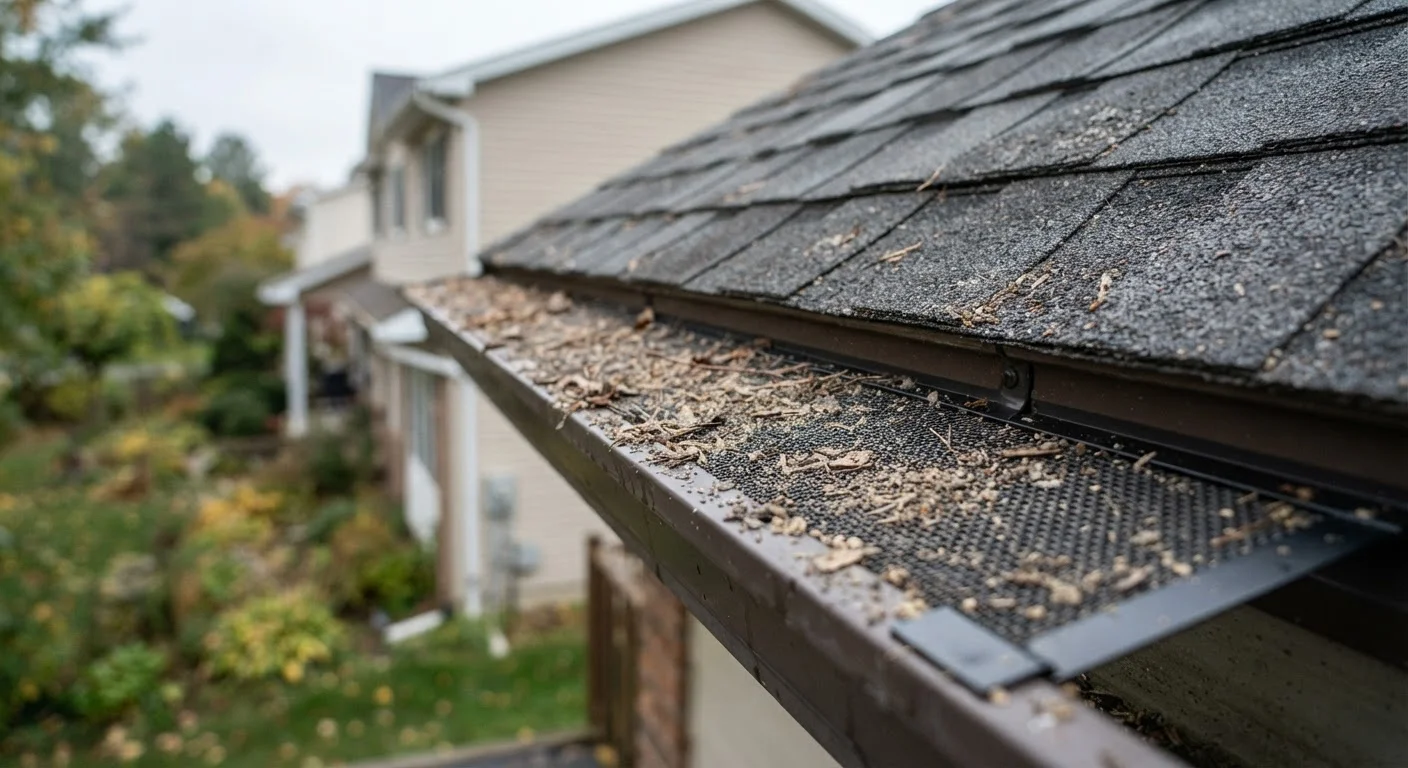
The debris that causes the most trouble with guarded gutters isn't the large leaves that guards are designed to shed. It's the small stuff that slips through or settles on top:
- Shingle grit: Asphalt shingles shed fine granules over time, especially as they age. This grit is small enough to pass through most guard openings or collect in the mesh surface, eventually forming a compacted layer that impedes drainage.
- Pollen and seed pods: Seasonal pollen falls in heavy quantities across most regions and accumulates on guard surfaces. Small seeds from nearby trees can sprout inside foam or brush-style inserts if left unchecked.
- Organic silt: Wind carries fine dirt and decomposed plant matter that settles into textured or mesh guard surfaces, gradually reducing their permeability.
- Algae and moss: In shaded or humid environments, moisture retained on guard surfaces encourages algae and moss growth. This biological layer can block water flow entirely and is often invisible until significant buildup has occurred.
For a deeper look at these specific clog types, see our companion article on fine debris, algae, and shingle grit.
Warranty Terms Often Require Maintenance
Many gutter guard manufacturers include explicit maintenance requirements in their warranty documentation. Failing to perform periodic cleaning — or allowing damage to go unaddressed — may give a manufacturer grounds to decline a claim. Before assuming your warranty covers all scenarios, review the maintenance terms carefully and keep a basic record of any cleaning or inspections you perform.
How Guard Type Affects Your Maintenance Routine
Not all gutter guards accumulate debris in the same way, and the maintenance each type requires differs meaningfully. Different gutter guard styles — mesh, foam, brush, reverse curve, and screen — each have distinct maintenance profiles:
- Micro-mesh guards are among the most effective at blocking debris entry, but their fine surfaces can collect pollen and silt that needs periodic rinsing or brushing.
- Foam inserts sit inside the gutter channel and are prone to trapping seeds and organic matter within the foam itself, which can be difficult to clean without removing the insert.
- Brush-style inserts present a similar challenge — debris works its way into the bristles. Our article on brush-style gutter guard maintenance covers this in detail.
- Reverse curve guards can collect debris at the lip and may allow small particles to enter the gutter during heavy rain events.
Understanding your specific guard type is essential for building a maintenance plan that's neither excessive nor neglectful.
Building a Simple, Sustainable Maintenance Habit
The goal isn't to clean your gutter guards as often as unprotected gutters — it's to check them at meaningful intervals so small issues don't become structural ones. A practical starting point for most homes is two inspections per year: one in late spring after pollen season, and one in late fall after the heaviest leaf drop.
During each inspection, look for:
- Visible debris resting on top of guards or partially blocking openings
- Signs of algae, moss, or discoloration on guard surfaces
- Water marks or staining on fascia boards, which may indicate overflow
- Any sections where guards appear bent, separated, or dislodged
For a structured approach to each season, our seasonal maintenance checklist walks through exactly what to look for and when.
Homes with dense tree canopy overhead, or located in humid climates where algae is common, should consider more frequent checks — possibly quarterly. And remember: working at roofline height carries real fall risk. When in doubt, contact a licensed gutter cleaning professional rather than attempting work at unsafe heights.
For a broader picture of how this fits into year-round home care, the year-round gutter guard maintenance overview is a helpful next read.
This article is for general informational purposes only. Gutter work at height should be performed by or in consultation with a qualified professional. Verify local codes and product warranty requirements before undertaking any maintenance.