

Key Takeaways
Option A
Heat Pump
The two-in-one system that cools and heats.
Best for: Homeowners who want a single system to handle year-round comfort, especially in moderate climates.
Option B
Traditional Central Air Conditioner
The dedicated, time-tested cooling specialist.
Best for: Homes in hot climates that already have a separate furnace or heating system in place.
If you want one system to both cool and heat your home
Heat Pump
A heat pump eliminates the need for a separate furnace, handling both functions efficiently through most of the year.
If you live in a very hot climate and already have a gas furnace
Traditional Central Air Conditioner
Pairing a dedicated AC with an existing gas furnace is often cost-effective and well-suited to extreme summer heat.
If you want to reduce your home's overall energy use for heating
Heat Pump
Heat pumps move heat rather than generating it, making them significantly more efficient than electric resistance heating.
If you live in a region with harsh, prolonged winters
Traditional Central Air Conditioner
Standard heat pumps lose efficiency below freezing; pairing a gas furnace with a dedicated AC may be more reliable in extreme cold.
How Each System Actually Works
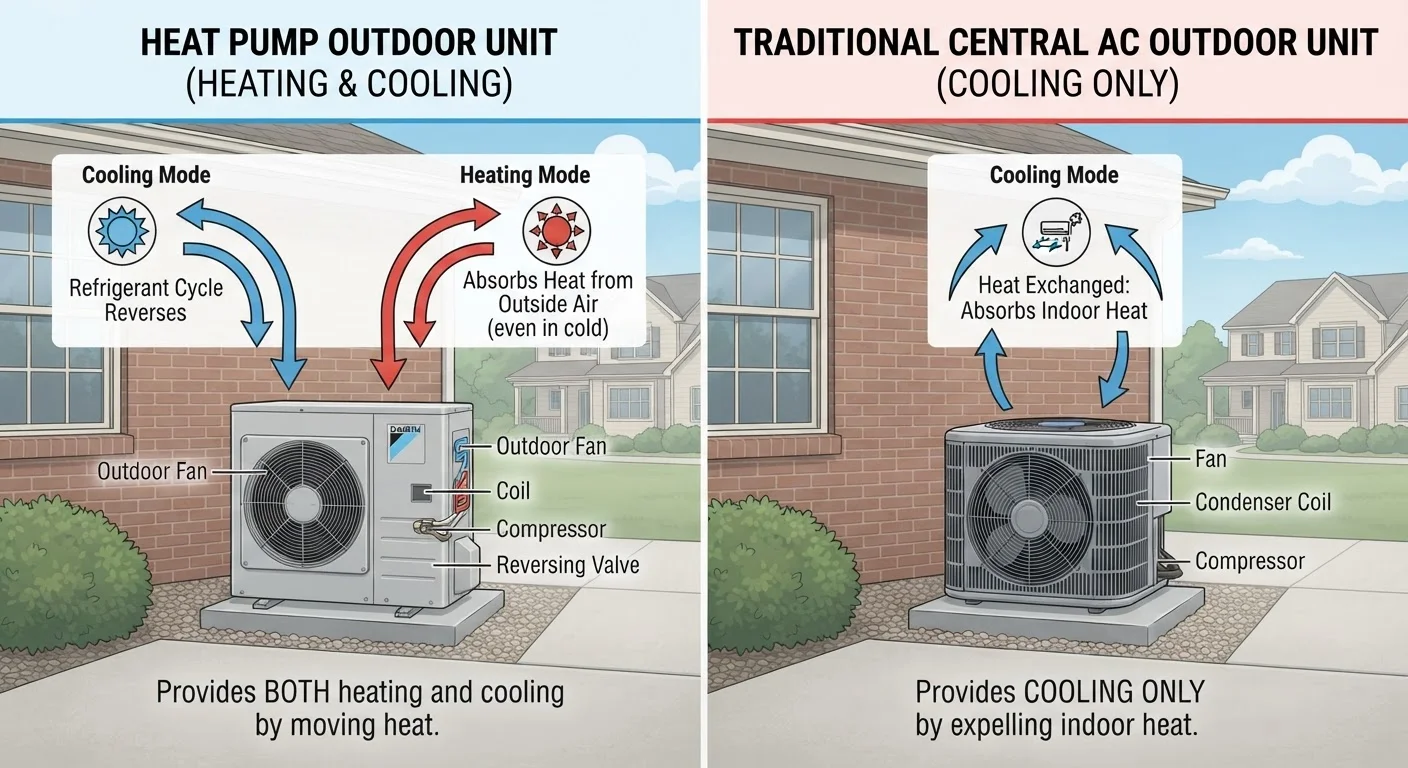
At first glance, a heat pump and a traditional air conditioner look almost identical — both have an outdoor unit, an indoor air handler, and use refrigerant to move heat. The fundamental difference lies in what each system can do with that process.
A traditional central air conditioner moves heat in one direction: it pulls warmth out of your indoor air and releases it outside, leaving your home cooler. That's all it does. When the temperature drops, you rely on a completely separate system — usually a furnace — to heat your home. If you're new to how cooling systems work in general, the Air Conditioning for Beginners guide covers the essentials clearly.
A heat pump uses the same refrigerant cycle but adds a reversing valve — a component that lets the system flip direction. In summer, it cools your home exactly like an AC. In winter, it reverses the process, extracting heat from outdoor air (even cold air holds some heat) and moving it inside. One system, two functions. For a deeper look at how that works, see Heat Pumps Demystified.
Key Differences at a Glance
Understanding where these two systems diverge helps you have a more informed conversation with any HVAC contractor who visits your home.
| Criterion | Heat Pump | Traditional Central AC |
|---|---|---|
| Primary function | Cools and heats | Cools only |
| Separate heating system needed | No (may need backup in cold climates) | Yes — furnace or other heater required |
| Best climate fit | Mild to moderate climates | Hot summers; any climate with existing heat |
| Heating efficiency | High (moves heat rather than generating it) | Not applicable — no heating function |
| Typical upfront cost | Higher than AC alone | Lower (AC unit only) |
| Year-round use | Yes | Cooling season only |
| Maintenance frequency | Twice yearly recommended | Once yearly typical |
One point worth noting: the upfront cost of a heat pump is typically higher than a standalone AC unit, but that figure doesn't account for the heating equipment you'd otherwise need to purchase or replace separately.
Climate and Efficiency: Where Each System Shines
Climate is one of the biggest factors in this comparison. Heat pumps are most efficient in mild to moderate climates — broadly speaking, areas where winter temperatures rarely dip far below freezing. In those conditions, a heat pump can deliver two to three units of heat energy for every one unit of electricity it consumes, making it substantially more efficient than electric baseboard or resistance heating.
In colder regions, standard heat pumps work harder as outdoor temperatures fall, and efficiency drops. Below a certain threshold — often around 25°F to 35°F depending on the model — some systems struggle to keep up without a backup heat source. Newer cold-climate heat pump models have improved considerably, but this remains an important consideration for homeowners in the northern US. For context on how heating systems compare more broadly, the Heating Systems hub is a useful starting point.
Traditional AC units paired with a gas furnace, by contrast, are a well-established combination that performs reliably across a wide range of climates — particularly where summers are intense and winters are long and cold.
Installation, Maintenance, and What to Ask a Contractor
Both systems require professional installation by a licensed HVAC technician. Attempting to handle refrigerant lines, electrical connections, or ductwork without proper credentials is both dangerous and, in most jurisdictions, illegal. Always verify that any contractor you hire holds the appropriate state licenses and EPA Section 608 certification for refrigerant handling.
Maintenance needs are similar for both: annual inspections, filter changes every one to three months, and keeping outdoor units clear of debris. Heat pumps are used year-round rather than seasonally, so some technicians recommend biannual check-ups — once before cooling season and once before heating season.
When speaking with a contractor, useful questions include:
- Is my existing ductwork compatible with a heat pump, or would modifications be needed?
- What backup heat source would you recommend for my climate?
- What size system does my home require based on a proper load calculation?
- Are there local rebates or utility incentives available for heat pump installation?
You may also want to compare your options further — the Central Air vs. Ductless Mini-Split comparison explores another common choice homeowners face when upgrading cooling systems.
This article is for informational and educational purposes only. HVAC installation and repair involves electrical, refrigerant, and structural considerations that require a licensed professional. Always verify local permit and code requirements before any system installation or replacement.