

Key Takeaways
Heat Pump
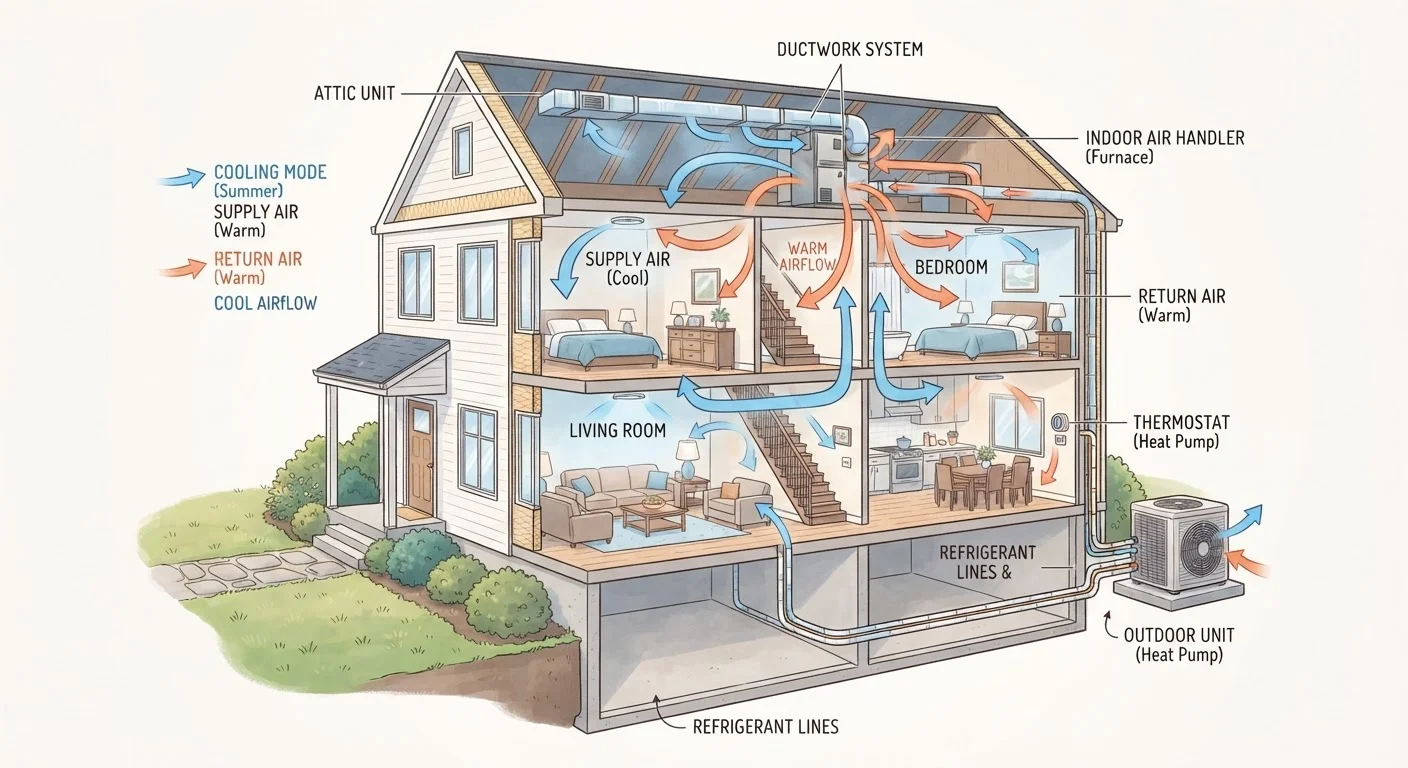
A heat pump is a home comfort system that moves heat from one place to another rather than burning fuel to create it. In winter, it pulls warmth from outdoor air and brings it inside. In summer, it reverses direction — pulling heat out of your home and releasing it outside, just like a central air conditioner. One system handles both heating and cooling year-round.
Most residential heat pumps are air-source systems that use a refrigerant cycle to transfer thermal energy. Cold-climate models can extract usable heat from outdoor air even when temperatures drop well below freezing.
The Core Idea: Moving Heat, Not Making It
Most home heating systems — gas furnaces, electric resistance heaters, boilers — create warmth by burning fuel or converting electricity directly into heat. A heat pump does something fundamentally different: it moves existing heat from one place to another.
Even on a cold winter day, outdoor air contains some thermal energy. A heat pump's refrigerant absorbs that energy outside, compresses it to raise its temperature, and then releases it inside your home as usable warmth. In summer, the process reverses: heat is pulled from the indoor air and expelled outside, cooling the house.
Think of it like a refrigerator working in both directions. Your fridge pulls heat out of the food compartment and releases it through coils at the back — a heat pump does the same thing, just on a whole-home scale, and it can flip the direction depending on the season.
For a broader look at how heat pumps compare to other whole-home heating options, see Home Heating Systems Explained.
The Two Main Types of Heat Pumps
Most homeowners will encounter one of two common configurations:
- Air-source heat pumps: These exchange heat with outdoor air. They are the most widely installed type and work well in most U.S. climates. A standard outdoor unit connects to your existing ductwork or, in ductless versions, to wall-mounted air handlers inside each room.
- Ground-source (geothermal) heat pumps: These draw heat from the stable temperatures found a few feet underground. They are highly efficient but require significant excavation during installation, making them a larger upfront investment and a less common residential choice.
For most homeowners exploring a heat pump for the first time, an air-source system — particularly a cold-climate model if you live in a northern state — is the practical starting point. If your home lacks ductwork, a ductless mini-split heat pump is worth discussing with a licensed HVAC professional.
Curious how heat pumps stack up against a traditional AC in summer? Heat Pumps vs. Traditional Air Conditioners offers a clear side-by-side breakdown.
300%+
Typical heat pump heating efficiency
Air-source heat pumps can deliver more than three units of heat energy for every one unit of electrical energy consumed, according to the U.S. Department of Energy.
-15°F
Minimum operating temperature for cold-climate models
Modern cold-climate heat pumps are rated to extract useful heat from outdoor air at temperatures as low as -15°F, greatly expanding their geographic viability.
15–20 years
Typical heat pump service life
With annual professional maintenance and timely filter changes, most heat pumps remain reliable for 15 to 20 years before major components require replacement.
When Heat Pumps Work Well — and When They Have Limits
Heat pumps perform best in climates where winter temperatures rarely stay below 20°F for extended periods. As outdoor temperatures drop, standard models extract less heat from the air, and efficiency decreases. Below a certain outdoor temperature — sometimes called the balance point — the system may not keep up with heating demand on its own.
Cold-climate heat pump technology has advanced considerably, and many modern units maintain strong performance well below freezing. Still, homeowners in the Upper Midwest or Mountain West should discuss a dual-fuel setup (heat pump plus a gas furnace backup) with a qualified contractor to ensure reliable warmth on the coldest days.
On the cooling side, heat pumps perform comparably to a central air conditioner in most climates. They use the same refrigerant-based process and connect to the same ductwork. The Cooling & AC hub covers efficiency tips and maintenance for both types of systems.
It's also worth noting that heat pumps circulate air throughout the home. Pairing them with good filtration and ventilation practices improves indoor air quality — a topic explored in the Ventilation & Air Quality hub.
What to Ask a Contractor Before Installing a Heat Pump
Heat pump installation is not a DIY project. Sizing, refrigerant handling, electrical work, and ductwork modifications all require a licensed HVAC contractor. An undersized or oversized unit will cycle incorrectly, wear out faster, and cost more to run.
Before committing to any system, ask a contractor these practical questions:
- What size unit does my home need? Proper sizing is calculated through a formal load calculation (called a Manual J calculation), not a rough estimate based on square footage alone.
- Is my home's electrical panel ready? Heat pumps often require a dedicated circuit. Older panels may need an upgrade.
- Do my existing ducts need modification? Leaky or undersized ducts reduce efficiency significantly.
- What efficiency rating should I look for? Look for the HSPF2 (heating) and SEER2 (cooling) ratings — higher numbers indicate greater efficiency. For a plain-language explanation of these and other terms, see Key Heating Terms Every Homeowner Should Recognise.
- Will I need a backup heat source? In colder climates, a hybrid setup may be the most reliable and cost-effective option. For a comparison with other heating approaches, Furnace vs. Boiler provides useful context.
Schedule Annual Maintenance Before Each Season
Have a licensed HVAC technician inspect your heat pump each year — ideally once before the heating season and once before summer. They will check refrigerant levels, clean coils, test electrical connections, and ensure the reversing valve (the component that switches between heating and cooling modes) is working correctly. Routine service is the single most effective way to extend the system's life and avoid unexpected breakdowns.
This article is for general informational purposes only. Consult a licensed HVAC professional for advice specific to your home, climate, and local building codes before making any installation decisions.