

Key Takeaways
Option A
Furnace
The forced-air heating workhorse found in most American homes.
Best for: Homes with existing ductwork that also need central air conditioning.
Option B
Boiler
The quiet, radiant heat system that warms rooms without blowing air.
Best for: Homes seeking even, draft-free warmth — especially older properties without ductwork.
If your home already has ductwork and a central AC unit
Furnace
A furnace shares the same duct system as your air conditioner, making it a practical all-in-one heating and cooling solution without added infrastructure.
If you want steady, draft-free warmth and have no existing ductwork
Boiler
Boilers deliver radiant heat through radiators or in-floor tubing, avoiding the temperature swings and air movement associated with forced-air systems.
If allergies or indoor air quality are a primary concern
Boiler
Because boilers do not blow air, they do not circulate dust, pet dander, or allergens the way a forced-air furnace can.
If you need a single system to cover a new build or major renovation
Furnace
Installing ductwork in new construction is generally more straightforward, and a furnace integrates easily with modern air handlers and central cooling.
How Each System Actually Heats Your Home
The single most important distinction between a furnace and a boiler is what they heat — and how that heat reaches you.
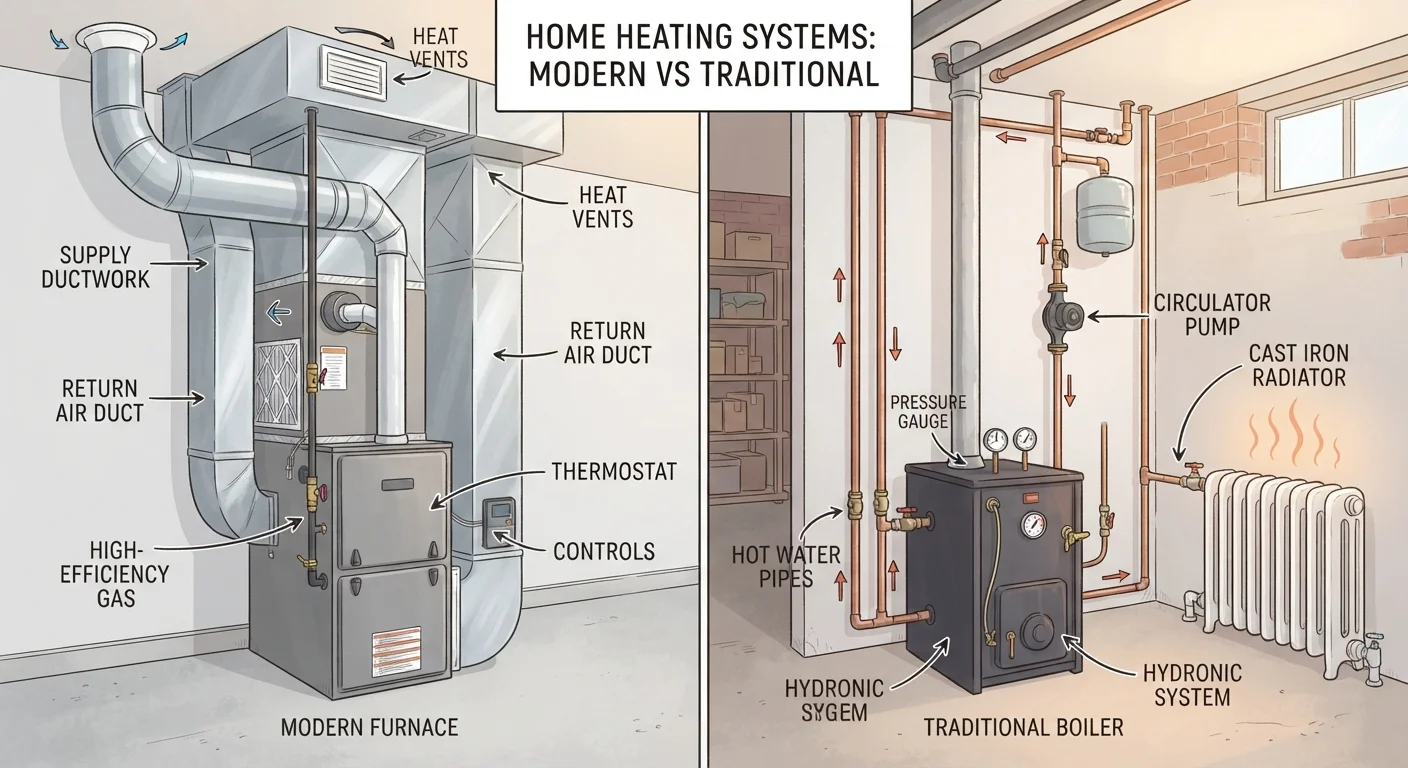
A furnace heats air. A gas burner (or electric element) warms a component called the heat exchanger, and a blower fan then pushes that warm air through a network of ducts and out of vents into your living spaces. The cooled air returns through separate return vents, gets reheated, and the cycle repeats. This is known as a forced-air system. You can learn more about how it compares to other delivery methods in our guide to forced air, radiant, and baseboard heat.
A boiler heats water. A burner heats water (or produces steam) inside a sealed vessel, and that heated water travels through pipes to radiators, baseboard units, or tubing embedded in your floors. The water releases its heat into the room and returns to the boiler to be reheated. This is a radiant or hydronic heating system.
Neither approach is universally superior — each suits different homes and priorities.
| Criterion | Furnace | Boiler |
|---|---|---|
| What it heats | Air | Water |
| Heat delivery method | Ducts and vents | Pipes, radiators, or floor tubing |
| Heat type | Forced air | Radiant / hydronic |
| Can share system with AC | Yes — uses same ducts | No — separate cooling needed |
| Air quality impact | Circulates dust and allergens | No airborne circulation |
| Common fuel sources | Natural gas, propane, electricity | Natural gas, oil, electricity |
| Typical lifespan | 15–20 years | 20–30 years |
| Primary filter maintenance | Air filter (monthly check) | No air filter; bleed radiators annually |
Maintenance: What Each System Needs
Both furnaces and boilers require annual professional servicing — skipping tune-ups is one of the most common reasons homeowners face mid-winter breakdowns. That said, the specific tasks differ.
Furnace Maintenance
- Replace or clean air filters every one to three months. A clogged filter forces the blower to work harder and reduces efficiency.
- Inspect the heat exchanger annually for cracks, which can allow carbon monoxide to enter living spaces — a serious safety hazard.
- Clean burners and check ignition components each season.
- Test the blower motor and belt for wear.
Boiler Maintenance
- Check water pressure and top up if the gauge reads low (typically 12–15 psi when cold).
- Bleed radiators annually to release trapped air that prevents even heating.
- Inspect the expansion tank and pressure relief valve — a licensed technician should test these for safe operation.
- Flush sediment from the system periodically to protect the heat exchanger.
For an overview of common terminology you'll encounter during service visits, see our heating terms reference guide.
Warning Signs You Should Not Ignore
Knowing what sounds and symptoms to watch for can help you catch small problems before they become expensive repairs.
Furnace Warning Signs
- Yellow or flickering burner flame (should be steady blue)
- Banging or popping when the heat kicks on
- Uneven temperatures between rooms
- Noticeably higher gas or electric bills without a change in usage
Boiler Warning Signs
- Visible water leaks or damp patches near the unit or pipes
- Banging, kettling (a rumbling sound like a boiling kettle), or clunking noises
- Radiators that are cold at the top but warm at the bottom — a classic sign of trapped air
- Pressure gauge reading consistently outside the normal range
If you notice a smell of gas near either system, leave the house immediately and call your gas utility from outside. Do not attempt to diagnose or repair a gas leak yourself.
For broader context on how these systems fit into the wider world of home heating, our home heating systems overview is a helpful starting point.
Permits and Licensed Contractors Are Typically Required
Any repair, replacement, or significant modification to a furnace or boiler — particularly work involving gas lines, venting, or electrical connections — generally requires permits and must be performed by a licensed HVAC technician or plumber. Requirements vary by state and municipality, so verify local codes before scheduling work. Unpermitted heating work can affect home insurance coverage and create safety risks.