

Key Takeaways
Our Verdict
No single heating system suits every home. Forced air works well where ductwork already exists and quick heat distribution is needed. Radiant systems reward homeowners who prioritize steady, quiet comfort and have the budget for installation. Baseboard units are a practical fit for supplemental heating or smaller spaces.
| Best for | Recommended |
|---|---|
| Homes with existing ductwork and central HVAC | Forced Air |
| Homeowners prioritizing silent, even warmth and no ductwork | Radiant Heating |
| Room additions, supplemental heat, or tight installation budgets | Baseboard Heating |
How Each System Actually Works
Understanding the basics of each heating approach helps you ask better questions when a contractor visits. For a broader overview, see our guide to common home heating systems.
Forced Air
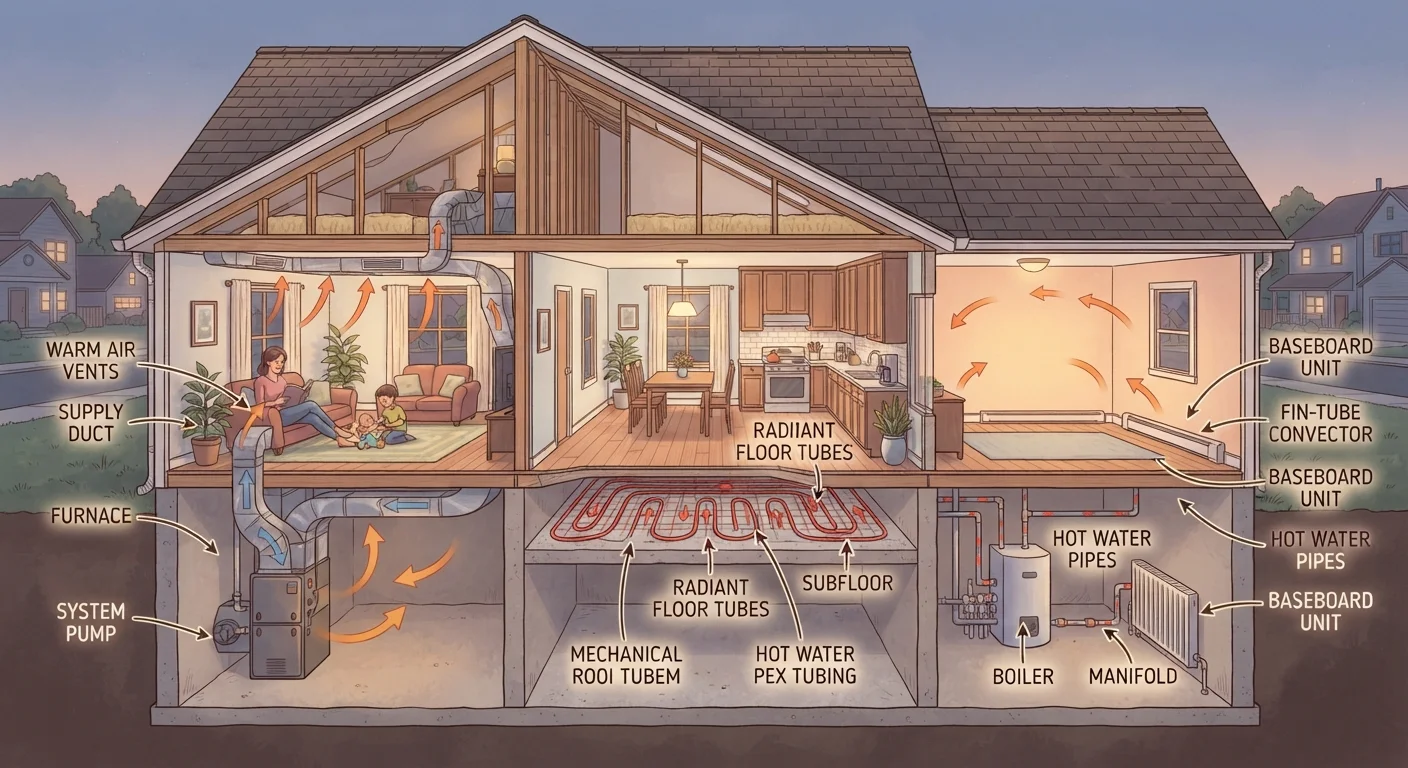
A furnace or heat pump warms air, then a blower fan pushes it through a network of ducts and out through vents in your floors, walls, or ceilings. The same duct system often handles cooling in summer, making it a dual-purpose infrastructure. Because air moves quickly, rooms warm up faster than with most other methods.
Radiant Heating
Radiant systems heat surfaces — most commonly floors — rather than air. Electric coils or water-carrying tubes (called a hydronic system) run beneath flooring and radiate warmth upward. The result is gentle, consistent heat at floor level, which many people find exceptionally comfortable. Hydronic radiant systems are typically powered by a boiler; you can learn more about that distinction in our furnace vs. boiler comparison.
Baseboard Heating
Electric baseboard heaters use metal heating elements housed in long, low units mounted along the base of exterior walls. Hydronic baseboard units circulate hot water through a pipe inside a finned enclosure. Both types heat by convection — cool air enters at the bottom, warms up, and rises naturally into the room.
| Forced Air | Radiant Heating | Baseboard Heating | |
|---|---|---|---|
| Heat delivery method | Heated air through ducts and vents | Warm surfaces radiate heat upward | Convection from wall-mounted units |
| Speed to warm a room | Fast | Slow but steady | Moderate |
| Noise level | Fan and duct noise present | Silent | Near-silent |
| Ductwork required | Yes | No | No |
| Typical installation cost | Moderate (with existing ducts) | High (especially hydronic) | Low |
| Best suited for | Whole-home with existing ducts | New construction or remodels | Supplemental or single-room use |
| Maintenance needs | Regular filter changes required | Minimal once installed | Minimal; keep vents clear |
Comfort, Noise, and Air Quality Differences
Each system creates a noticeably different living experience. Forced air can deliver warmth quickly, but the moving air also circulates dust, allergens, and humidity imbalances — a real concern for anyone with respiratory sensitivities. Filters must be changed regularly; neglecting them reduces efficiency and air quality.
Radiant heating produces no air movement, which means less dust circulation and no drafts. Floors feel warm underfoot, a comfort especially appreciated in colder climates. The system is also completely silent. However, it takes longer to bring a cold room up to temperature, so it works best when left running at a steady setting rather than turned on and off frequently.
Baseboard units operate quietly and require minimal maintenance, but uneven heat distribution can occur in larger rooms because warmth rises near the unit and doesn't always reach the far corners effectively. Furniture placement matters — blocking a baseboard unit significantly reduces its output and can create a fire hazard.
Installation Realities and Running Costs
Installation complexity varies considerably across these three systems. Forced air requires a full duct network; in a home that already has ducts, upgrading or replacing the furnace is relatively straightforward. In a home without ducts, adding them is a major construction project. Ductless alternatives — such as mini-split heat pumps — can bridge that gap, as explored in our central air vs. ductless mini-split article.
Radiant floor systems carry higher upfront installation costs, particularly hydronic systems, because running tubing under flooring typically means working around or replacing existing floors. Electric radiant is easier to retrofit in single rooms. Running costs for electric radiant can be higher depending on local electricity rates; comparing fuel sources is worth reviewing in our gas vs. electric heating comparison.
Electric baseboard units have the lowest installation cost of the three — they require only an electrical circuit and no ductwork or plumbing. However, electricity is typically more expensive per unit of heat than gas, so running costs in a whole-home baseboard setup can add up quickly in colder climates.
If precise temperature control by room appeals to you, it's worth asking your contractor about zoning options, which our article on zoned heating covers in detail.
Choosing What Fits Your Home
The right system is rarely the one with the longest feature list — it's usually the one that works with your home's existing structure and your daily habits. A few practical questions help narrow it down:
- Do you already have ductwork? If yes, forced air is typically the most cost-efficient path forward.
- Are you remodeling or building new? Radiant floor heating is easiest to install before flooring goes down.
- Are you heating one room or the whole home? Baseboard units are well-suited to supplemental or single-room heating.
- Do allergies or dust sensitivity matter? Radiant and baseboard systems don't circulate air, which may be beneficial.
Unfamiliar with key terms like BTU, AFUE, or hydronic? Our heating terminology reference explains them in plain language before your next contractor conversation.
Always work with a licensed HVAC professional when assessing, installing, or replacing a heating system. Permits and inspections are commonly required for new heating installations — verify your local requirements before any work begins.
This article is for informational purposes only. Heating system suitability depends on your specific home, local building codes, and climate. Consult a licensed HVAC contractor for professional assessment and installation guidance.