

Key Takeaways
Start here
The Four Main Types of Home Heating Systems
Next
How Each System Delivers Heat
Then
Fuel Sources: What Powers Your Heat
Watch for these
Warning Signs Your Heating System Needs Attention
Final step
When to Call a Professional
The Four Main Types of Home Heating Systems
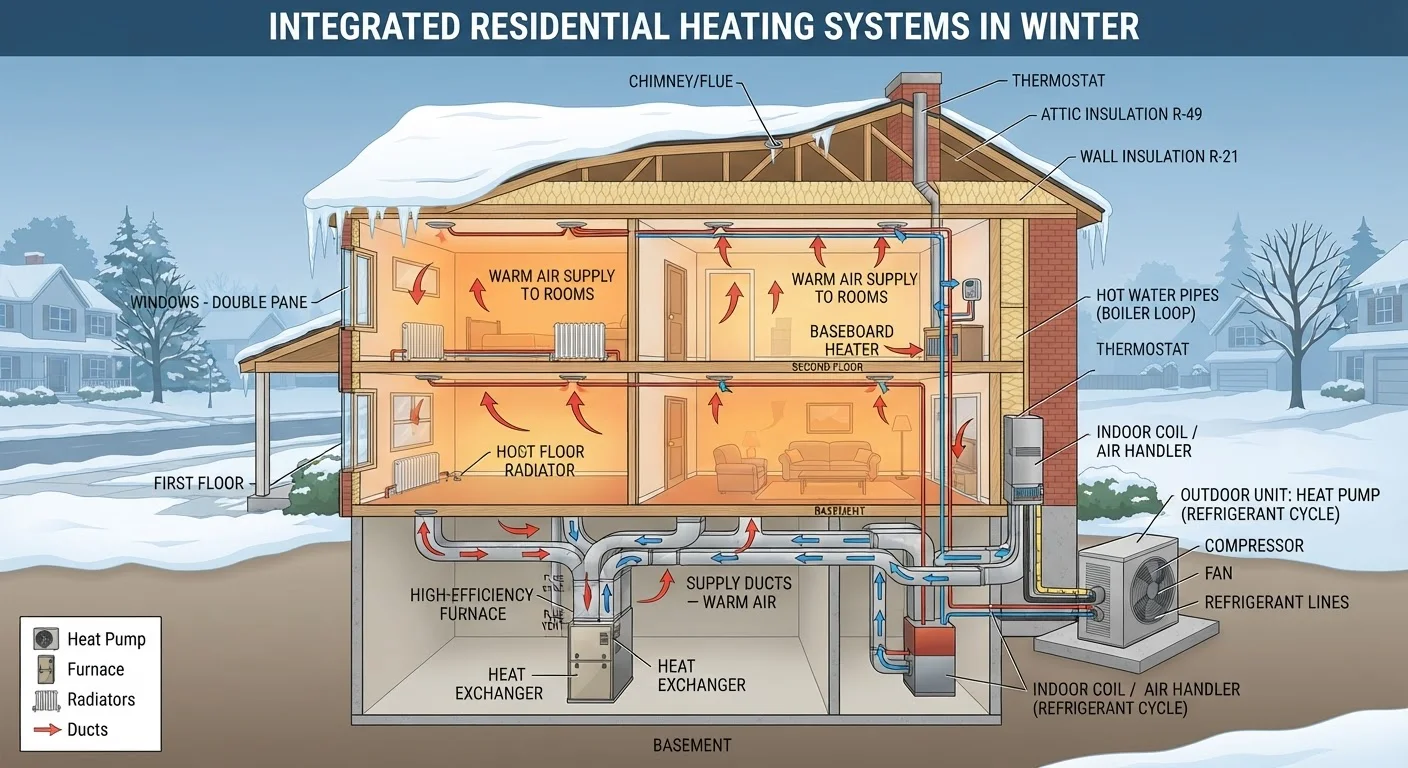
If you've ever stared at a thermostat wondering what's actually happening inside your walls and floors, you're not alone. Home heating can feel like a black box — but the core idea is simple: every system takes a fuel source, converts it to heat, and moves that heat into your living spaces.
The four systems found in most US homes are:
- Furnaces — heat air and push it through ducts
- Boilers — heat water and circulate it through radiators or floor tubing
- Heat pumps — move heat from outside air (or the ground) into your home
- Electric baseboard heaters — use electric resistance coils to warm individual rooms
Each has its own strengths, maintenance needs, and ideal use cases. For a deeper side-by-side look at the two most common systems, see our furnace vs. boiler comparison.
Heat exchanger
A metal component inside a furnace that gets hot from combustion and warms the air passing over it, without letting combustion gases mix with your indoor air.
Radiant heat
A method of warming a room by radiating heat from a warm surface — such as a radiator or heated floor — rather than blowing warm air through vents.
Heat pump
A device that moves heat from one place to another rather than generating it. In winter it pulls warmth from outside air or the ground; in summer it reverses direction to cool your home.
AFUE
Annual Fuel Utilization Efficiency — a percentage rating that tells you how much of the fuel your heating system burns actually becomes usable heat. A rating of 90% means 90 cents of every dollar of fuel heats your home.
Carbon monoxide (CO)
A colorless, odorless gas produced when fossil fuels like gas or oil burn incompletely. At elevated levels it is dangerous, which is why CO detectors are essential in any home with combustion appliances.
Short cycling
When a heating system turns on and off more frequently than normal without completing a full heating cycle. It often signals an oversized system, a dirty filter, or a failing component.
How Each System Delivers Heat
Understanding how heat gets from your equipment into your rooms helps you spot problems early and have informed conversations with technicians.
Forced-Air Furnaces
A furnace draws cold air from your home, passes it over a heat exchanger — a metal component warmed by combustion or electric resistance — and blows the warmed air through a network of ducts. Vents in each room release the heated air. The same duct system can carry cool air in summer if you have central air conditioning.
Boilers and Radiant Systems
Boilers heat water (or steam) and pump it through pipes to radiators or loops of tubing beneath your floors. The heat radiates gently and evenly into rooms without moving air. Many homeowners find radiant heat more comfortable, particularly for those with allergies, since it doesn't circulate dust.
Heat Pumps
A heat pump doesn't generate heat — it moves it. In winter, it extracts warmth from outdoor air or the ground and transfers it inside. In summer, the process reverses, acting as an air conditioner. Because they transfer rather than create heat, well-matched heat pumps can be highly efficient. See our heat pump vs. AC comparison to understand how they differ from standard cooling equipment.
Electric Baseboard Heaters
These self-contained units use electric resistance coils that warm the air immediately around them. They require no ducts or pipes, making them practical for additions or rooms without existing ductwork, though running costs can be high in areas with expensive electricity.
Fuel Sources: What Powers Your Heat
Your heating system's fuel source shapes its running costs, availability, and the safety considerations you'll need to manage.
| Fuel | Common System Types | Key Consideration |
|---|---|---|
| Natural gas | Furnace, boiler | Widely available; requires carbon monoxide detector |
| Heating oil | Furnace, boiler | Requires on-site storage tank; prices fluctuate |
| Electricity | Heat pump, baseboard, furnace | No combustion risk; cost depends on local rates |
| Propane | Furnace, boiler | Common in rural areas; stored in outdoor tank |
Gas and oil systems produce combustion byproducts including carbon monoxide — a colorless, odorless gas that is dangerous at elevated levels. Our article on home heating safety and carbon monoxide covers the precautions every homeowner should understand. If you'd like to learn the terminology used on equipment labels and utility bills, the heating terms reference guide is a helpful companion.
Warning Signs Your Heating System Needs Attention
Schedule Service Before the Cold Arrives
The busiest period for HVAC technicians is the first cold snap of the season, when many systems fail after sitting idle all summer. Booking an annual tune-up in early fall — before demand peaks — typically means faster scheduling and a system that's ready when you need it most.
Catching a problem early almost always costs less than waiting for a full breakdown. Watch for these common indicators that something isn't right:
- Unusual noises — banging, rattling, or squealing when the system starts or runs
- Uneven heat — some rooms noticeably colder than others with the thermostat unchanged
- Rising energy bills — a sudden increase without a change in usage habits
- Short cycling — the system turns on and off frequently without fully heating the home
- Yellow or flickering burner flame — on a gas furnace or boiler, the flame should be steady and blue
- Visible rust or moisture — around the unit or along pipes and ductwork
None of these symptoms should be ignored. Most have straightforward causes — a dirty filter, a failing component — that a technician can address before they escalate. Replacing an air filter is one of the simplest things a homeowner can do; our air filter reference guide explains the types and how often to swap them.
When to Call a Professional
Some heating tasks — such as replacing a standard air filter or adjusting a programmable thermostat — are safe for most homeowners. However, anything involving gas lines, electrical connections, heat exchangers, or refrigerant requires a licensed HVAC technician. Attempting these repairs without the proper training and tools can create serious hazards and may void your equipment warranty.
As a general rule, schedule professional service:
- Once a year before the heating season begins, even if the system seems fine
- Any time you notice a warning sign listed above
- Before and after a period of extended non-use (such as a vacation home)
- When moving into a home with an unfamiliar or aging system
When evaluating a contractor, ask whether they are licensed in your state, carry liability insurance, and will provide a written estimate before starting work. Local permit requirements vary — a professional should be familiar with what inspections apply in your area.
For a broader look at heating knowledge, including maintenance schedules and seasonal preparation, the complete homeowner's heating guide brings it all together in one place.
This article is for general informational purposes only. Always consult a licensed HVAC professional for system-specific advice, repairs, or installation work.