

Key Takeaways
Option A
Gas Heating
The high-output, lower-operating-cost workhorse.
Best for: Homeowners in colder climates who want fast, powerful heat and have access to a natural gas line.
Option B
Electric Heating
The simpler, safer-to-install alternative.
Best for: Homeowners without gas service, in milder climates, or those who prioritize low upfront installation costs.
If you live in a cold-winter climate and want lower monthly heating bills
Gas Heating
Gas delivers more heat per dollar in most cold regions and heats spaces quickly, which matters when outdoor temperatures drop sharply.
If your home has no existing gas line or you want simpler installation
Electric Heating
Running a new gas line is expensive and requires permits; electric systems connect to your existing wiring with far less disruption.
If safety simplicity is your top priority and you prefer no combustion appliances
Electric Heating
Electric systems produce no combustion gases, eliminating carbon monoxide risk entirely and removing the need for flue or venting systems.
If you already have a gas furnace and are deciding whether to replace it
Gas Heating
Replacing an existing gas system with another gas unit is typically more cost-effective than converting to electric, given existing infrastructure.
How Each System Produces Heat
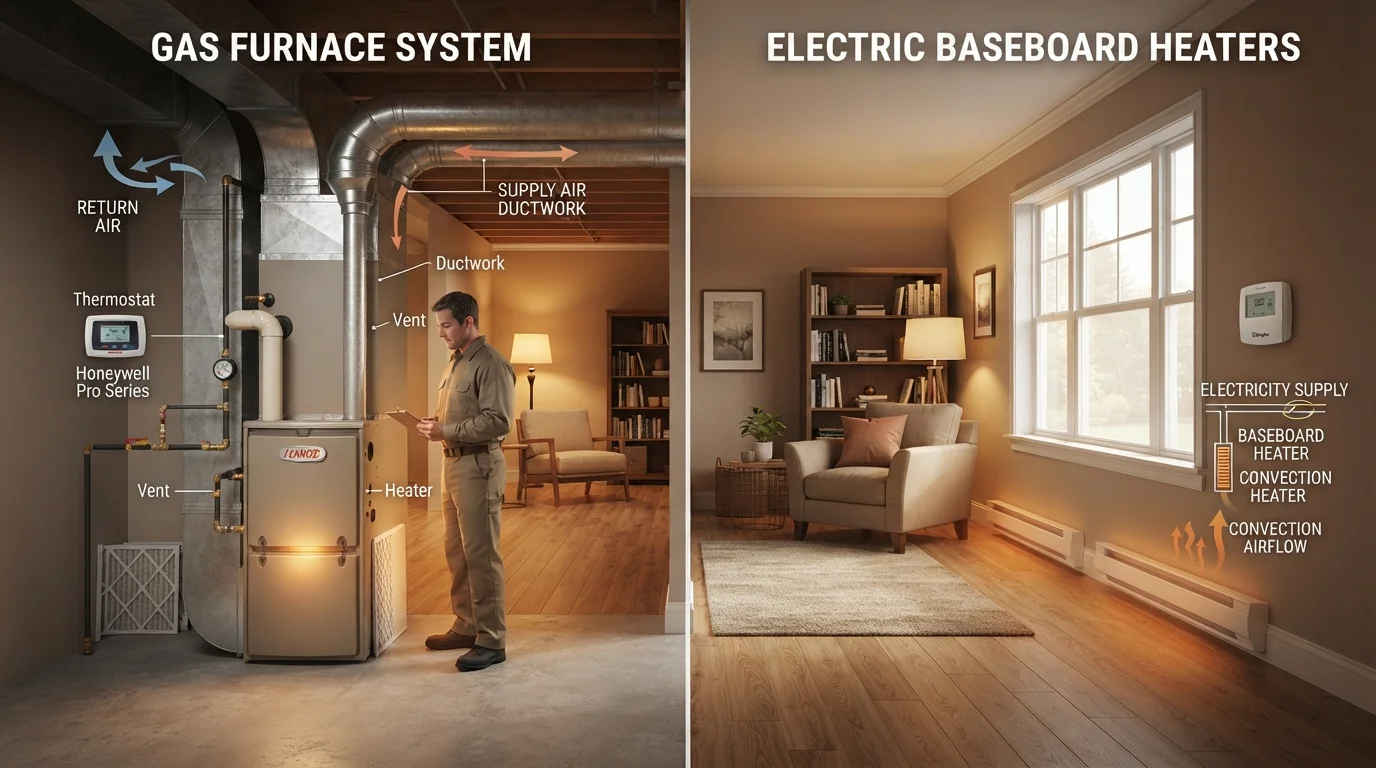
Understanding what sets gas and electric heating apart starts with how each system generates warmth. A gas furnace burns natural gas (or, less commonly, propane) inside a heat exchanger. Air passes over that heated exchanger and is pushed through ducts into your living spaces. The process is fast and produces high-temperature air quickly.
Electric heating works differently depending on the system type. Electric furnaces pass air over heat-producing coils; baseboard heaters warm air through metal fins heated by electrical resistance; heat pumps move heat from the outdoor air into your home rather than generating it directly. For a plain-language overview of these system types, see our guide to common heating systems.
The key mechanical difference: gas combustion releases significantly more energy per unit of fuel than electrical resistance heating, which is why gas heats spaces more rapidly and at higher output levels.
Running Costs: Gas vs. Electric
For most U.S. homeowners, natural gas costs less per unit of heat (measured in BTUs) than electricity. The U.S. Energy Information Administration regularly tracks residential energy prices, and historically gas has offered a lower cost-per-BTU in the majority of regions — though this varies by state and can shift with market conditions.
That said, electric heat pumps complicate this comparison. Because they move heat rather than generate it, heat pumps can deliver two to three units of warmth for every unit of electricity consumed — making them far more efficient than simple electric resistance heating and sometimes competitive with gas on operating costs.
| Criterion | Gas Heating | Electric Heating |
|---|---|---|
| Typical operating cost | Lower in most U.S. regions | Higher (resistance); competitive (heat pump) |
| Installation complexity | Higher — needs gas line and venting | Lower — connects to existing wiring |
| Heat output speed | Fast, high-temperature air | Slower; lower air temperature |
| Carbon monoxide risk | Yes — requires CO detectors | None — no combustion |
| Performance in extreme cold | Strong | Variable (heat pumps lose efficiency) |
| Maintenance requirements | Annual professional inspection essential | Periodic checks; fewer moving parts |
Your actual bill depends on local utility rates, your home's insulation quality, and how cold your winters get. In mild climates, the cost gap between gas and electric narrows considerably. Always request current rate information from your local utility before making assumptions.
Comfort and Performance
Gas heating tends to produce air that feels warmer because furnaces deliver air at higher temperatures — typically around 120–140°F from the register. Many homeowners describe this as a more immediately satisfying heat, especially on very cold days.
Electric baseboard or resistance heating warms rooms more slowly and delivers lower-temperature air. Heat pumps can feel less warm in extreme cold because efficiency drops as outdoor temperatures fall, though modern cold-climate heat pumps perform well down to surprisingly low temperatures.
For homes with multiple zones, different heating delivery methods matter too. If you're exploring how forced air compares to radiant or baseboard options, our article on forced air, radiant, and baseboard heat walks through the trade-offs clearly.
Safety Considerations You Shouldn't Ignore
Gas heating introduces risks that electric systems do not. Any appliance that burns fuel can produce carbon monoxide — an odorless, colorless gas that is dangerous at elevated concentrations. Faulty heat exchangers, blocked flues, or inadequate ventilation are the main culprits. Working CO detectors on every floor and annual inspections by a licensed HVAC technician are not optional with gas heat — they are essential.
Electric systems carry no combustion risk. However, they must be correctly wired and have adequate circuit capacity. Overloaded circuits or improper installation create fire hazards. Always have a licensed electrician handle any new electrical heating installation.
For a deeper look at carbon monoxide risks specific to combustion heating, our article on heating your home safely covers ventilation requirements and detector placement in detail.
This article is for general informational purposes only. Heating system installation, repair, and safety requirements vary by location. Always consult a licensed HVAC professional and verify local code requirements before making changes to your home's heating system.