

| Recommended tune-up frequency | Once per year, ideally in spring before cooling season |
| Typical tune-up duration | 1–2 hours for a standard residential system |
| Refrigerant handling requirement | EPA Section 608 certification required (U.S. federal law) (U.S. Environmental Protection Agency) |
| Filter replacement interval | Every 1–3 months depending on filter type and conditions |
| Outdoor unit clearance | Minimum 2 feet on all sides from obstructions |
| Most common breakdown cause | Failed capacitors and dirty coils |
What a Seasonal AC Tune-Up Actually Involves
Many homeowners assume a tune-up means swapping the air filter and calling it done. In reality, a qualified HVAC technician works through a systematic checklist that touches every major part of your cooling system — from the indoor air handler to the outdoor condenser unit. If you're new to how these systems work, our beginner's guide to air conditioning explains the key components before diving deeper.
Below is a breakdown of what a technician typically inspects, measures, or adjusts during a professional tune-up — and why each task protects your comfort and your wallet.
| Recommended tune-up frequency | Once per year, ideally in spring before cooling season |
| Typical tune-up duration | 1–2 hours for a standard residential system |
| Refrigerant handling requirement | EPA Section 608 certification required (U.S. federal law) (U.S. Environmental Protection Agency) |
| Filter replacement interval | Every 1–3 months depending on filter type and conditions |
| Outdoor unit clearance | Minimum 2 feet on all sides from obstructions |
| Most common breakdown cause | Failed capacitors and dirty coils |
Electrical Components and Controls
The technician checks that capacitors, contactors, and wiring connections are in good condition. Worn capacitors are one of the most common causes of midsummer breakdowns. Loose or corroded wiring can create fire hazards or cause the system to short-cycle (turn on and off rapidly), which stresses the compressor.
Refrigerant Level Check
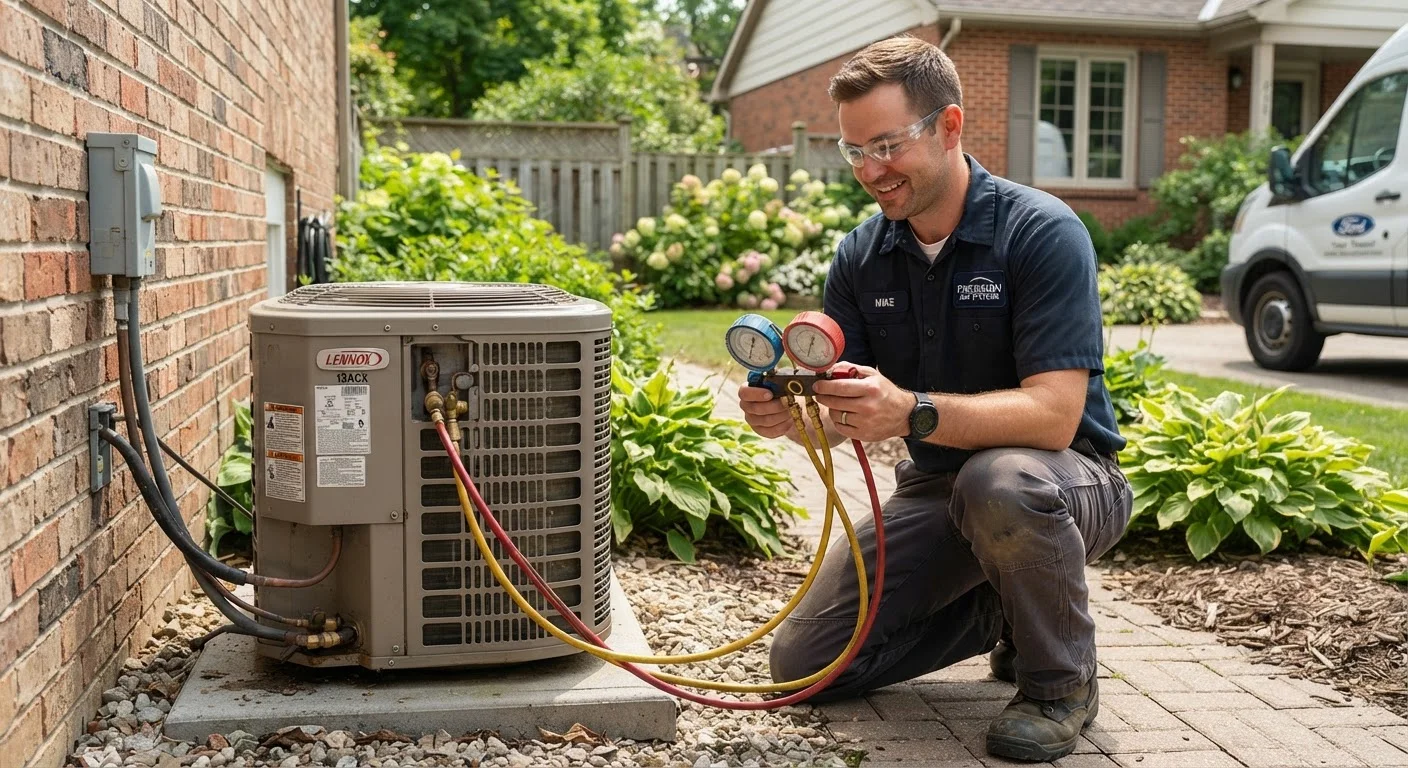
Refrigerant — the substance that transfers heat out of your home — must be at the correct charge (amount) for your unit. Too little refrigerant reduces cooling capacity and forces the compressor to overwork; too much can damage components. Technicians measure system pressure using gauges and compare readings against the manufacturer's specification. Note: Only EPA-certified technicians may legally handle refrigerants in the United States.
Condenser and Evaporator Coil Inspection
Dirty coils act like insulation, blocking heat transfer and driving up energy use. The technician inspects both the outdoor condenser coil and indoor evaporator coil for dirt, debris, or signs of corrosion. A coil cleaning may be performed on-site or flagged as a separate service depending on condition.
Blower Motor and Airflow
The blower fan circulates conditioned air through your ductwork. The technician checks motor amperage draw, lubrication (on older motors), and belt condition if applicable. Restricted airflow — from a dirty blower wheel or blocked return vents — makes the whole system less efficient and can cause the evaporator coil to freeze.
Thermostat Calibration and Operation
The technician verifies that your thermostat reads temperatures accurately and that the system responds correctly to its signals. A miscalibrated thermostat can cause the AC to run longer than needed or short-cycle, both of which raise energy bills.
Condensate Drain Inspection
As your AC cools air, it also removes humidity. That moisture drains through a condensate line. A clogged drain can cause water to back up into the unit or overflow into your ceiling or walls. The technician checks the drain pan and clears any blockages.
Why Skipping a Tune-Up Costs More in the Long Run
A neglected AC system doesn't fail all at once — it degrades gradually. Dirty coils, low refrigerant, and worn electrical parts each trim a little efficiency and add a little stress until a major component, often the compressor, gives out. Compressor replacements are expensive and sometimes cost more than the unit itself.
Regular tune-ups also give a technician the chance to catch small problems — a weakening capacitor, a slightly blocked drain — before they become emergency calls on the hottest weekend of the year.
Up to 15%
Efficiency loss from dirty evaporator coils
According to the U.S. Department of Energy, dirty coils significantly reduce system efficiency and increase energy use.
5%–15%
Potential energy savings from proper AC maintenance
The U.S. Department of Energy notes that regular maintenance can reduce cooling costs noticeably compared to neglected systems.
Scheduling a tune-up in spring, before cooling season begins, is generally recommended. This gives you time to address any repairs without urgency and ensures the system is ready when temperatures climb. For a helpful parallel, see the annual heating system maintenance checklist — the same proactive logic applies year-round.
What You Can Do Between Professional Visits
- Replace or clean air filters every 1–3 months, depending on your filter type and household conditions (pets, allergies, dust levels).
- Keep the area around the outdoor unit clear — at least 2 feet of clearance from vegetation, fencing, and stored items.
- Listen for unusual sounds. Rattling, grinding, or hissing are worth a call to a technician. Our article on warning signs your heating system needs inspection covers similar red flags that apply to cooling systems too.
- Check your condensate drain pan periodically for standing water.
Compared to what happens during a heating tune-up, an AC tune-up follows a similar structure but focuses on cooling-specific components like refrigerant and the condenser coil. Understanding both helps you stay on top of your home's full HVAC picture.
This article is for informational and educational purposes only. Always consult a licensed, qualified HVAC professional for diagnosis, repair, or refrigerant handling. Requirements for permits and licensed trades vary by location — verify local regulations before any HVAC work is performed.