

Key Takeaways
Why a Heating Service Visit Is More Than a Tune-Up
Many homeowners picture a heating service visit as a quick once-over — maybe a new filter and a signature on a form. In reality, a thorough visit from a qualified technician is a structured inspection that protects both your safety and your wallet.
Heating systems — whether a forced-air furnace, boiler, or heat pump — work harder in cold months than at any other time of year. If you're not sure which type you have, our plain-language guide to home heating systems explains the differences clearly. Each system type has specific parts that wear down, accumulate debris, or develop small faults that grow into expensive problems if ignored.
Annual service gives a licensed technician the chance to catch those faults early. It also gives you — the homeowner — a documented record of your system's condition, which can be useful for insurance purposes or when selling your home.
What you will need
What a Technician Actually Does: Step by Step
A standard heating service visit follows a logical sequence. While exact procedures vary by system type and technician, the steps below reflect what a thorough, professional inspection typically includes. Follow along so you know what to expect — and what to ask about if a step seems to be skipped.
Prepare your home before the technician arrives
Clear a two-foot path around your furnace, boiler, or air handler so the technician can work safely. Locate your thermostat and make sure it's accessible. If you have pets, secure them in another room. Write down any questions or concerns you've noticed — unusual sounds, cold spots in certain rooms, or a higher-than-usual energy bill.
Safety inspection of combustion and venting components
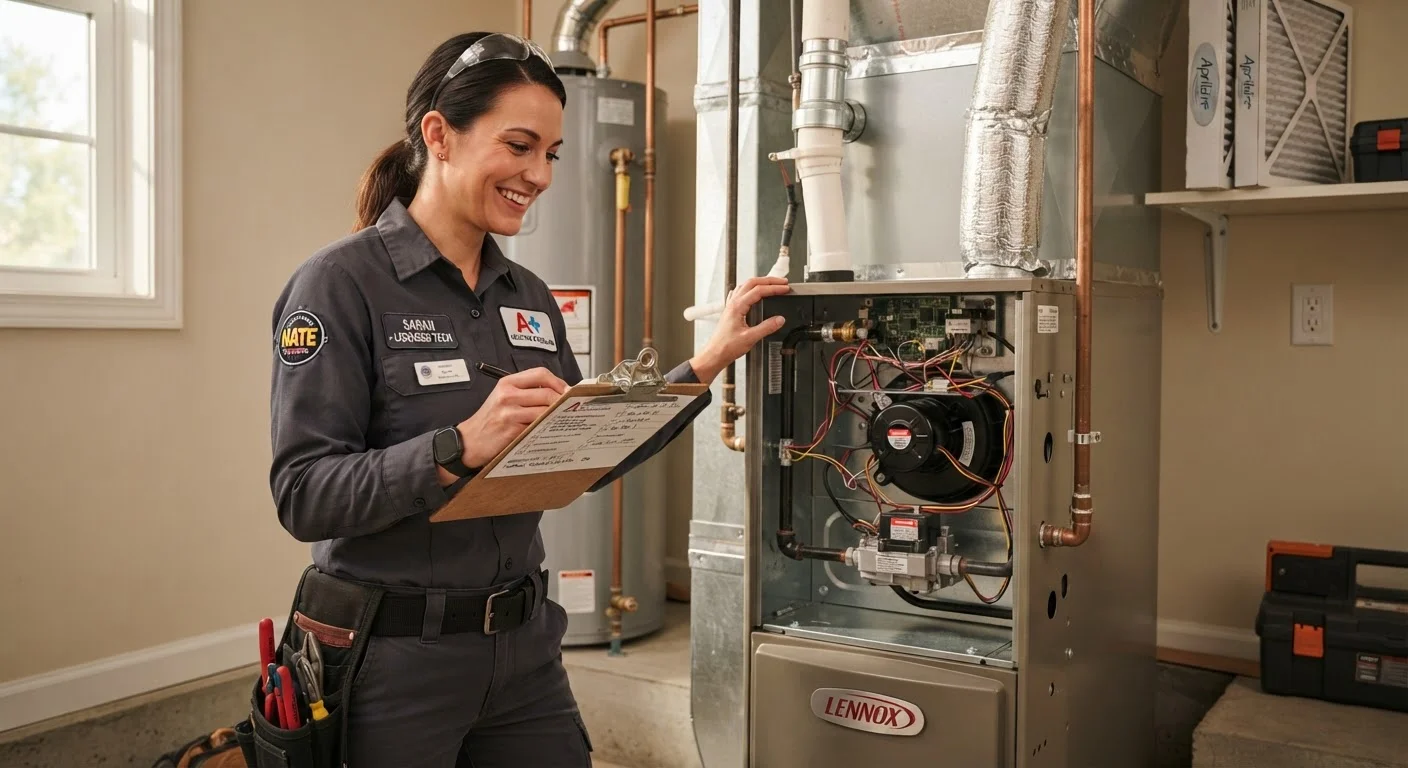
The technician will begin by checking components related to combustion safety. For gas furnaces and boilers, this means inspecting the heat exchanger for cracks, checking the burners for proper flame color and pattern, and verifying that the flue (the exhaust pipe) is clear and correctly vented to the outside. Carbon monoxide (CO) spillage is a serious health risk — this step is not optional.
Inspect and clean burners, heat exchangers, and ignition systems
Dirty burners reduce efficiency and can cause uneven heating or hard starting. The technician will clean the burner assembly and inspect the igniter or pilot system to make sure the system lights reliably. On older systems, a standing pilot may be checked and adjusted; on modern systems, an electronic igniter is tested for proper operation.
Check and replace the air filter
A clogged filter restricts airflow, forces the system to work harder, and can cause overheating. The technician will inspect the current filter and replace it if needed. Note that filter type and replacement frequency vary — a standard 1-inch filter may need monthly changes in heavy-use seasons, while a thicker media filter might last several months.
Test electrical connections, controls, and safety switches
Loose electrical connections can cause intermittent failures or become fire hazards over time. The technician will tighten connections, check voltage and amperage readings on the blower motor and other components, and test safety controls such as the high-limit switch — a device designed to shut the system down if it overheats.
Measure system performance and thermostat calibration
The technician will run the system through a full heating cycle and measure supply-air temperature at a register versus return-air temperature. This temperature rise (or temperature differential) indicates whether the system is producing heat within the manufacturer's specified range. They'll also confirm that your thermostat is reading accurately and communicating correctly with the system.
After the visit, ask the technician for a written service report. This document should list every item inspected, any readings taken, and any repairs or parts recommended. Keep it with your home maintenance records. Our annual heating system maintenance checklist is a helpful companion to review alongside that report.
Red Flags and What Comes Next
Not every service visit ends with a clean bill of health. A technician may find worn parts, a cracked heat exchanger (the component that separates combustion gases from indoor air), or signs that the system is struggling to meet your home's heating demand. These findings are not causes for alarm — they are exactly why annual service exists.
Never Ignore a Cracked Heat Exchanger
A cracked heat exchanger in a gas furnace is a serious safety issue, not a minor repair. It can allow carbon monoxide — a colorless, odorless gas — to mix with the air circulated through your home. If a technician identifies this fault, do not operate the furnace until it has been repaired or the unit replaced by a licensed professional. Ensure working carbon monoxide detectors are installed on every level of your home.
If the technician recommends repairs, ask them to explain each item in plain language: what the part does, what happens if it fails, and whether the repair is urgent or can be safely monitored. A trustworthy professional will not pressure you into same-day decisions on non-emergency work.
If you've noticed any symptoms between service visits — unusual noises, uneven warmth in different rooms, or a sudden spike in your energy bill — don't wait for the next scheduled appointment. Our article on warning signs your heating system needs a professional inspection walks through the signals that mean it's time to call sooner rather than later.
This article is for general informational purposes only. Heating system work involving gas lines, electrical components, or combustion chambers should always be performed by a licensed, qualified HVAC professional. Requirements for permits and licensed trades vary by locality — verify local codes before any repair or replacement work begins.