

Key Takeaways
Roofing Contractor's Licence
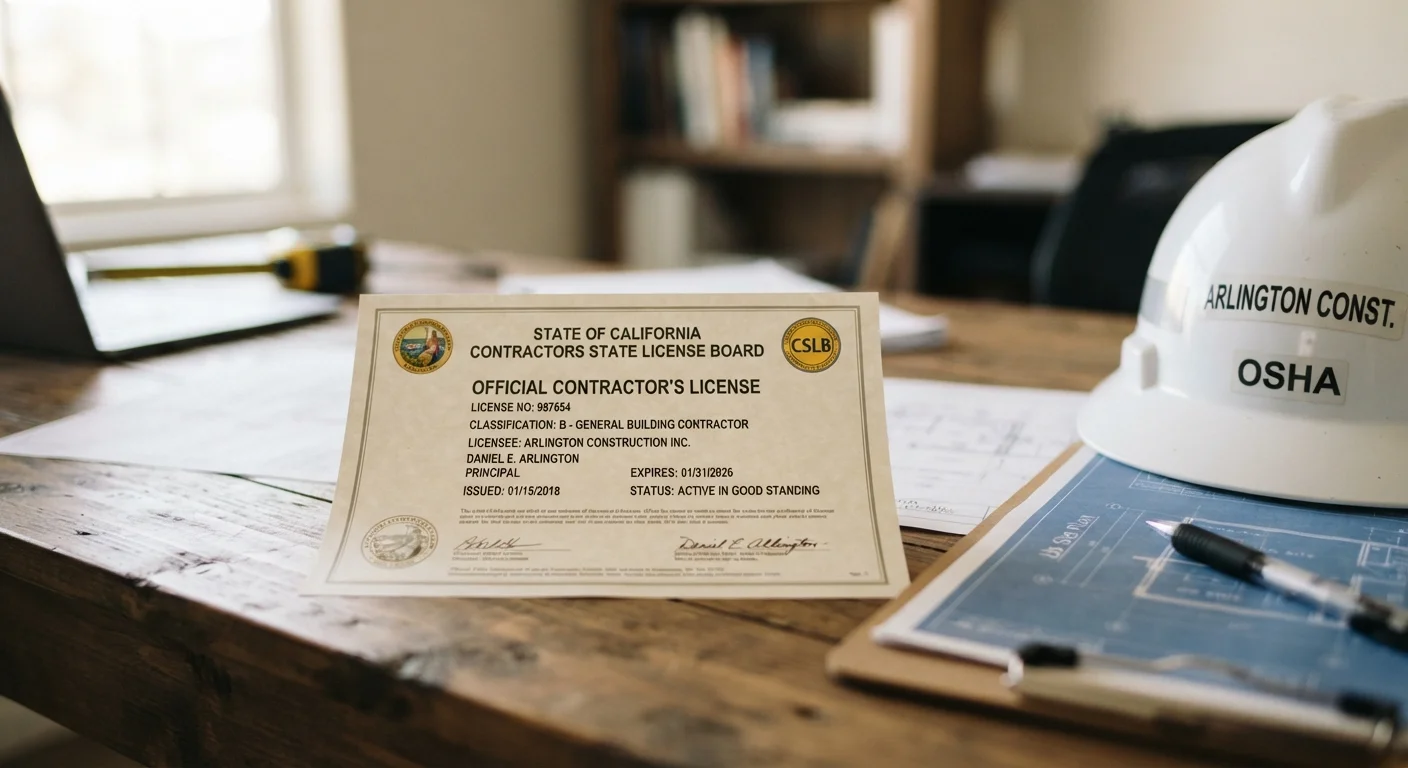
A roofing contractor's licence is an official authorisation issued by a state or local government that permits a contractor to legally perform roofing work in that jurisdiction. To obtain one, contractors typically must demonstrate trade knowledge, carry required insurance, and pay registration fees. The licence is a baseline credential — it signals that the contractor has met minimum standards set by regulators.
Licensing is governed at the state level, meaning requirements differ significantly: some states require a specific roofing licence, others issue a general contractor's licence that covers roofing, and a small number impose no state-level requirement at all, leaving oversight to individual counties or municipalities.
Why Licensing Exists — and What It Actually Covers
When a roofing contractor says they are "licensed," it sounds reassuring. But what does that word actually mean? The honest answer is: it depends on where you live.
Contractor licensing was introduced to protect homeowners from unqualified workers performing dangerous or substandard construction. Roofing carries real risk — improper installation can lead to leaks, structural damage, voided manufacturer warranties, and in some cases, safety hazards. Licensing gives regulators a mechanism to set minimum competency standards, investigate complaints, and discipline contractors who cause harm.
In practice, a roofing licence typically signals that the contractor has:
- Passed a trade knowledge exam (in states that require one)
- Demonstrated a minimum number of years working in the trade
- Registered with the state and paid applicable fees
- Provided proof of insurance at the time of application
What a licence does not automatically guarantee is quality craftsmanship, prompt communication, or fair pricing. It is a floor — not a ceiling. Think of it as the starting credential, not the whole picture.
For a broader look at the credentials roofers commonly cite, see our article on what bonded, insured, and licensed actually mean.
How Licensing Rules Differ Across States
There is no single national roofing licence in the United States. Each state sets its own rules, and the variation is significant.
Broadly speaking, states fall into three categories:
- States with a dedicated roofing contractor licence
- These states require roofers to obtain a specific roofing licence — separate from a general contractor credential. Requirements often include a roofing-specific exam and proof of relevant experience.
- States that use a general contractor licence
- Roofing is covered under a broader contractor licence. The exam and requirements are not roofing-specific, which means the bar for roofing knowledge may be lower.
- States with no state-level roofing licence requirement
- In these states, oversight falls to counties, cities, or is largely absent. This does not mean any contractor is acceptable — it means you need to research local requirements carefully and rely more heavily on other vetting steps.
Because the rules vary so much, the first step when hiring a roofer is to find out what your state actually requires. Your state's contractor licensing board or department of consumer affairs is the authoritative source — not the contractor's own website.
Check Local Requirements Too
Even if your state does not require a roofing licence, your county or city may have its own requirements. Before hiring, contact your local building department to confirm what credentials are required in your specific jurisdiction. This step takes only a few minutes and can save significant headaches later.
How to Verify a Licence — and What to Look For
Asking a contractor for their licence number is reasonable and professional — any reputable roofer will provide it without hesitation. Once you have the number, follow these steps to verify it independently:
- Find your state's licensing board website. Search for " contractor licensing board" or " department of consumer affairs contractors." Use the official .gov site, not a third-party directory.
- Use the online licence lookup tool. Most states offer a free search by name or licence number. Enter the contractor's details and confirm the licence status.
- Check the licence status carefully. Look for: whether the licence is active and current; any disciplinary actions, suspensions, or complaints on record; whether the licence class covers roofing specifically; and whether the name on the licence matches the company bidding your job.
If a contractor cannot provide a licence number, or if a lookup returns no matching record, treat that as a serious warning sign. Unlicensed work in a state that requires it can create real problems — including potential issues with your homeowner's insurance if something goes wrong. This connects directly to understanding when your contractor should pull a permit, since permits and licensing work together as part of legitimate, accountable roofing work.
What a Licence Doesn't Tell You
A valid licence is necessary — but it is not sufficient on its own. There are important things a licence number will not reveal:
- Whether the contractor carries adequate insurance. Licensing and insurance are separate. Always request current certificates of general liability insurance and workers' compensation, and call the insurer to confirm they are active.
- Whether the crew on your roof is employed or subcontracted. Many roofing companies use subcontractors, whose licensing and insurance status may differ from the primary contractor's. Our article on subcontractors on your roof explains the implications for accountability and warranty coverage.
- Whether the contractor's past work is high quality. Reviews, references from past customers, and photos of completed projects give you information that a licence number cannot.
- Whether common misconceptions are shaping your decision. It helps to be aware of common beliefs about roofing contractors that simply aren't true, so you evaluate contractors with clear eyes.
A contractor's licence is one important piece of a thorough vetting process — not a substitute for doing the rest of the homework.
This article is for general informational purposes only. Licensing requirements vary by state and locality. Always verify current requirements with your state's contractor licensing authority before hiring.