

Key Takeaways
Roofing Cost Breakdown
A roofing quote is made up of several separate charges, not one lump sum. These typically include the cost of materials, the labour to install them, tear-off and disposal of your old roof, and any required permits. Understanding each component helps you compare quotes fairly and avoid unexpected charges.
Roofing costs are often quoted per "square" — industry shorthand for 100 square feet of roof surface — which can make raw numbers confusing until you know your roof's total square footage.
Why Roofing Quotes Feel Confusing
When you receive a roofing quote, it can look like a wall of numbers with unfamiliar terms. Most homeowners have never hired a roofer before, so there's no baseline for what's normal. The good news: every quote is built from the same core components. Once you know what each one is, the numbers stop feeling mysterious.
This guide walks through each major cost category you'll see on a professional roofing estimate — and explains what you're actually paying for. If you want to go further, our guide to comparing multiple estimates explains why a single quote rarely gives you enough information.
Labour: The Largest Line Item
Labour typically accounts for 40–60% of a roofing project's total cost. This covers the skilled work of removing old roofing, preparing the deck surface, and installing the new roofing system correctly. Roofing is physically demanding and requires trained workers who understand how to handle slope, flashing, ventilation, and weatherproofing — all of which directly affect how long your roof performs.
Labour costs vary based on several factors:
- Roof complexity: More valleys, dormers, skylights, and steep pitches mean more time and care.
- Crew size and speed: Larger, experienced crews may cost more per day but finish faster with fewer errors.
- Regional wage rates: What labour costs in rural areas often differs from urban markets.
Ask for a Fully Itemised Quote
Before accepting any estimate, ask the contractor to break down labour, materials, disposal, permits, and any additional components as separate line items. A reputable contractor will do this without hesitation. Itemised quotes make it far easier to compare bids fairly and flag anything that seems out of place.
Never evaluate a quote on labour cost alone. A contractor who quotes very low labour may be cutting crew size, experience level, or installation time — all of which affect the quality and durability of the finished roof.
Materials: Where Type Makes a Big Difference
Materials are the second major component of any roofing quote. The type of roofing system you choose has a substantial effect on price. Asphalt shingles — the most common residential choice in the U.S. — are generally the most affordable option per square. Metal, tile, and slate systems typically cost more upfront but may offer longer service lives.
Within each material category, there are grades. Architectural asphalt shingles, for example, cost more than basic 3-tab shingles but tend to carry better warranties and handle weather more reliably. The quote should itemise the specific product type, not just a broad category.
For a detailed look at how materials compare on cost and durability, see our overview of roofing material costs. You can also explore the roof materials hub for a broader comparison of what suits different home types.
Tear-Off, Disposal, and Underlayment
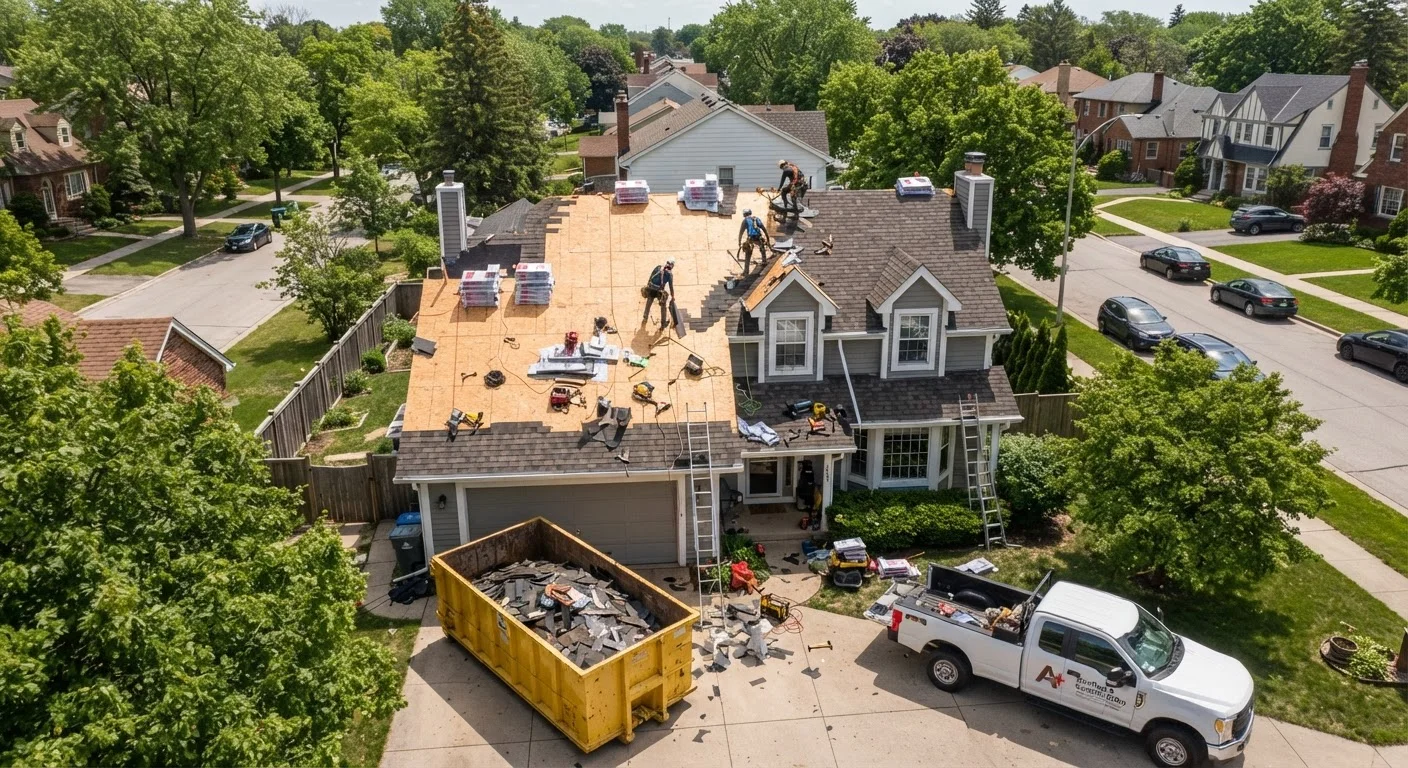
Before new roofing goes on, the old material usually has to come off. Tear-off is labour-intensive work, and the debris has to be hauled away and disposed of responsibly. Expect to see this as a separate line item — typically charged per square — and treat its absence as a red flag worth clarifying.
Underlayment is the water-resistant barrier installed directly on the roof deck before the visible roofing material. It's a critical layer for weatherproofing and should always be included in a full replacement quote. Cheaper quotes sometimes omit or downgrade underlayment to lower the headline number.
Additional materials that belong in a complete quote include:
- Flashing: Metal strips that seal joints around chimneys, vents, and edges.
- Ridge cap: Specialised material that covers the peak of the roof.
- Drip edge: A metal strip along the eaves that directs water away from the fascia.
Permits, Overhead, and Warranty
Permit fees are a real cost and a legitimate part of any full roofing quote. Many jurisdictions require a building permit for a complete roof replacement, and inspections may follow. A contractor who discourages permits — or suggests skipping them — is a warning sign. Always verify local permit requirements with your building department, or ask your contractor to confirm what's required in your area.
Overhead and profit are also built into every professional quote. This covers the contractor's insurance, licensing, bonded employees, and business operations. A contractor who is properly insured and licensed has higher overhead than one who isn't — which partly explains why some quotes are cheaper than others.
Warranty terms are worth reading carefully. Some quotes include a manufacturer's material warranty plus a separate workmanship warranty from the contractor. Others offer only one or neither. Ask explicitly what's covered and for how long.
Be aware that unexpected conditions — like rotted roof decking discovered after tear-off — can add to the final bill. Our article on hidden roofing costs covers what to watch for before signing a contract.
This article provides general educational information about roofing costs. Actual costs vary by location, project scope, and contractor. Always verify permit requirements with your local building department and consult a licensed roofing professional before beginning any project.