

Key Takeaways
Our Verdict
No single roofing material suits every home or budget. Asphalt shingles offer the lowest entry cost and widest contractor availability, while metal and composite options balance durability with moderate pricing. Slate and clay tile deliver exceptional longevity but come with premium costs and structural requirements that not every home can meet.
| Best for | Recommended |
|---|---|
| Homeowners prioritizing the lowest upfront cost | Asphalt shingles |
| Those seeking long-term value with lower maintenance | Metal roofing |
| Homes in fire-prone or high-wind regions | Concrete or clay tile |
| Buyers wanting maximum lifespan on a structurally sound home | Natural slate |
Why Roofing Material Choice Matters Beyond Aesthetics
When it's time to replace a roof, most homeowners focus first on cost — and reasonably so. But the material you choose determines far more than the invoice amount. It shapes how long your roof lasts, how much maintenance it needs, how well it handles your local weather, and whether your home's structure can even support it.
Understanding the cost ranges and trade-offs for each major material puts you in a much stronger position when talking to contractors. For a deeper look at what else drives your final bill, see our guide on what you're actually paying for in a roofing quote.
All cost figures in this article represent general national ranges for installed materials in the U.S. Actual prices vary based on your region, roof complexity, and current material costs. Always request itemized quotes from licensed local contractors before making any decisions.
Comparing the Major Roofing Materials
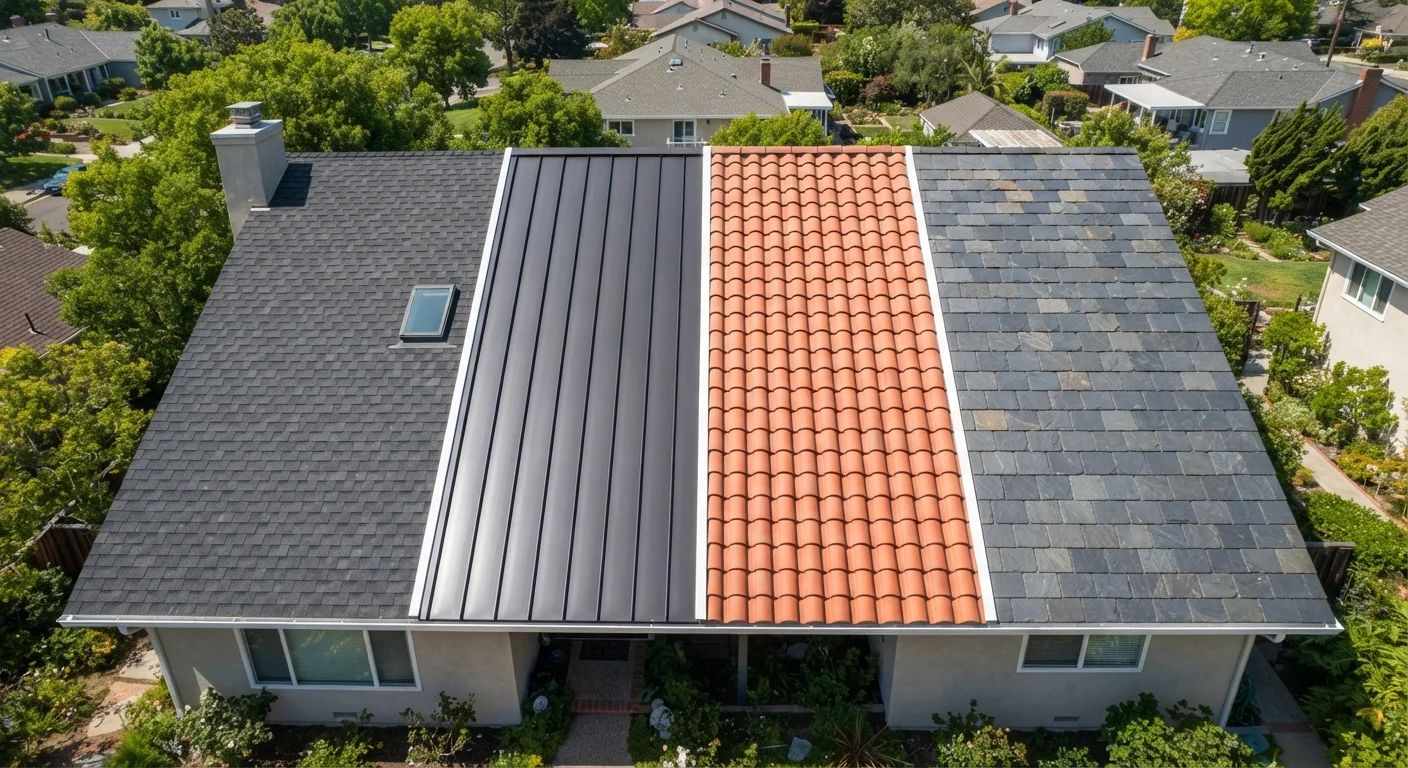
The five materials below cover the vast majority of residential roofing projects. Each has a distinct cost range, lifespan, and set of practical considerations.
| Asphalt Shingles | Metal Roofing | Clay / Concrete Tile | Natural Slate | Composite / Synthetic | |
|---|---|---|---|---|---|
| Typical installed cost (per sq. ft.) | $4–$8 | $8–$16 | $10–$20 | $15–$30+ | $7–$14 |
| Expected lifespan | 20–30 years | 40–70 years | 40–60 years | 75–150 years | 30–50 years |
| Weight / structural demand | Light — minimal | Light to moderate | Heavy — may need reinforcement | Very heavy — often needs upgrade | Light — minimal |
| Maintenance level | Low to moderate | Low | Low to moderate | Low (if installed correctly) | Low |
| Contractor availability | Very widely available | Widely available | Moderate — regional | Limited — specialist required | Moderate |
| Climate strengths | Most climates | Wind, snow, rain | Hot, dry, coastal | Cold, wet climates | Most climates |
| Typical fire rating | Class A (with underlayment) | Class A | Class A | Class A | Class A (most products) |
For a detailed look at how the two most popular options stack up, our article on asphalt shingles vs. metal roofing walks through long-term value side by side.
Key Factors That Change What You'll Actually Pay
The per-square-foot ranges above are useful starting points, but several variables will move your specific quote up or down significantly.
- Roof size and complexity: More squares of roofing material, steep pitches, multiple valleys, and dormers all add labor time. See how roof size, pitch, and shape affect pricing.
- Structural capacity: Heavier materials — particularly slate and clay tile — often require an engineer to assess whether your existing framing can bear the load. If reinforcement is needed, that cost is separate from the roofing work itself. Learn more about roof weight and load.
- Climate suitability: A material well suited to the dry Southwest may perform poorly in a humid coastal environment. How climate shapes the right roofing choice is worth reading before you finalize a material.
- Fire rating requirements: Some regions and insurers require Class A fire-rated roofing. Understanding fire rating classifications helps you know which materials qualify.
- Tear-off and disposal: Removing existing layers of shingles adds to labor costs. Some jurisdictions limit how many layers can remain on a roof before a full tear-off is required.
Planning Your Budget and Next Steps
Once you have a clear picture of which materials fit your climate, structure, and goals, the next step is building a realistic budget. For most homeowners, that means gathering multiple written quotes — at least three — from licensed contractors in your area. Compare them line by line rather than just by total price.
If the upfront cost is a concern, there are several financing options worth understanding before you sign anything. Our overview of how roofing financing options work explains how home equity loans, personal loans, and contractor payment plans are typically structured.
For a broader overview of material categories and what suits different home types, the Roof Materials hub is a useful reference as you continue planning.
This article provides general educational information about roofing materials and cost ranges. It is not a substitute for professional assessment. Always consult a licensed roofing contractor and verify local permit and code requirements before beginning any roofing project.