

Key Takeaways
Roofing Fire Rating
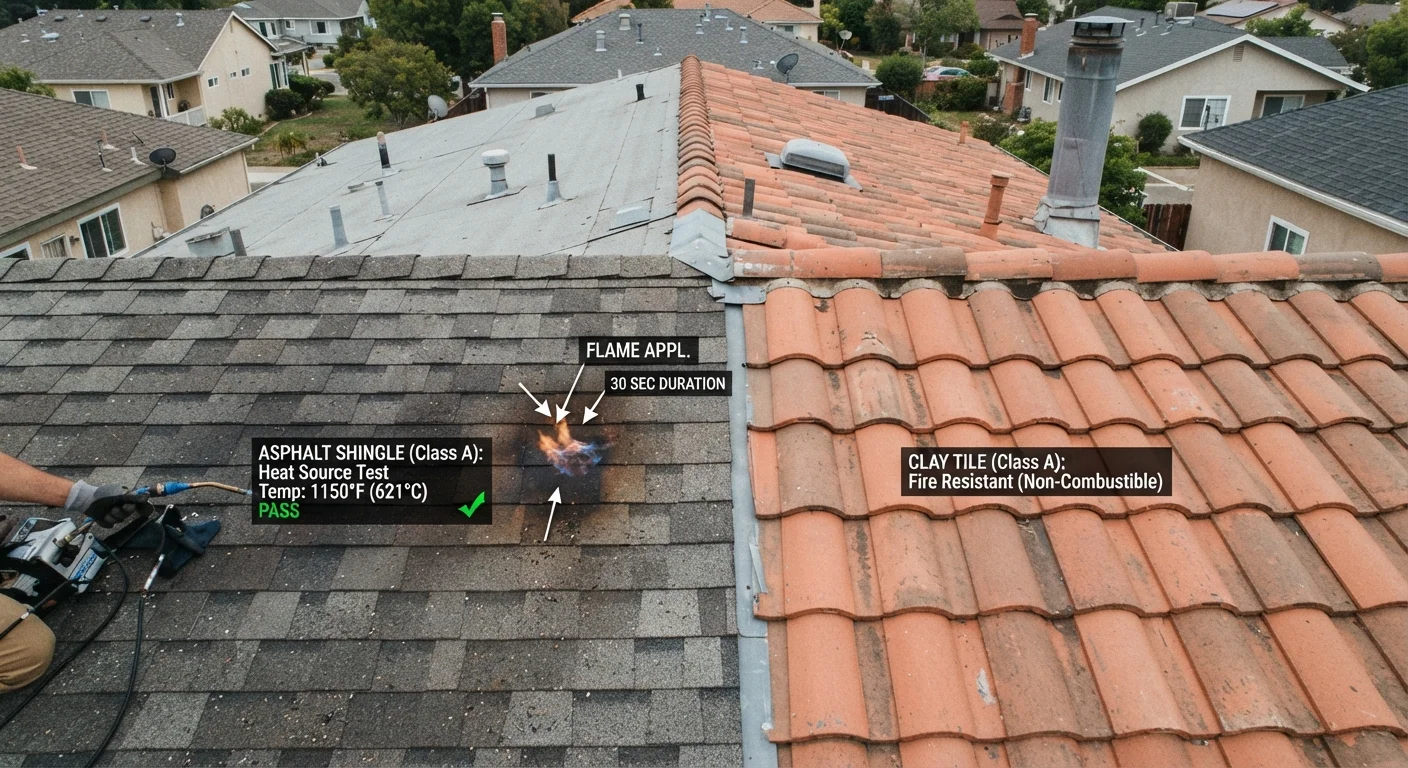
A roofing fire rating is an official classification — Class A, B, or C — that tells you how well a roofing material resists catching fire from an outside source, such as a windblown ember or a nearby structure fire. The ratings are based on standardized tests and indicate how long a material can withstand fire exposure before it ignites or allows flames to spread. Class A offers the highest resistance; Class C offers the lowest among rated materials.
Ratings are governed by standards such as ASTM E108 and UL 790. Note that a material's rating can depend on the full roof assembly — not just the top layer — so underlayment and deck materials factor into the final classification.
Why Fire Ratings Exist and What They Actually Test
When roofing manufacturers talk about fire ratings, they're referring to a standardized set of tests designed to simulate real-world fire scenarios. The goal is to measure how a roofing material — or more accurately, an entire roof assembly — responds to fire coming from outside the home. This matters most during wildfires or when burning embers travel from a neighboring structure.
Three specific things are measured during testing:
- Flame spread: How far and how fast fire moves across the surface of the material.
- Burning brand resistance: Whether glowing embers landing on the roof cause the material to ignite.
- Penetration: Whether flames or heat pass through the roof deck into the attic space.
Materials that perform best across all three measures earn a Class A rating. Those that meet intermediate thresholds earn Class B. Class C materials provide only basic resistance and fail at lower fire intensities. Some materials — particularly older untreated wood products — carry no rating at all.
Understanding what these tests measure helps clarify something important: a fire rating isn't just a label stamped on a shingle. It reflects how the whole roof system performs under pressure. For a deeper look at what the most common materials are made of, see our overview of common roofing materials.
How Each Class Applies to Common Roofing Materials
Not every material falls neatly into a single category — assembly matters as much as the surface product. Here's how major material types typically align with fire ratings:
- Asphalt shingles
- Most fiberglass-based asphalt shingles are Class A. Older organic-mat shingles may be rated Class C. Always check the product's listed classification before purchase.
- Metal roofing
- Steel, aluminum, and copper roofing are non-combustible and typically achieve Class A as part of a correctly installed assembly.
- Concrete and clay tile
- These materials are non-combustible and generally Class A, though gaps beneath tile can create pockets where embers accumulate — proper installation with fire-resistant underlayment is critical.
- Wood shake and shingles
- Untreated wood is inherently combustible and typically rated Class C or unrated. Fire-retardant-treated wood products installed over a rated underlayment system can achieve Class A. This is an important consideration covered in our wood shake and shingle roofing guide.
- Slate
- Natural slate is non-combustible and generally Class A, making it one of the most fire-resistant options available.
Class A
Highest residential roofing fire-resistance rating
Class A ratings are required by code in many wildfire-prone U.S. jurisdictions, including portions of California, Colorado, and Oregon.
~85%
U.S. homes using asphalt shingle roofing
According to industry estimates, asphalt shingles are the dominant roofing material in the U.S.; most modern fiberglass-based versions carry a Class A rating.
Millions of acres
U.S. land designated as Wildland-Urban Interface zones
The USDA Forest Service estimates tens of millions of U.S. homes sit within WUI zones, where fire-rated roofing is increasingly mandated by local ordinance.
Local Codes, Insurance, and Wildfire Zones
Fire ratings have practical consequences beyond the laboratory. Two areas where they directly affect homeowners are local building codes and homeowner's insurance.
Building codes: Many jurisdictions — particularly in California, Colorado, and other wildfire-prone states — mandate Class A roofing for new construction or roof replacements. Some counties in designated Wildland-Urban Interface (WUI) zones go further, requiring specific assembly types. Failing to comply can result in a failed inspection or being required to redo the work. Always verify requirements with your local building department before committing to a material. This is one of the common pitfalls homeowners encounter when choosing roofing materials.
Homeowner's insurance: Insurers assess roof fire ratings as part of property risk evaluation. A Class A roof may qualify your home for a lower premium or ensure coverage eligibility in high-risk zones. A Class C or unrated roof in a wildfire area could result in higher costs or coverage limitations. Contact your insurer to understand how your specific roof rating factors into your policy.
Fire rating is just one dimension of a good material choice. Durability and cost are equally important factors — our guide to roofing material costs and trade-offs walks through the numbers, and our material lifespan reference shows how long each option typically lasts.
Verify the Full Assembly Rating
A roofing product's fire rating applies to the complete installed system — including the deck, underlayment, and surface material. If a contractor proposes substituting one component, ask specifically whether the change affects the assembly's official fire classification. Request documentation that confirms the full system meets the required rating before work begins.
What to Ask a Contractor Before You Decide
When you're getting bids for a new roof or a full replacement, fire rating deserves a direct conversation with your contractor. Here are specific questions worth asking:
- What fire rating does this assembly carry? Ask for the rating of the complete system — not just the surface shingle or tile.
- Does my local code require a minimum rating? A knowledgeable contractor should know this for your area, but verify with your building department independently.
- Will the underlayment affect the assembly rating? Swapping one underlayment product for another can change a roof's official classification. Confirm that the planned underlayment is consistent with the rated assembly.
- Is this material appropriate for my wildfire risk zone? If you live in or near a WUI zone, this is a non-negotiable question.
Getting written confirmation of the fire rating in your contract — along with the specific product names and assembly details — protects you if questions arise during inspection. For broader planning guidance, our Roof Costs & Planning hub covers budgeting, contractor selection, and project timelines in one place.
This article is for general informational purposes only. Building codes, insurance requirements, and fire-risk designations vary by location. Always consult your local building department and a licensed roofing contractor before making decisions about roofing materials or fire-resistance requirements for your home.