

Key Takeaways
Wood Shake and Wood Shingle Roofing
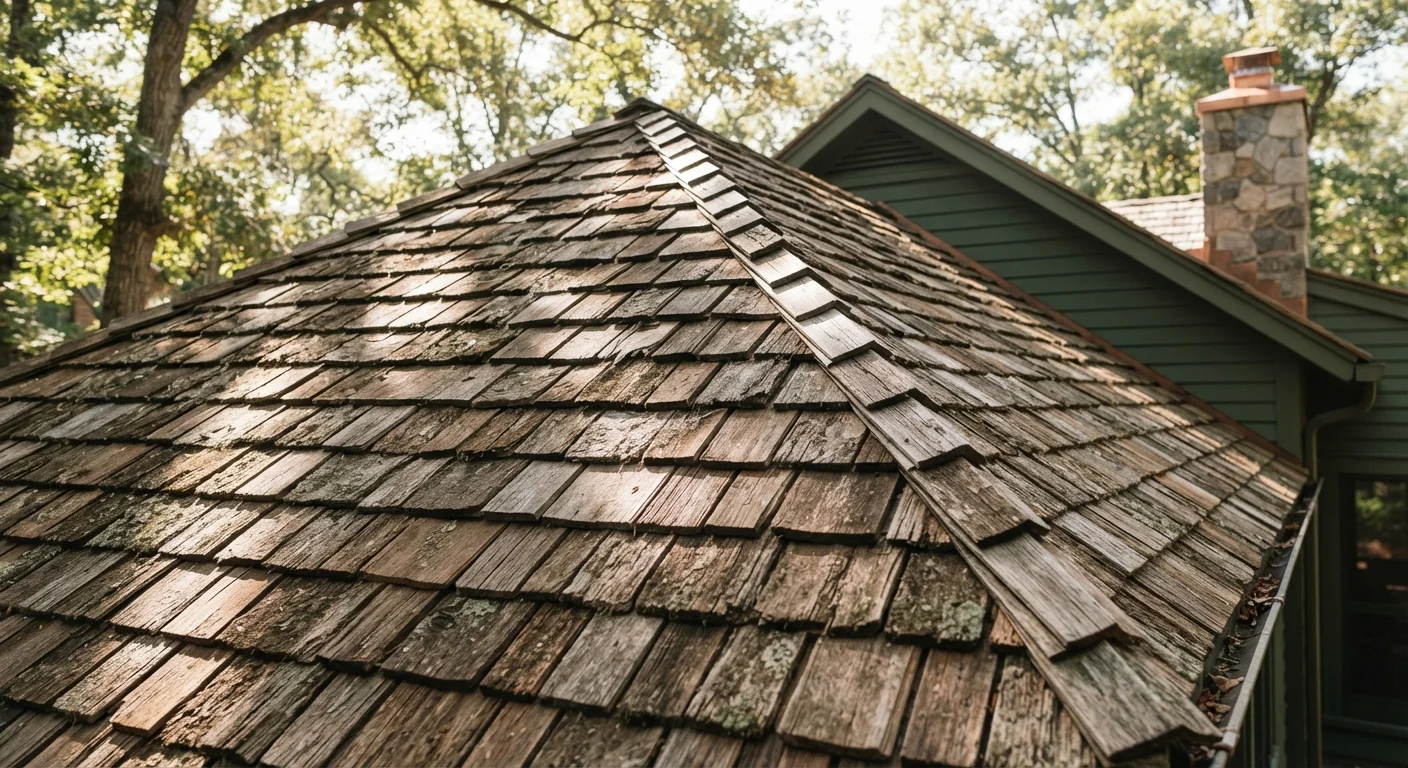
Wood shakes and wood shingles are roofing materials made from split or sawn pieces of natural wood — most commonly cedar, redwood, or pine. Wood shingles are machine-cut to a smooth, uniform shape, while wood shakes are hand-split or sawn to produce a rougher, thicker texture. Both materials are used to create the classic, layered appearance common on Craftsman, Colonial, and cottage-style homes.
Cedar shakes and shingles are graded by standards set by the Cedar Shake and Shingle Bureau (CSSB). Fire-resistance ratings — Class A, B, or C — vary depending on whether the product has been treated with a fire retardant.
Shakes vs. Shingles: Understanding the Difference
The terms "wood shake" and "wood shingle" are often used interchangeably, but they describe two distinct products. Understanding the difference helps you make a more informed conversation with any contractor.
Wood shingles are sawn on both sides and taper to a thin edge. The result is a flat, smooth surface with a relatively uniform appearance. They are thinner than shakes and sit closer together on the roof deck.
Wood shakes are split on at least one side, which creates a rougher, more varied texture. They are thicker, particularly at the butt (lower) edge, and tend to have a more rustic, dimensional look. Hand-split shakes have a more irregular surface; hand-split and resawn shakes offer one smooth face and one rough face.
Both are most commonly made from western red cedar, though redwood, pine, and other species are available. Cedar is popular because it contains natural oils that provide some resistance to moisture and insects — though this does not eliminate the need for maintenance or fire treatment.
For a broader look at how wood fits among other roofing options, see our overview of common roofing materials.
Fire Ratings and Insurance Considerations
One of the most important factors homeowners should understand before choosing wood roofing is fire resistance. Roofing materials in the U.S. are rated by fire performance — Class A (highest resistance), Class B, or Class C (lowest). Untreated wood shake typically achieves only a Class C rating.
In wildfire-prone states such as California, Colorado, and parts of the Pacific Northwest, local codes may require a minimum Class A rating, effectively barring untreated wood roofing. Even in areas where it is permitted, homeowners insurance providers may charge higher premiums or decline coverage for homes with untreated wood roofs.
Fire-Rated Wood Products Are Available
Some manufacturers offer wood shakes and shingles pressure-impregnated with fire retardant to achieve a Class A or B rating. These products cost more upfront but may satisfy local code requirements and reduce insurance complications. Ask any contractor you speak with specifically about fire-rated wood options and how they are maintained differently from untreated products.
Some manufacturers offer wood shakes and shingles that have been pressure-impregnated with fire retardant to achieve a Class A or B rating. These products cost more upfront but may satisfy local code requirements and reduce insurance complications. Ask your contractor specifically about fire-rated wood options.
Before committing to a material, check with your local building department and your insurance provider. Our article on common mistakes homeowners make when choosing roofing materials covers code and HOA oversights that can result in costly reversals.
Maintenance Requirements You Should Plan For
Wood roofing demands more active upkeep than most other residential roofing materials. Homeowners who choose wood should be prepared for a regular maintenance schedule — or budget for professional maintenance services.
- Annual inspection: Look for cracked, cupped, or missing pieces, and check for early signs of moss or lichen growth.
- Cleaning: Debris such as leaves and pine needles trap moisture and should be cleared regularly. Moss and algae should be treated with appropriate low-pressure cleaning methods — high-pressure washing can split or damage individual shakes.
- Preservative treatment: A penetrating oil or wood preservative should be applied every three to five years to help the wood resist moisture and UV degradation.
- Ventilation and drainage: Proper attic ventilation and clear gutters reduce moisture accumulation that accelerates wood deterioration.
Neglecting these steps can cut a wood roof's lifespan by a decade or more. When comparing long-term costs, factor in maintenance expenses alongside the initial installation price. Our roof costs and planning hub offers guidance on how to budget for ongoing upkeep.
Climate Suitability and Local Code Restrictions
Wood roofing is not equally well suited to every climate. It performs best in drier regions with moderate temperatures and good airflow. In climates that are consistently wet, humid, or heavily shaded — such as the Pacific Northwest or parts of the Southeast — wood shakes and shingles are significantly more vulnerable to moss, rot, and mold without aggressive maintenance.
Beyond climate, local building codes may restrict or prohibit wood roofing entirely. Many municipalities in fire-prone regions have adopted model building codes that require Class A roofing materials, which effectively excludes untreated wood. Homeowners associations (HOAs) in many communities also have aesthetic or safety rules that govern acceptable roofing materials.
Failing to verify these restrictions before purchasing materials can be an expensive mistake. Always check with your local building department and review any HOA governing documents before finalizing your choice. For a side-by-side look at how wood compares to lower-maintenance alternatives, see our comparison of metal roofing and asphalt shingles.
Working with a Contractor on Wood Roofing
Installation quality has an outsized effect on how a wood roof performs over time. Wood shakes and shingles require specific nailing patterns, proper spacing to allow for expansion and drainage, and appropriate underlayment — details that not every roofer is experienced with.
When vetting contractors, ask directly about their experience with wood roofing. Request examples of previous wood roof installations and ask how long those roofs have been in service. Verify that the contractor is licensed, carries liability insurance, and will obtain any required permits for your project.
Our article on questions to ask a contractor before agreeing on a roofing material provides a practical checklist you can use during those conversations.
Ask About Wood Roofing Experience Specifically
Not every licensed roofer has hands-on experience installing wood shakes or shingles. The nailing pattern, spacing, and underlayment requirements differ from asphalt installation. Before hiring, ask how many wood roofs the contractor has installed in the past two years and whether they can provide references from those jobs.
This article is for informational purposes only. Roofing costs, material availability, fire codes, and insurance requirements vary by location. Always consult a licensed roofing contractor and verify local building code requirements before beginning any roofing project.