

Key Takeaways
Why Window Energy Efficiency Matters
Windows are among the largest sources of heat loss and unwanted heat gain in a home. According to the U.S. Department of Energy, heat gain and loss through windows accounts for roughly 25–30% of residential heating and cooling energy use. For homeowners on fixed incomes or managing rising utility costs, that is a meaningful share of a monthly budget.
Replacing older, single-pane or poorly sealed windows with energy-efficient models can reduce drafts, improve comfort year-round, and lower heating and cooling demand. This guide walks through every layer of that decision — from the numbers on a rating label to the frame in the wall — so you can evaluate options with confidence rather than guesswork.
For a full picture of what replacement windows cost overall, see the complete homeowner cost overview before budgeting.
Reading the ENERGY STAR Label and NFRC Ratings
Two certification systems give homeowners independently verified performance data:
- ENERGY STAR: A U.S. Environmental Protection Agency program. Windows earn this label by meeting regional performance thresholds. Look for the blue ENERGY STAR mark and verify it applies to your climate region — the program divides the country into four zones (Northern, North-Central, South-Central, Southern).
- NFRC (National Fenestration Rating Council): Produces the detailed label showing specific measured values. The two most important figures are:
- U-Factor: Measures how well the window insulates against heat transfer. Lower is better — values typically range from 0.20 to 1.20. A well-insulated window for a cold climate may aim for 0.30 or below.
- Solar Heat Gain Coefficient (SHGC): Measures how much solar heat the window allows in, on a scale of 0 to 1. Lower SHGC reduces cooling load in hot climates; higher SHGC can be useful in cold climates where passive solar warmth is desirable.
The label also shows Visible Transmittance (VT) — the share of visible light that passes through — and Air Leakage (AL), which indicates how much air infiltrates around the frame. Both matter for comfort and performance.
25–30%
Share of home energy use tied to windows
According to the U.S. Department of Energy, heat gain and loss through windows accounts for this portion of residential heating and cooling energy.
0.20–1.20
Typical U-Factor range for residential windows
Lower U-Factor values indicate better insulation; the NFRC measures and certifies these figures independently.
4
ENERGY STAR climate regions for windows
The EPA divides the U.S. into four climate zones, each with different performance thresholds for ENERGY STAR window certification.
Glazing, Gas Fills, and Coatings Explained
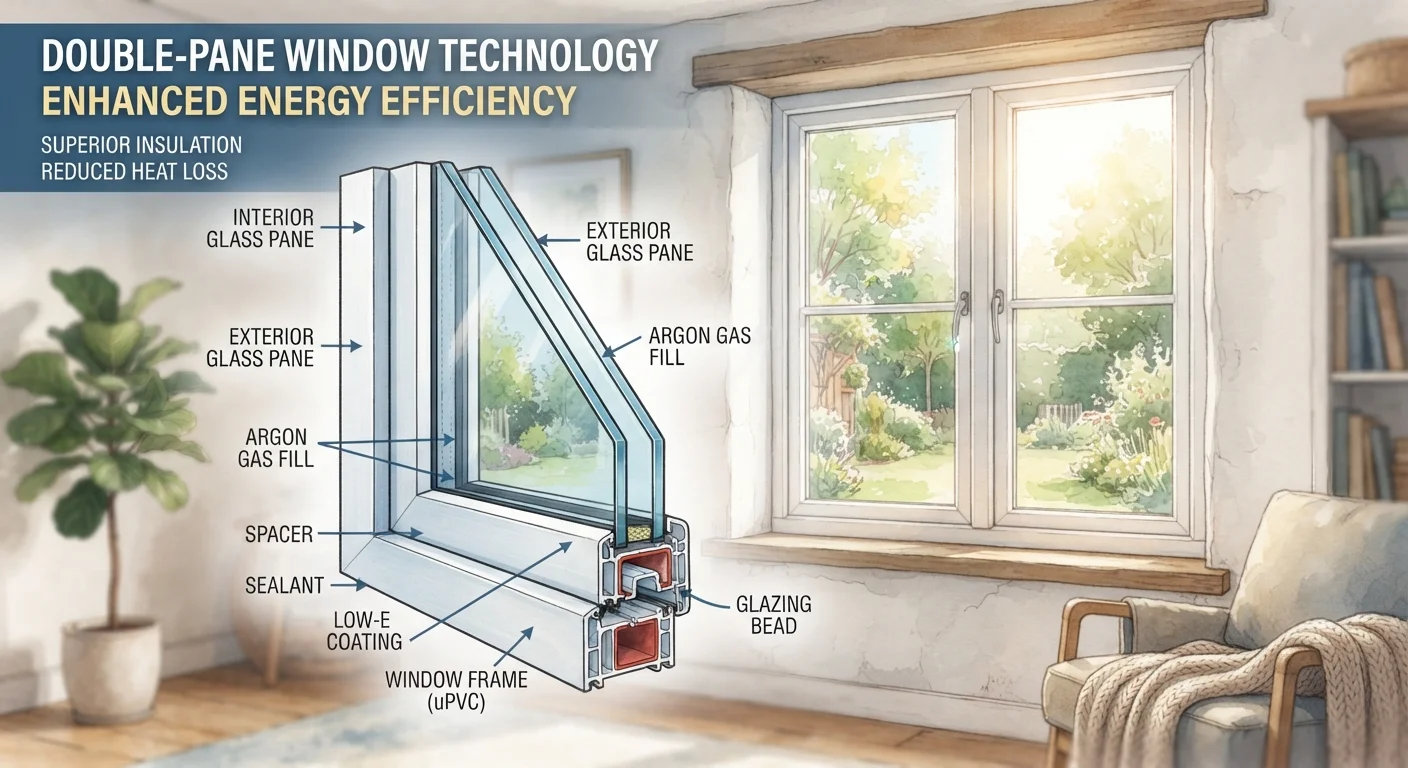
Most energy-efficient windows today use at least two panes of glass (double-pane), and many use three (triple-pane). The space between panes is sealed and filled with an inert gas — typically argon or krypton — which conducts heat less readily than air, improving the U-Factor.
Low-E coatings (short for low-emissivity) are microscopic metallic layers applied to glass surfaces. They reflect infrared energy while allowing visible light to pass through. The placement of the coating — which surface of which pane — affects whether the window is optimized to block summer heat, retain winter warmth, or balance both. Contractors should be able to specify the coating configuration for your climate.
Triple-pane windows offer better insulation than double-pane but cost more and add weight, which can affect frame and hardware requirements. They are generally most cost-effective in very cold climates where the U-Factor difference pays back over time.
To understand how window style affects glazing options, review the guide to window types and styles.
Frame Materials and Their Trade-Offs
The frame surrounding the glass is not just structural — it contributes to the window's overall thermal performance and affects how much maintenance you'll do over the years. Common frame materials include:
- Vinyl (uPVC)
- Low maintenance, good insulating properties, and generally the most affordable option. Quality varies between manufacturers, so look for multi-chambered profiles, which improve thermal performance.
- Fiberglass
- Dimensionally stable (expands and contracts at a rate similar to glass), strong, and thermally efficient. Typically more expensive than vinyl but may require less long-term attention.
- Wood
- Naturally insulating and traditional in appearance. Requires periodic painting or staining to prevent moisture damage. Sometimes found with aluminum or vinyl cladding on the exterior to reduce maintenance.
- Aluminum
- Durable and low maintenance, but a highly conductive material — meaning it transfers heat and cold readily. Not well-suited for cold climates unless the frame includes a thermal break (an insulating barrier inside the frame).
No single material is universally superior; the right choice depends on your climate, home style, maintenance preferences, and budget.
When comparing window quotes, ask each contractor to provide the NFRC label values — not just the product name — so you can compare U-Factor and SHGC numbers directly across bids.
Product names and marketing descriptions vary widely, but NFRC-certified values are standardized measurements that allow true apples-to-apples comparison.
For older homes with large rough openings, request that the installer use fiberglass batt insulation rather than expanding foam around the frame — foam can compress or bow the frame over time.
Frame distortion from improper insulation fill is a common but preventable cause of air leakage and operational problems in replaced windows.
Why Installation Quality Determines Real-World Performance
A window rated at 0.25 U-Factor installed with gaps, compressed insulation, or inadequate flashing will perform far worse than its label suggests. Air infiltration around the frame — not through the glass — is often the primary source of energy loss in replaced windows.
Key installation factors to verify include:
- Proper flashing and weather-resistant barrier integration to prevent water intrusion
- Low-expansion foam or fiberglass batt insulation used to fill the rough opening gap
- Caulking applied on the interior and exterior perimeter
- Level, plumb, and square installation — a racked frame can prevent proper sealing and affect operation
Permits are often required for window replacement when structural changes are involved or when local codes mandate inspections. Always verify requirements with your local building department before work begins.
For a detailed list of questions to bring to any contractor conversation, see questions to ask a window contractor about energy performance.
Get Installation Details in Writing
Ask your contractor to include the specific installation method — insulation type, flashing approach, and caulking plan — in the written quote. This protects you if the finished work doesn't match what was discussed. A contractor unwilling to put these details in writing is a meaningful warning sign.
Matching Windows to Your Climate Zone
ENERGY STAR's regional criteria exist because the same window is not equally efficient everywhere. A useful starting framework:
| Climate Type | U-Factor Priority | SHGC Priority |
|---|---|---|
| Cold / Northern | Low (≤0.30 recommended) | Higher (≥0.35 to capture solar gain) |
| Mixed / Central | Moderate (≤0.32) | Moderate (varies by orientation) |
| Hot / Southern | Less critical | Low (≤0.25 to reduce cooling load) |
South-facing windows in cold climates can actually benefit from higher SHGC to allow passive solar heating during winter months. North-facing windows gain little solar benefit in any climate. Discussing orientation with a knowledgeable contractor helps ensure the right spec for each window position in your home.
If you're also evaluating how other home systems interact with energy performance — such as HVAC — the concept of efficiency ratings is similar across categories; the explanation of SEER ratings for air conditioning offers a useful parallel.
Next Steps: Evaluating Contractors and Claims
Once you understand the ratings and specifications, the next challenge is navigating contractor conversations and marketing language. Terms like "energy-saving," "high-performance," or "low-E glass" are not self-certifying — they require backing from NFRC data and ENERGY STAR documentation.
Before signing anything, ask contractors for the NFRC label values for the specific product being quoted, written confirmation of the installation method, and proof of licensing and insurance. Independent home energy auditors can also assess your current windows and identify where air leakage is greatest, helping you prioritize which windows to replace first if budget is a constraint.
To go deeper on separating verified performance data from unverified claims, the article evaluating window energy claims covers this in detail.
This article is for general informational and educational purposes only. Performance outcomes vary based on home conditions, climate, installation quality, and other factors. Always verify local permit requirements and consult a licensed contractor for project-specific guidance.