

Key Takeaways
Why Window Energy Claims Are So Confusing
Walk through any home improvement showroom and you'll encounter windows described as 'ultra-efficient,' 'energy-smart,' or 'thermally superior.' These phrases appear on packaging, sales sheets, and contractor proposals — but none of them has a regulated definition. A manufacturer can print almost anything on a box without independent verification.
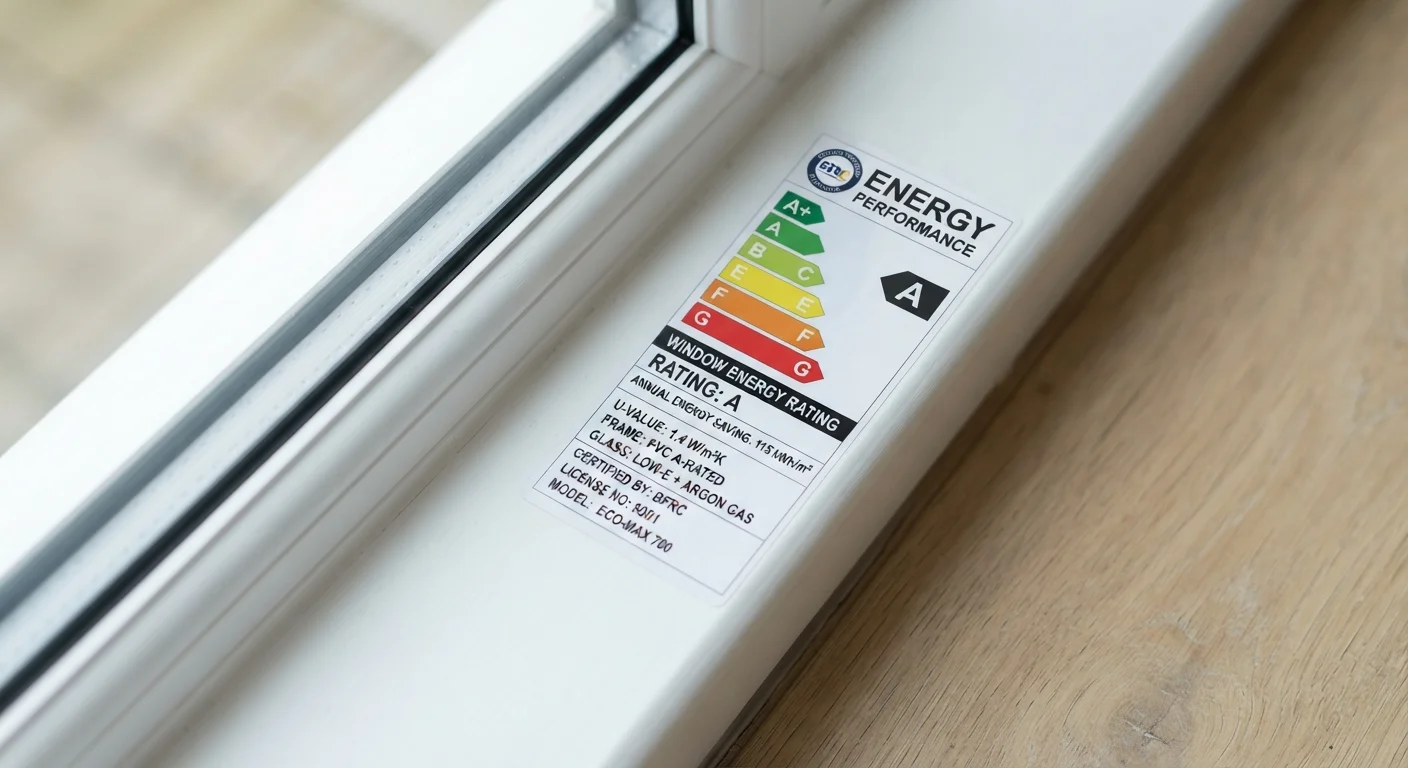
This creates a real problem for homeowners. When comparing quotes from multiple contractors, it's easy to assume that descriptive language signals meaningful performance differences. It usually doesn't. What does signal performance is a small, standardized label developed by the National Fenestration Rating Council (NFRC) — an independent, nonprofit organization that tests and certifies window products using consistent laboratory methods.
Understanding how to read that label, and what to ignore around it, is the most practical skill you can develop before purchasing replacement windows. For a broader foundation, see our full overview of window energy efficiency covering everything from label ratings to installation factors.
The Two Numbers That Actually Predict Performance
Two figures on the NFRC label carry the most weight for most homeowners:
- U-factor measures how quickly a window loses heat through its surface. Lower numbers mean better insulation. Typical values range from about 0.20 to 1.20. In cold climates, look for windows rated 0.30 or below.
- Solar Heat Gain Coefficient (SHGC) measures how much solar energy passes through the glass into your home. Values run from 0 to 1. In hot climates, a lower SHGC (around 0.25 or less) reduces cooling loads; in cold climates, a higher SHGC can help offset heating costs.
These two figures interact with your climate zone, your home's orientation, and your existing heating and cooling setup. No single value is universally 'best.' A window well-suited to a Minnesota winter may be a poor choice for a Florida home that faces southwest.
For a plain-language explanation of each rating, our article on what U-factor, SHGC, and Visible Transmittance actually mean walks through each number in detail.
What ENERGY STAR Certification Tells You — and What It Doesn't
ENERGY STAR certification, administered through a partnership between the U.S. Environmental Protection Agency and the Department of Energy, confirms that a window meets minimum performance thresholds for a specific U.S. climate zone. This is genuinely useful — it tells you the product has been tested and meets a defined baseline.
However, it does not tell you that the window is the most efficient option available, or that it will produce specific savings in your home. Many windows exceed the ENERGY STAR minimums, and the label alone won't distinguish them. Two windows carrying identical ENERGY STAR stickers may have meaningfully different U-factors.
For a complete picture of what the ENERGY STAR label covers and where it stops, see our companion article on what the ENERGY STAR label covers and what it leaves out.
How to Protect Yourself During the Buying Process
The most effective safeguard is simple: ask for the NFRC label data in writing for any window being quoted. A reputable contractor should be able to provide the specific U-factor and SHGC values for each product, not just a model name or a marketing category.
If a contractor responds to this request with vague reassurances — 'these are our best windows' or 'we only carry high-efficiency products' — treat that as a signal to ask follow-up questions. Our guide to questions to ask a window contractor about energy performance provides a practical list to use before signing anything.
It's also worth understanding how performance upgrades — such as Low-E coatings, gas fills, and warm-edge spacers — affect both efficiency and price. Our article on energy efficiency upgrades and their effect on window replacement pricing explains each upgrade and when the added cost is typically justified.
Finally, keep your expectations grounded. Energy-efficient windows can meaningfully reduce drafts and contribute to lower utility bills over time, but outcomes vary based on installation quality, your climate, and your home's overall envelope. For a clear look at common misconceptions, see our piece on separating common myths from verified facts about energy-efficient windows.
This article is for informational and educational purposes only. Energy performance outcomes vary by home, climate, installation quality, and product specifications. Always verify product ratings, local code requirements, and contractor credentials before making purchasing decisions.