

Key Takeaways
Reduces heat transfer through the glass
Low-E coatings and gas fills meaningfully lower a window's U-factor, reducing the rate at which heat moves through the glass in either direction. This directly affects comfort, particularly in rooms with large windows.
May lower heating and cooling costs over time
By reducing unwanted heat gain in summer and heat loss in winter, efficient windows can contribute to lower energy bills — though the actual savings depend on climate, home size, and existing insulation levels.
Reduces interior condensation and cold spots
Warm-edge spacers and improved glazing keep the interior glass surface closer to room temperature, which reduces condensation and the discomfort of sitting near cold windows in winter.
May improve UV protection for furnishings
Many Low-E coatings block a portion of ultraviolet light, which can slow fading in fabrics, flooring, and artwork exposed to sunlight — a secondary but tangible benefit for many homeowners.
Standardized ratings allow objective comparison
NFRC labels give homeowners a consistent way to compare efficiency across window brands and styles, making it easier to evaluate whether the premium is proportionate to the performance gain.
Higher upfront cost per window
Efficiency upgrades add to the purchase price of each unit. For a full-home replacement project, those per-window premiums accumulate into a significantly larger total investment.
Payback period can be long and uncertain
How quickly — or whether — energy savings offset the higher cost depends on local energy rates, climate severity, and the condition of your previous windows. In mild climates, payback may take many years.
Gas fills can deplete gradually over time
Argon and krypton fills are not permanent; seals can degrade over years, allowing gas to slowly escape. Once gas is lost, the insulating benefit decreases, though the window remains functional.
Some coatings can slightly alter natural light quality
Certain Low-E coatings give glass a subtle tint or reduce visible transmittance, which some homeowners notice, particularly in rooms where natural light quality is a priority.
Returns diminish in already well-insulated homes
If your home has good wall and attic insulation, the contribution windows make to overall energy performance is proportionally smaller, reducing the practical impact of glass upgrades.
Our Verdict
Energy-efficiency upgrades add real, measurable performance benefits to replacement windows, but the financial return depends heavily on your climate, current energy costs, and how long you plan to stay in your home. For most homeowners replacing single-pane or aging windows, standard upgrades like Low-E coatings and gas fills represent reasonable added value. Premium additions like triple-pane glass or specialized coatings may be harder to justify in mild climates.
Homeowners in regions with extreme hot or cold seasons who are replacing significantly outdated windows and plan to remain in their home for seven or more years.
What Energy-Efficiency Upgrades Actually Are
When contractors quote energy-efficient windows, they're typically referring to a bundle of add-on technologies applied to standard glazing. Understanding each one helps you evaluate whether the price difference is worth it for your situation.
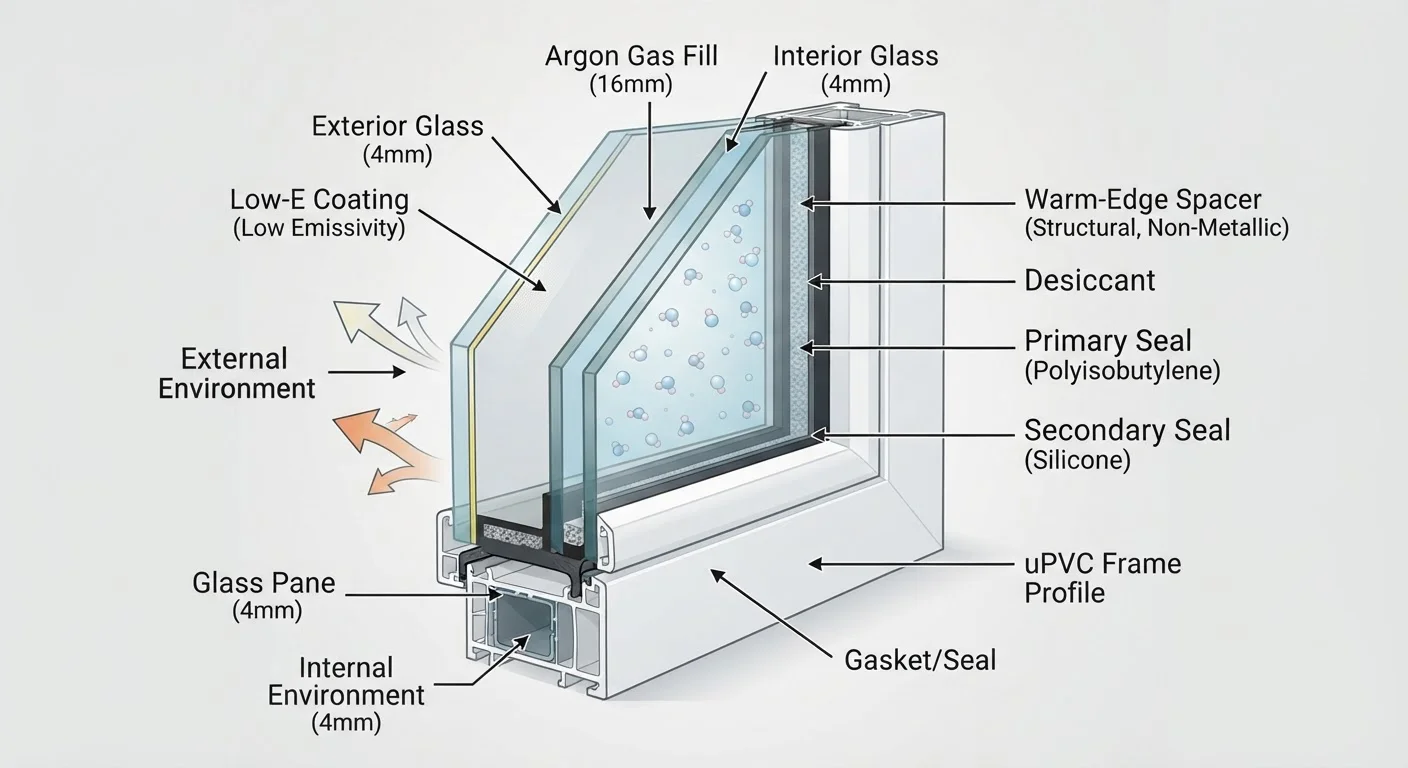
Low-E coatings (short for low-emissivity) are microscopically thin metallic layers applied to glass surfaces. They reflect infrared heat while allowing visible light to pass through — keeping heat inside during winter and blocking solar heat gain in summer. A window without Low-E can lose significantly more heat through the glass alone.
Gas fills — typically argon or krypton — replace the air between glass panes. These dense, inert gases conduct heat more slowly than air, improving insulation. Argon is the more common and affordable option; krypton offers slightly better performance but at a higher cost.
Warm-edge spacers sit between glass panes at the edge of the unit, holding them apart. Traditional aluminum spacers conduct heat rapidly at the perimeter, creating condensation and cold spots. Spacers made from foam, fiberglass, or composite materials reduce that edge-of-glass heat loss. For more on how frame and spacer choices interact with overall efficiency, see how frame materials affect energy performance.
How These Upgrades Affect the Price Tag
Each upgrade layer adds cost, and those costs compound. A basic double-pane window without efficiency features will generally run less per unit than the same window fitted with Low-E glass, argon fill, and warm-edge spacers. The premium for a fully upgraded double-pane unit can range from roughly 10% to 20% above a comparable uncoated window, though this varies by window size, style, and supplier.
25–30%
Share of home heating/cooling loss through windows
According to the U.S. Department of Energy, heat gain and loss through windows accounts for roughly 25–30% of residential heating and cooling energy use.
$125–$465
Estimated annual savings replacing single-pane windows
The U.S. Department of Energy estimates these ranges for replacing single-pane windows with Energy Star-qualified double-pane units, varying significantly by climate zone and home size.
Triple-pane windows — which add a third glass layer and a second gas-filled chamber — represent the highest-cost tier. They're most common in very cold climates where the added insulation value is meaningful. In moderate climates, the incremental performance gain over a well-specified double-pane unit may not justify the additional outlay. For a direct comparison, our guide on matching glass to your climate breaks down when triple-pane makes sense.
It's also worth noting that efficiency upgrades interact with installation quality. A highly rated window installed with air gaps or poor sealing can perform worse than expected. See where energy loss occurs in a replacement window installation for more on this.
Pros and Cons of Choosing Energy-Efficiency Upgrades
Deciding whether to invest in these features requires an honest look at both the benefits and the drawbacks. The right answer varies by household.
Reduces heat transfer through the glass
Low-E coatings and gas fills meaningfully lower a window's U-factor, reducing the rate at which heat moves through the glass in either direction. This directly affects comfort, particularly in rooms with large windows.
May lower heating and cooling costs over time
By reducing unwanted heat gain in summer and heat loss in winter, efficient windows can contribute to lower energy bills — though the actual savings depend on climate, home size, and existing insulation levels.
Reduces interior condensation and cold spots
Warm-edge spacers and improved glazing keep the interior glass surface closer to room temperature, which reduces condensation and the discomfort of sitting near cold windows in winter.
May improve UV protection for furnishings
Many Low-E coatings block a portion of ultraviolet light, which can slow fading in fabrics, flooring, and artwork exposed to sunlight — a secondary but tangible benefit for many homeowners.
Standardized ratings allow objective comparison
NFRC labels give homeowners a consistent way to compare efficiency across window brands and styles, making it easier to evaluate whether the premium is proportionate to the performance gain.
Higher upfront cost per window
Efficiency upgrades add to the purchase price of each unit. For a full-home replacement project, those per-window premiums accumulate into a significantly larger total investment.
Payback period can be long and uncertain
How quickly — or whether — energy savings offset the higher cost depends on local energy rates, climate severity, and the condition of your previous windows. In mild climates, payback may take many years.
Gas fills can deplete gradually over time
Argon and krypton fills are not permanent; seals can degrade over years, allowing gas to slowly escape. Once gas is lost, the insulating benefit decreases, though the window remains functional.
Some coatings can slightly alter natural light quality
Certain Low-E coatings give glass a subtle tint or reduce visible transmittance, which some homeowners notice, particularly in rooms where natural light quality is a priority.
Returns diminish in already well-insulated homes
If your home has good wall and attic insulation, the contribution windows make to overall energy performance is proportionally smaller, reducing the practical impact of glass upgrades.
For a broader look at what drives window replacement pricing overall — including costs unrelated to glass efficiency — this overview of realistic window replacement costs provides useful context. And if you're comparing glazing options from scratch, our article on single-pane vs. double-pane vs. triple-pane windows covers the cost and performance differences in detail.
How to Read the Numbers Before You Decide
The NFRC label on replacement windows gives you standardized performance data: U-factor (heat loss rate), Solar Heat Gain Coefficient (how much solar heat enters), and Visible Transmittance (how much daylight passes through). Lower U-factors mean better insulation; lower SHGC is better in hot climates, while higher SHGC can be desirable in cold climates to capture passive solar warmth.
Understanding the ENERGY STAR Climate Zone System
ENERGY STAR certifies windows based on four U.S. climate zones: Northern, North-Central, South-Central, and Southern. A window that qualifies in one zone may not meet the requirements of another. When reviewing contractor proposals, confirm that the windows being quoted are rated for your specific climate zone — not just broadly described as 'energy efficient.' Your contractor or the NFRC label itself should make this clear.
Use these numbers to compare windows objectively rather than relying solely on marketing terms like "energy-saving" or "high-efficiency," which carry no standard definition. Ask your contractor to walk you through the NFRC ratings on any window they're proposing and explain how those figures map to your local climate conditions.
For a deeper look at common misconceptions about what energy-efficient windows actually deliver, separating myths from verified facts about energy-efficient windows is worth reading before you finalize your decision.