

Key Takeaways
Option A
Double-Pane Windows
The proven, widely available insulation standard.
Best for: Homeowners in mild to moderate climates seeking a meaningful upgrade from single-pane glass without a significant cost premium.
Option B
Triple-Pane Windows
The premium, high-performance option for extreme climates.
Best for: Homeowners in very cold or very hot climates who prioritize maximum thermal performance and are willing to invest more upfront.
If you live in a mild or mixed climate (IECC zones 1–3)
Double-Pane Windows
Triple-pane's added performance is rarely recovered through energy savings in regions without extreme winters, making double-pane the more cost-effective choice.
If you live in a cold northern climate (IECC zones 5–7, such as Minnesota or Maine)
Triple-Pane Windows
Sustained sub-zero temperatures mean the superior U-factor of triple-pane glass can translate into measurable heating cost reductions over the window's lifespan.
If structural load or frame capacity is a concern
Double-Pane Windows
Triple-pane units are significantly heavier, which can stress frames and hardware; double-pane is a safer choice when load capacity is limited.
If you want maximum noise reduction alongside thermal performance
Triple-Pane Windows
The additional glass layer and gas-filled cavity provide a meaningful acoustic buffer, benefiting homes near busy roads or airports.
How Each Option Actually Works
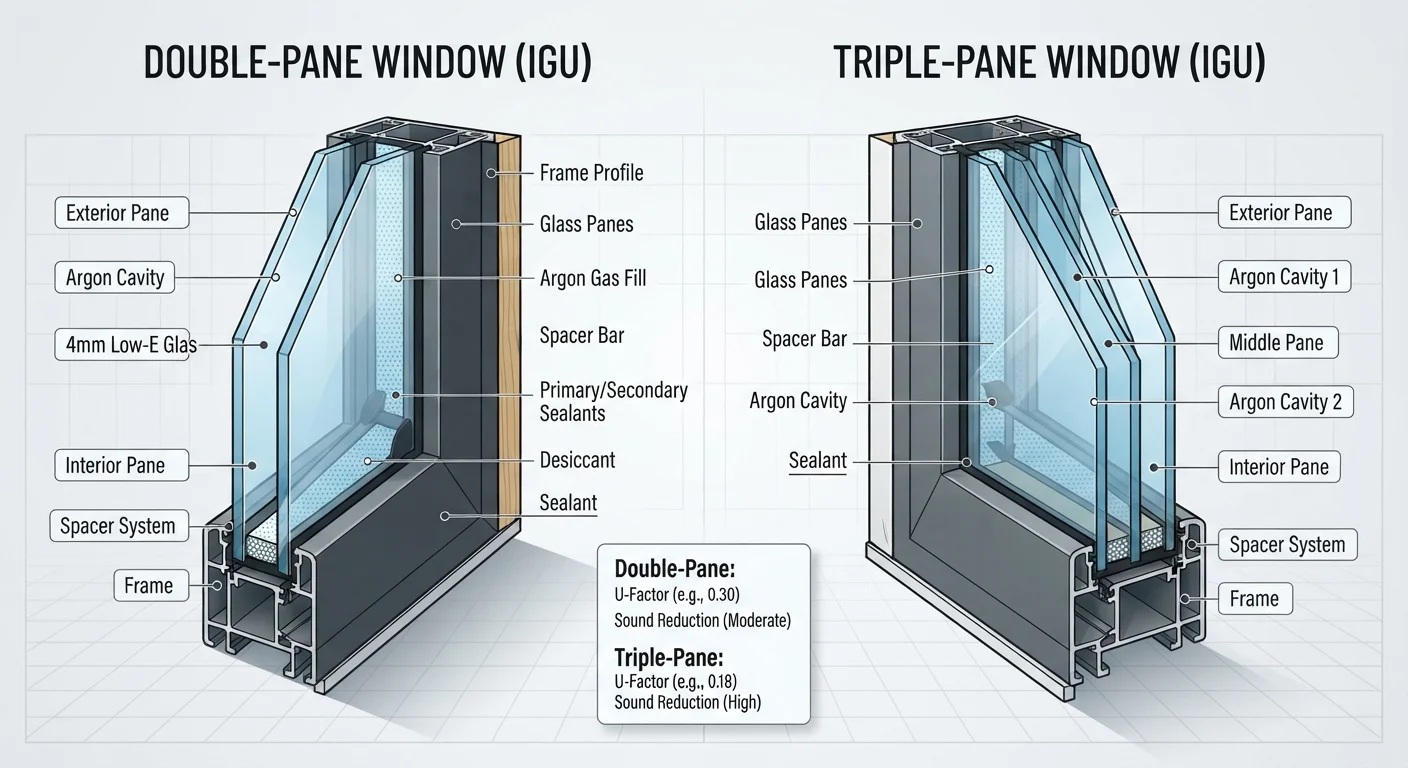
Both double-pane and triple-pane windows trap insulating gas — typically argon or krypton — between sealed glass layers. That gas-filled space is what dramatically slows heat transfer compared to single-pane glass. The difference between the two options comes down to how many of those insulating chambers exist.
A double-pane window (also called double-glazed or IGU — insulated glass unit) uses two panes of glass enclosing one gas-filled chamber. A triple-pane window adds a third pane, creating two separate insulating chambers. That additional layer reduces the window's U-factor — a measure of heat loss, where lower numbers mean better insulation.
Typical U-factors fall in these general ranges: double-pane units often achieve roughly 0.25–0.35, while triple-pane units can reach 0.15–0.25. These figures vary depending on frame material, Low-E coatings, and gas fill type. U-factor alone does not tell the whole story.
| Criterion | Double-Pane | Triple-Pane |
|---|---|---|
| Number of glass panes | 2 | 3 |
| Insulating chambers | 1 | 2 |
| Typical U-factor range | 0.25–0.35 | 0.15–0.25 |
| Relative cost | Moderate | 15–30% higher |
| Weight | Standard | Up to 50% heavier |
| Best climate fit | Mild to moderate zones | Cold northern zones |
| Noise reduction | Good | Better |
| Visible light transmission | Higher | Slightly lower |
The Role of Climate in Your Decision
Climate zone is the single most important factor in deciding whether triple-pane is worth the upgrade. The U.S. Department of Energy divides the country into climate zones (1 through 8). In warmer zones — roughly the Southeast, Southwest, and coastal areas — winters are short and mild, so the incremental heat-retention benefit of a third pane rarely generates enough energy savings to offset the higher purchase price over a typical window lifespan of 15–25 years.
In colder zones — the Upper Midwest, New England, and mountain regions — heating seasons are long and severe. Here, the lower U-factor of triple-pane glass can make a more meaningful difference in annual heating costs. Homeowners in these regions should request energy modeling estimates from contractors to gauge potential savings specific to their home's size, orientation, and existing insulation.
Solar heat gain also matters. In hot-summer climates, a low Solar Heat Gain Coefficient (SHGC) reduces unwanted heat entering through glass, and that can be achieved with either pane count through appropriate Low-E coatings. See our guide to solar heat gain and window orientation for more detail on matching SHGC to your home's exposure.
Cost, Weight, and Practical Trade-Offs
Triple-pane windows typically cost 15–30% more than comparable double-pane units, though exact pricing varies by size, frame material, and installer. That premium is not just for the extra glass — manufacturing tolerances are tighter, and the additional weight demands sturdier hardware and frames.
Weight is a practical concern homeowners often overlook. Triple-pane units can be 50% heavier than double-pane equivalents. In older homes or those with wood frames that have experienced moisture damage, that added load can stress sills, hinges, and balances. A qualified installer should assess your existing frame condition before specifying triple-pane units.
There are also considerations around natural light. A third pane absorbs a small additional percentage of visible light, which is generally imperceptible in most rooms but may matter in spaces that rely on maximum daylight — something worth bearing in mind for rooms where a picture window style is planned.
For a broader look at how upgrades like these affect total project budgets, energy efficiency upgrades and their effect on window replacement pricing breaks down how individual features stack up in cost.
What Else Affects Insulation Performance
Pane count is only one variable in a window's thermal performance. Two other factors often have equal or greater impact:
- Low-E coatings: Microscopically thin metallic coatings applied to glass surfaces that reduce radiant heat transfer. The right type — hard-coat or soft-coat — depends on your climate. Learn how Low-E coatings affect heat and light.
- Gas fills: Argon is the most common fill and provides solid performance. Krypton is denser and more effective in thinner spaces — often used in triple-pane units where the chamber gap is narrower. Compare argon, krypton, and air fills.
- Warm-edge spacers: The bar that separates panes at the edge affects condensation and edge-of-glass heat loss significantly. Warm-edge spacers can make a real difference and are worth specifying regardless of pane count.
A well-specified double-pane window with quality Low-E coating, argon fill, and warm-edge spacers will outperform a poorly specified triple-pane unit in many climates. Ask contractors to provide the full performance specifications — not just the pane count.
This article is for informational purposes only. Energy savings, costs, and performance figures vary by product, installation, home condition, and local climate. Always consult a licensed window professional and verify local building code requirements before purchasing or installing windows.