

Key Takeaways
Our Verdict
For most homeowners replacing standard double-pane windows, argon fill strikes the best balance between insulation improvement and cost. Krypton is the stronger performer in narrow-gap triple-pane units, particularly in harsh climates, but the added expense is only justified when other efficiency upgrades are also in place. Plain air is acceptable only when budget constraints are severe and the climate is mild.
| Best for | Recommended |
|---|---|
| Most homeowners upgrading double-pane windows | Argon |
| Cold-climate homes with triple-pane windows | Krypton |
| Mild climates or very tight budgets | Air |
Why the Gas Between Your Panes Matters
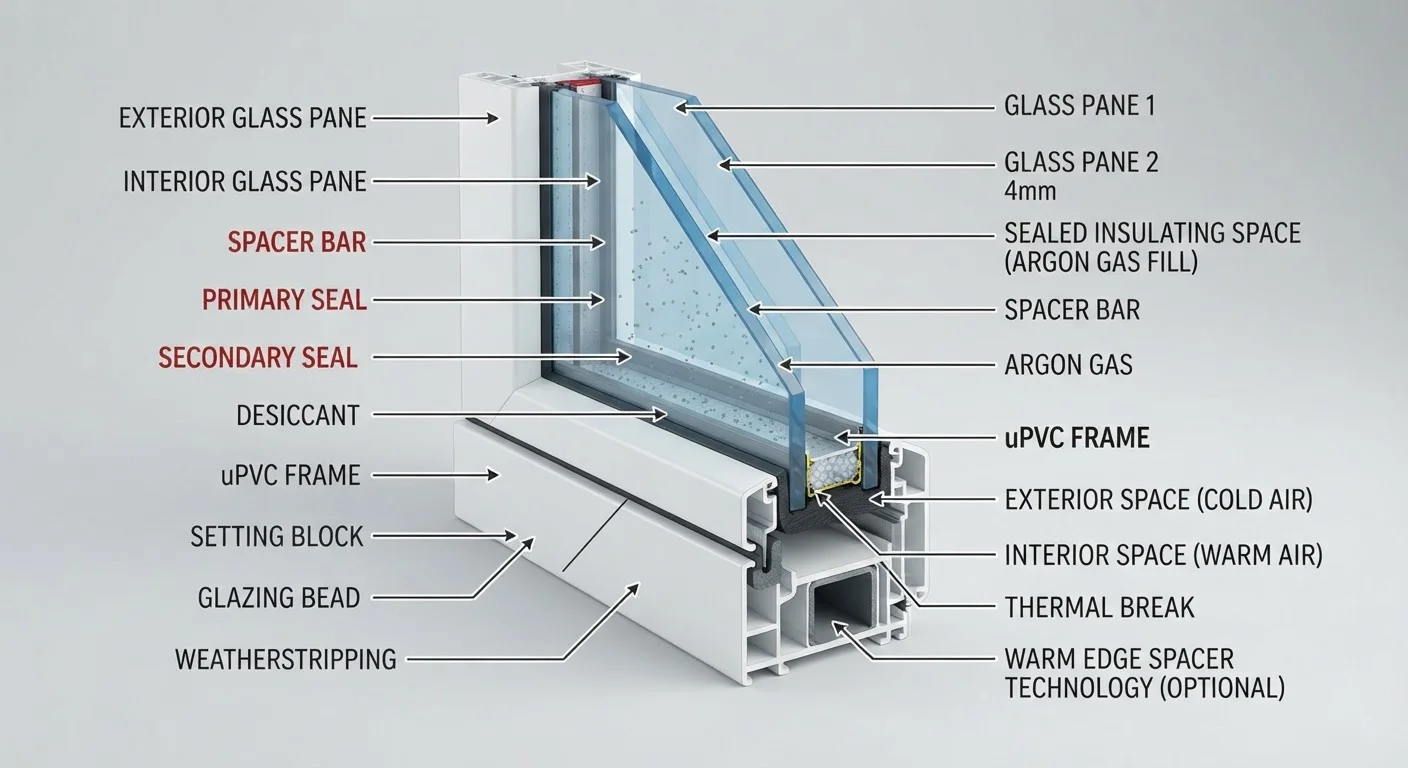
Most modern insulated windows seal a gap between two or more panes of glass. That gap does most of the insulating work — but only if it contains the right fill. Plain air conducts heat and allows convection currents to form inside the gap, reducing thermal resistance. Dense, inert gases like argon and krypton move heat more slowly, which directly lowers the window's U-factor (a measure of how much heat escapes). A lower U-factor means a more energy-efficient window.
Gas fill is rarely the only variable at play. It works in combination with low-E coatings, glass thickness, and spacer quality. To understand how glazing layers interact with these choices, see how glazing affects your total bill.
Comparing the Three Options: Air, Argon, and Krypton
Each fill has a distinct performance and cost profile. Understanding the trade-offs helps you evaluate quotes and ask better questions when speaking with a contractor.
| Air | Argon | Krypton | |
|---|---|---|---|
| Thermal conductivity vs. air | Baseline | ~34% lower | ~63% lower |
| Best gap width | Any | 12–16 mm (½ in) | 8–12 mm (⅓–½ in) |
| Typical use case | Budget windows | Standard double-pane | Triple-pane units |
| Relative cost premium | None | Low | High |
| Availability | Universal | Widely available | Less common |
| Climate suitability | Mild climates only | Most climates | Cold/very cold climates |
Argon is colorless, odorless, non-toxic, and abundant — which keeps its cost low relative to its benefit. It is typically used in gaps of about half an inch (12–16 mm), which suits standard double-pane construction. Krypton is denser and conducts heat even more slowly, making it more effective in narrower gaps (around 8–12 mm) common in triple-pane windows. Air requires no sealing process beyond the glazing unit itself, but it underperforms both noble gases in nearly every thermal metric.
Cost Considerations and Long-Term Value
Argon fill typically adds a modest amount to the per-window cost — often estimated in the range of a few dollars to low tens of dollars per unit, though this varies by manufacturer and region. Krypton can cost several times more than argon for an equivalent fill, reflecting its relative scarcity. Neither upgrade should be evaluated in isolation from other efficiency features.
For a broader look at how gas fills fit into the overall cost of energy-efficient windows, the article on energy efficiency upgrades and their effect on window replacement pricing breaks down where each dollar tends to go.
Ask for the NFRC Label
Any window unit making energy-efficiency claims should carry an NFRC (National Fenestration Rating Council) label. This label shows independently verified U-factor and Solar Heat Gain Coefficient (SHGC) values, so you can compare products on an equal footing. Ask your contractor to show you the NFRC ratings for any window they propose, not just the manufacturer's marketing materials.
One practical note: all sealed gas units experience some slow leakage over decades. Industry estimates suggest a well-manufactured unit loses roughly 1% of its fill per year under normal conditions. Proper installation and quality seals are the best defense against premature loss.
Matching the Right Fill to Your Window and Climate
Climate is the most important context for this decision. In cold climates — where windows lose significant heat in winter — the incremental improvement from argon over air can translate to meaningful utility savings over the life of the window. Krypton's advantage is most apparent in triple-pane configurations where narrow gaps make argon less effective; if you are weighing triple-pane windows, see double-pane vs. triple-pane windows matched to your climate.
In mild climates, the thermal performance difference between argon and air narrows considerably, and the payback period for the premium fill extends. In those regions, putting upgrade dollars toward low-E coatings or warm-edge spacers may return more value than the gas fill alone.
When reviewing contractor proposals, ask specifically which gas fill is included, what the gap width is, and whether the unit carries a certification from the National Fenestration Rating Council (NFRC) — an independent body that verifies thermal performance claims on window labels.
This article provides general educational information about window insulation options. Actual performance, costs, and savings depend on many factors specific to your home, climate, and installation. Always consult a qualified window professional before making purchasing decisions.