

Key Takeaways
Warm-Edge Spacer
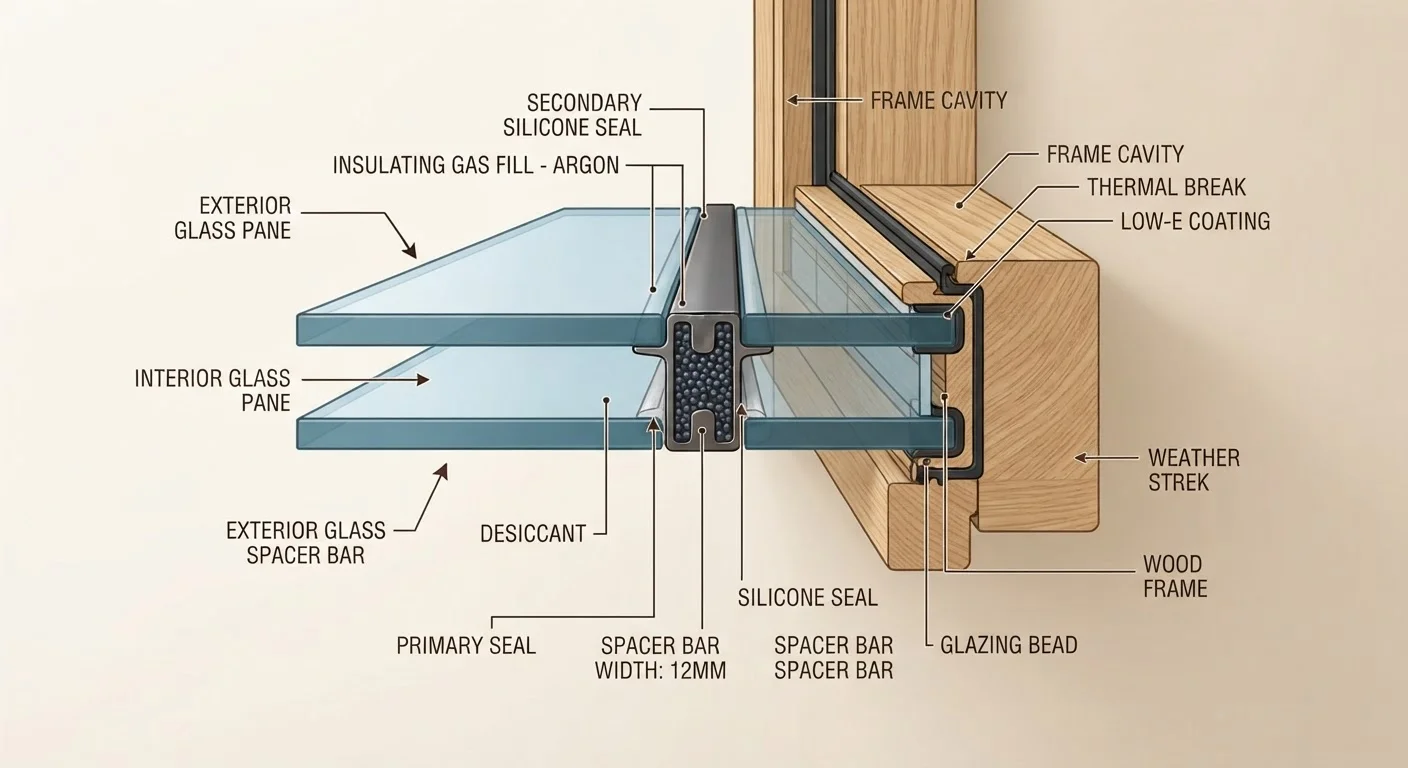
A warm-edge spacer is the thin bar that runs along the inside perimeter of a double- or triple-pane window, holding the panes of glass apart at a precise distance. Unlike older aluminum spacers, warm-edge versions are made from materials that conduct heat poorly — such as foam, silicone, or structural polymers — so less heat escapes through the window's edge. The result is a warmer inner glass surface at the frame, which reduces condensation and improves overall energy performance.
In energy ratings, edge-of-glass heat loss is measured separately from center-of-glass U-factor; warm-edge spacers specifically target this perimeter heat pathway, which standard ratings can underrepresent.
Why the Window Edge Matters More Than You Might Expect
When homeowners think about energy-efficient windows, they usually focus on the glass itself — the number of panes, gas fills like argon, or low-emissivity coatings. The spacer bar is easy to overlook because it is narrow and mostly hidden behind the frame. But heat does not only escape through the center of the glass; a meaningful amount travels around the edge, directly through the spacer.
Traditional spacers are made from aluminum, a metal that conducts heat approximately 1,000 times better than still air. That conductivity creates a thermal bridge — a path of least resistance where warmth from inside your home moves steadily toward the cold outdoors. The result is a cooler strip of glass along the interior perimeter, which is precisely where condensation tends to collect first. Understanding how this pathway works is a useful starting point before comparing window options. You can also explore how double-pane and triple-pane glass compare more broadly.
How Warm-Edge Spacers Address the Problem
Warm-edge spacers replace high-conductivity metals with materials that resist heat flow. Common options include structural foam, silicone foam, thermoplastic composites, and hybrid designs that pair a thin stainless steel face with an insulating core. Each reduces — though does not eliminate — the thermal bridge at the window's edge.
The practical effect is a warmer inner glass surface near the frame. In cold weather, that difference can be enough to keep the glass above the dew point of typical indoor air, reducing or eliminating the band of condensation that often appears at the bottom of older windows. For homeowners who have noticed persistent moisture streaks on their current windows, this is one of the mechanisms worth investigating. Our article on condensation on energy-efficient windows explains what surface moisture actually signals.
Ask About the Spacer Before You Sign
Spacer material is not always listed in standard window brochures. Before agreeing to any quote, ask the installer to confirm whether the window uses a warm-edge spacer and what it is made from. This takes under a minute and ensures you are comparing equivalent products across multiple bids.
The spacer also plays a structural role: it holds the two panes at a precise, consistent gap that is optimized for the insulating gas — typically argon or krypton — sealed inside. A failing spacer seal is one of the main reasons gas can escape over time. Learn more about how argon and krypton fills perform in combination with well-sealed spacers.
What to Ask When Comparing Windows
Spacer type is rarely the headline feature in a window specification sheet, so homeowners need to ask directly. When reviewing quotes or speaking with an installer, a few focused questions help clarify what you are actually buying.
- What material is the spacer made from? Aluminum indicates a conventional design; foam, silicone, thermoplastic, or a named hybrid system indicates a warm-edge approach.
- Is the spacer part of a sealed unit with a warranty? The spacer and its seal work together; ask how long the insulated glass unit is warranted against seal failure.
- How does this window's edge performance factor into its overall energy rating? A window's published U-factor is measured at the center of glass and does not fully capture edge losses, so understanding both is useful.
Warm-edge spacers are one component in a system that also includes glass coatings, gas fills, and the frame material itself. Window style also plays a role — some opening mechanisms seal more tightly than others, as explained in our guide to window style and energy efficiency. Considering spacers alongside these other factors gives you a more complete picture when making decisions. For a broader look at how upgrades affect pricing, see our overview of energy-efficiency upgrades and window replacement costs.
~10–15%
Of window heat loss attributed to the edge zone
Research by the Lawrence Berkeley National Laboratory has estimated that the perimeter edge zone can account for a notable share of total window heat loss, depending on frame and spacer design.
~2–3°F
Warmer inner glass surface with warm-edge spacers
Studies on insulated glass units have found that switching from aluminum to low-conductivity spacers can raise the inner perimeter glass temperature by several degrees under cold-weather conditions, reducing condensation risk.