

Key Takeaways
Window Condensation
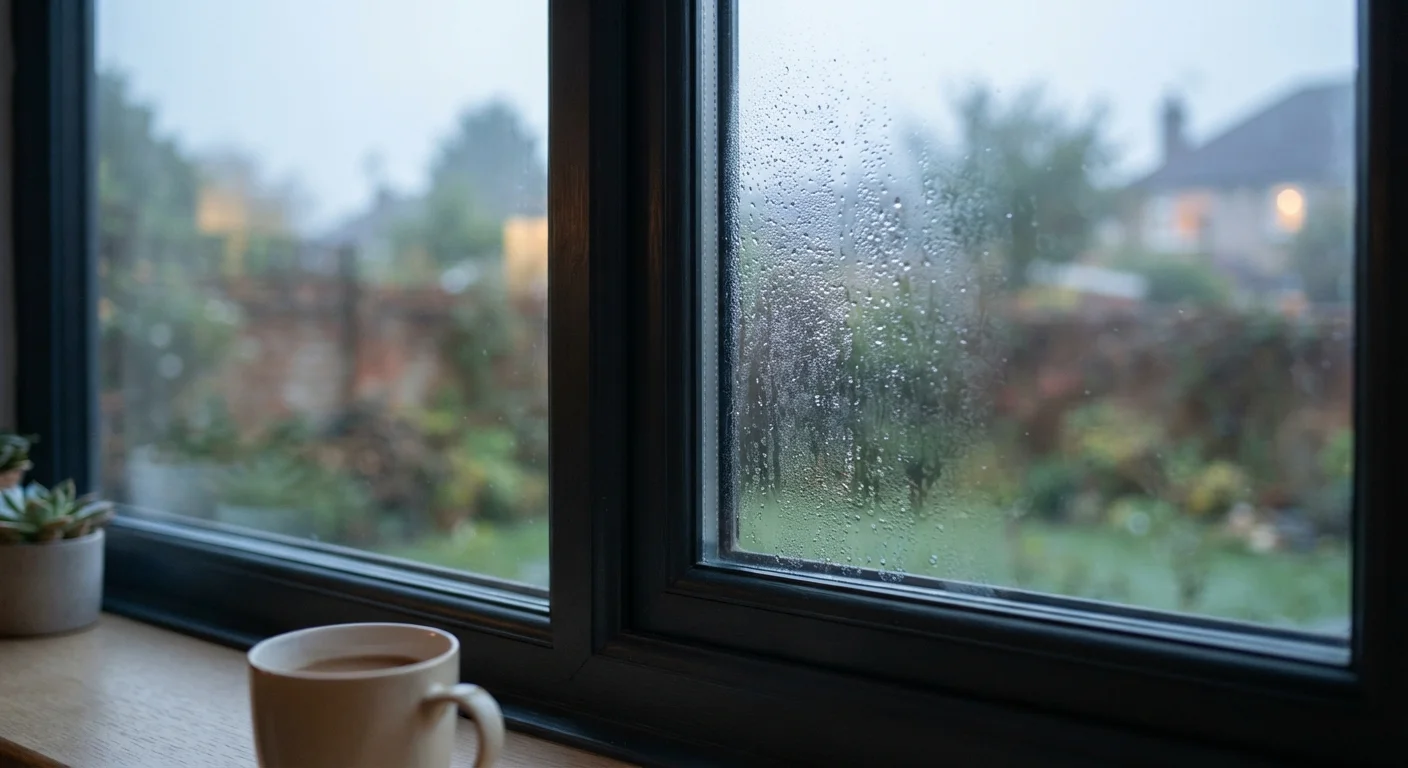
Window condensation is moisture that forms when warm, humid air contacts a cooler glass surface. On new energy-efficient windows, it can appear on the exterior pane, the interior pane, or — in a sign of actual trouble — between the panes of glass. Each location tells a different story about your home and your windows.
Condensation forms when a surface temperature drops below the dew point of the surrounding air. The thermal performance of the window glass determines which surface reaches that threshold first.
Three Locations, Three Different Meanings
When condensation appears on a new window, the first question to ask is: where exactly is it forming? The location is the single most important clue about what's happening and whether action is needed.
Exterior Condensation
Moisture forming on the outside surface of the glass is generally good news. It means the window's insulating layers are doing their job — keeping interior heat from passing through to the outer pane. Because the outer glass stays relatively cold, humid outdoor air can condense on it, much like dew forms on grass overnight. This type of condensation typically evaporates on its own as the morning sun warms the glass.
Interior Condensation
Moisture on the inside surface of the glass reflects conditions inside your home rather than a window defect. Cooking, showering, breathing, and even houseplants contribute moisture to indoor air. When indoor humidity is high enough, it condenses on the coolest nearby surface — often the window glass. While energy-efficient windows have warmer interior glass than older single-pane windows, they can still show interior condensation when humidity is elevated.
Between-Pane Condensation
Fogging or streaking between the glass panes is the one scenario that warrants professional attention. It signals that the sealed gas-filled unit — which provides most of the window's insulating value — has been compromised. Once the seal fails, the insulating gas escapes and moisture infiltrates. This reduces thermal performance and cannot be resolved by homeowner action alone. Contact your installer or the manufacturer to review warranty options.
Why Energy-Efficient Windows Change the Condensation Picture
Older single-pane windows were poor insulators, which meant interior glass surfaces stayed almost as cold as outdoor temperatures. Condensation formed readily on the inside but rarely on the outside. When you upgrade to double- or triple-pane windows with low-emissivity (low-e) coatings and inert gas fills, the dynamics shift.
Exterior Condensation: A Performance Indicator
If you notice condensation on the outer surface of your new windows on cool, humid mornings, resist the urge to call it a defect. This pattern commonly appears within the first year after installing high-performance windows and typically diminishes as seasons change. Document it with photos if it concerns you, and mention it to your installer at your next contact — they can confirm whether the pattern matches expected behavior for your specific window type.
The interior glass surface becomes noticeably warmer because heat is no longer escaping freely through it. This is the efficiency benefit you paid for. As a side effect, the exterior glass surface can remain colder than before, making exterior condensation more likely on humid mornings. Some homeowners interpret this as a sign something is wrong — in most cases, it's the opposite.
For a broader look at how these performance properties interact, see our full overview of window energy efficiency for homeowners.
When Interior Condensation Signals a Larger Problem
While light, occasional interior condensation is manageable, persistent or heavy condensation warrants investigation. It can indicate that your home's ventilation is insufficient for the moisture being generated indoors — a problem that goes beyond the windows themselves.
Signs that indoor humidity may be getting out of hand include: condensation appearing on multiple surfaces (not just windows), musty odors, or visible mold near window frames. If you notice these patterns, it may be worth reviewing your home's overall ventilation. Our related guide on signs your home isn't breathing properly covers these warning signals in more detail.
Practical steps to lower indoor humidity include:
- Using exhaust fans during and after cooking and bathing
- Running a dehumidifier in basements or other damp areas
- Ensuring dryer vents exhaust to the outdoors
- Opening windows briefly when outdoor humidity is lower than indoors
Keeping indoor relative humidity between roughly 30% and 50% is a reasonable target for most climates and seasons, though local conditions vary.
What to Do Based on Where Condensation Appears
Here's a straightforward reference for how to respond to each condensation type:
| Location | Likely Cause | Recommended Action |
|---|---|---|
| Exterior glass | Window is insulating well; outdoor humidity is high | No action needed; monitor and confirm it clears as conditions change |
| Interior glass | Elevated indoor humidity | Improve ventilation; use dehumidifier; check exhaust fans |
| Between panes | Failed sealed unit | Contact installer or manufacturer; review warranty coverage |
If you are uncertain whether your windows were installed correctly — a factor that affects condensation patterns and long-term performance — our article on where energy loss occurs in a replacement window installation explains what proper installation prevents.
Understanding condensation isn't just about windows — it's about understanding your home as a system. Moisture, ventilation, and insulation interact in ways that become clearer once you know what each signal means.