

Key Takeaways
Our Verdict
Double-pane windows represent the most practical choice for the majority of homeowners, delivering meaningful energy performance at a manageable cost. Single-pane is rarely a sound investment in new replacements, while triple-pane earns its premium most clearly in cold northern climates where heating costs are high and long ownership horizons allow savings to accumulate.
| Best for | Recommended |
|---|---|
| Homeowners in moderate climates with a standard renovation budget | Double-Pane |
| Homeowners in very cold climates planning to stay long-term | Triple-Pane |
| Temporary or very low-budget situations in mild climates only | Single-Pane |
What Glazing Actually Means — and Why It Matters
The term glazing simply refers to the glass component of a window, including how many layers of glass are used and what sits between them. Each additional pane of glass creates an insulating air or gas-filled gap that slows the transfer of heat between your home's interior and the outside world.
This matters directly to your energy bill. A poorly insulating window loses heat in winter and lets it pour in during summer, forcing your HVAC system to work harder. Upgrading glazing is one of the most impactful changes you can make during a window replacement project. For a broader look at every cost layer involved, see the complete homeowner cost overview.
Single-Pane Windows: Low Cost, High Trade-Off
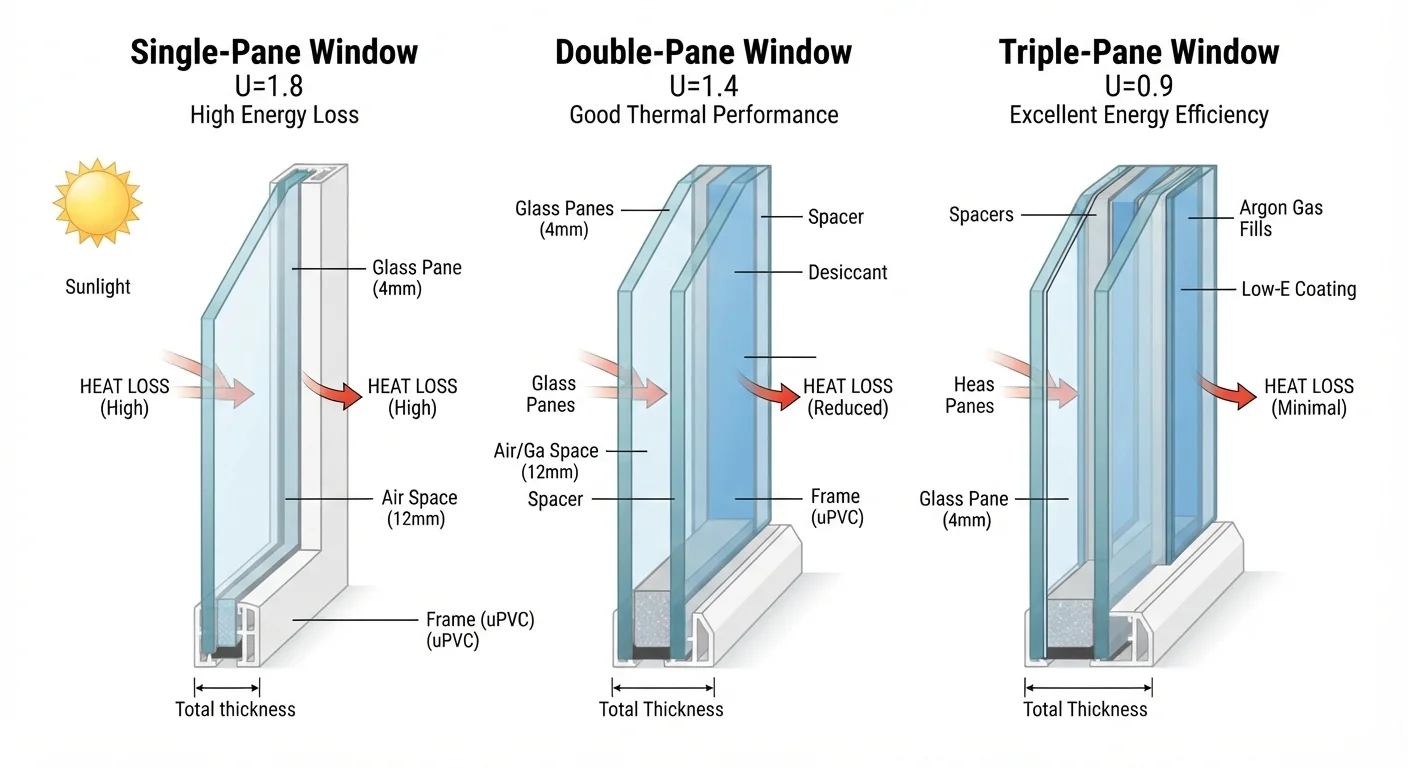
Single-pane windows consist of one layer of glass with no insulating gap. They were standard in homes built before the 1970s and are still found in many older properties today.
Typical installed cost: Roughly $150–$400 per window, depending on size and frame material — the lowest upfront figure of the three options.
The problem is performance. Single-pane glass offers an U-factor typically around 1.0 or higher, meaning heat escapes rapidly. In most climates, the ongoing energy penalty far outweighs the savings on purchase price. Single-pane replacements are rarely recommended for new installations in the continental US and do not meet current energy codes in most jurisdictions.
Double-Pane Windows: The Practical Standard
Double-pane (also called dual-pane or IGU) windows have two glass layers separated by a sealed space, usually filled with air or argon gas. This is the dominant standard for residential window replacement across the US today.
Typical installed cost: Roughly $300–$800 per window. Size, frame material, and add-ons like low-E coatings or gas fills influence where you land in that range.
Double-pane windows achieve U-factors in the range of 0.25–0.40, a substantial improvement over single-pane. For most US climates — including the South, Midwest, and Pacific Coast — they deliver meaningful energy savings without the steep premium of triple-pane glass. To understand how argon and other fill gases influence performance, see how gas fills compare.
| Single-Pane | Double-Pane | Triple-Pane | |
|---|---|---|---|
| Typical installed cost (per window) | $150–$400 | $300–$800 | $550–$1,200+ |
| Typical U-factor range | ~1.0 or higher | 0.25–0.40 | 0.15–0.25 |
| Insulating gas fill option | No | Yes (air or argon) | Yes (argon or krypton) |
| Weight vs. standard frame | Lightest | Moderate | Heaviest |
| Meets current energy codes | Rarely | Yes, in most climates | Yes, exceeds in most areas |
| Best climate fit | Mild only (limited use) | Most US climates | Cold northern climates |
| Payback horizon | Poor — not recommended | Moderate (varies widely) | Longer — best for cold climates |
Triple-Pane Windows: Maximum Insulation at a Price
Triple-pane windows add a third layer of glass and two insulating gaps, pushing U-factors down to the 0.15–0.25 range — the best available in standard residential products. They are common in Scandinavian and Canadian construction and are growing in popularity in cold US regions.
Typical installed cost: Roughly $550–$1,200 per window or more, depending on size and specification. That premium of 20–50% over comparable double-pane units is the central question homeowners must weigh.
Triple-pane windows also add significant weight, which can place extra demands on the window frame and rough opening. They perform best — and deliver the clearest payback case — in cold northern climates with long heating seasons, where the energy differential between double and triple glazing is most pronounced. For a detailed climate-matched comparison, see double-pane vs. triple-pane by climate.
Understanding the Real Payback Timeline
Energy savings from better glazing are genuine, but homeowners should approach payback estimates with realistic expectations. The gap in annual energy savings between single-pane and double-pane can be substantial — often cited in the hundreds of dollars per year for a full home of windows in cold climates. The step from double to triple-pane produces a narrower additional saving, typically smaller than the cost premium suggests on a short horizon.
Payback depends on: the number of windows replaced, your local energy rates, your climate, and how efficiently your home is already sealed. Replacing all windows at once can lower your per-unit cost; read about the trade-offs of phased vs. full replacement before deciding your scope.
Also be cautious of any estimate that promises a specific payback year — too many variables affect real-world outcomes. For a clear-eyed look at common misconceptions, see energy-efficient window myths vs. facts.
This article is for informational purposes only. Cost ranges are general estimates and will vary by region, window size, contractor, and site conditions. Always obtain multiple quotes and verify local code requirements before beginning any window replacement project.